
Ratan Tata is a bigger-than-life individual when we think of leaders who have intertwined business excellence and compassion. He is a billionaire industrialist but has become the epitome of modesty, vision, and integrity in his corporate life. His life story – from humble beginnings to his stewardship of one of the most respected conglomerates in the world continues to make an impact on millions.
Early Life and Education
Ratan Tata was born on December 28, 1937, in Mumbai, into the illustrious Tata family. His childhood was less than rosy as his parents divorced when he was ten years old, and he was raised by his grandmother, Lady Navajbai Tata. He carried emotional baggage from this formative time in his life, but did not let it affect his studies. He enrolled in Cornell University, New York State, to pursue Architectural and structural engineering.
Ratan worked two part-time jobs while at college: as a dishwasher and as a waiter. These jobs impressed upon him the importance of humility and hard work that would shape his leadership style.
Starting at the Bottom
In 1962, Ratan Tata joined the Tata Group. Instead of entering directly into a leadership role, he began on the factory floor of Tata Steel. His willingness to learn the business from the ground up gained him immense respect. When a worker once questioned if he thought he’d walk straight into a director’s office, Ratan saw it as motivation to prove his capabilities.
Becoming Chairman of the Tata Group
In 1991, Ratan Tata became chairman of the Tata Group and replaced J.R.D. Tata. Many questioned whether Ratan Tata could fill J.R.D. Tata’s shoes. Ultimately, these questions dissipated after Tata entered the international market. The Tata Group acquired Tetley Tea, Jaguar Land Rover, and Corus Steel and made the Tata Group a powerhouse in over 100 countries around the globe.
The Innovator of the Tata Nano
One of Ratan Tata’s boldest and most humane initiatives was launching the Tata Nano in 2008—the cheap car. This initiative emerged from Ratan Tata’s desire to offer Indian families the safest and economical vehicle possible! While the Nano never achieved commercial success, the Tata Nano is a reminder of Tata’s compassion and creativity.
The Legacy of Philanthropy and Social Impact
Ratan Tata’s legacy was much broader than his boardrooms. Tata Trusts, which represent 66% of the Tata Sons’ profit, have employed Ratan Tata’s significant capital to benefit social needs such as education, healthcare, and rural development. His name is connected to institutions that will forever be known as Tata, such as Tata Memorial Hospital and the Indian Institute of Science. For Ratan Tata, being successful in business is not enough unless he can create wider opportunities for society to prosper.
The Return of Air India
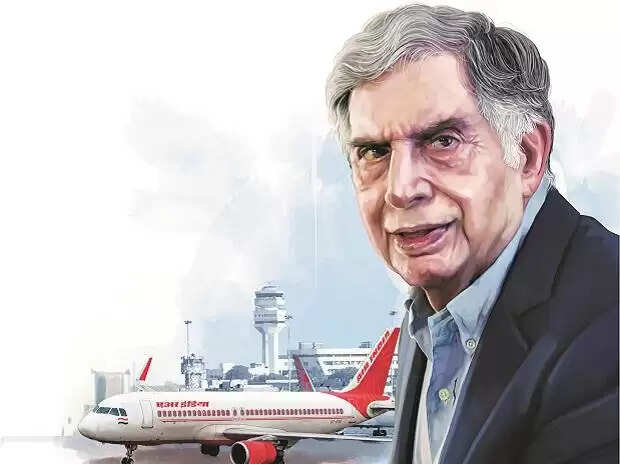
In 2021, Tata Group bought back Air India, re-acquiring the airline started by J.R.D. Tata in 1932—the moment was animated and emotional, a full-circle return, and Ratan Tata himself made an emotional farewell, welcoming the airline back to its roots—this earned him admiration from across the nation, from management, and even from politicians.
An Ageless Legacy
Ratan Tata died on October 10, 2024, and with him, left a legacy beyond business. With revenues exceeding $100 billion, an international footprint, and millions of people’s lives touched through his philanthropy, he remains a symbol of selfless, visionary leadership.
Although Ratan Tata’s life was accomplished, he was never about success in terms of status or profit, but rather success in terms of purpose, tenacity, and staying true to oneself.
About the Author