
One of the world’s most famous sports, cricket is seen by millions for strategy, skill, and excitement. While most people know the basic rules of batting and bowling, fielding positions get lost on casual viewers. Each fielding position serves a unique purpose and demands certain reflexes, awareness, and anticipation. Let us now explore the important fielding positions in cricket and lay out their significance on the field.
Division of the Cricket Field
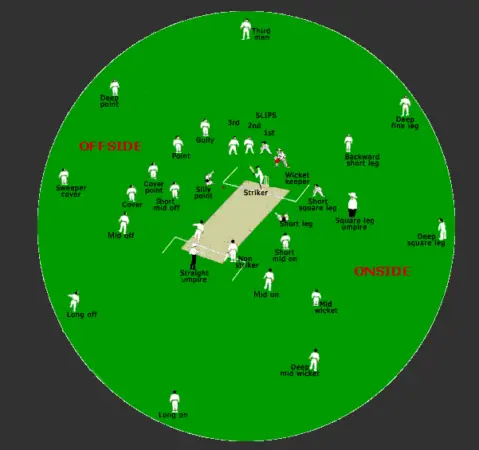
Generally, the field is divided into three broad zones: the close catching area, the inner circle, and the outfield.
Close catching area: This area lies within 15 yards of the batsman and is designed for checking edges or deflections.
Inner circle: Stretching up to 30 yards from the pitching area, it is meant to block quick singles and put the batsman under pressure to take a risk.
Outfield: This is the largest area where the boundary fielders hinder the batsman from seizing boundaries and thereby saving some valuable runs.
1. Wicketkeeper
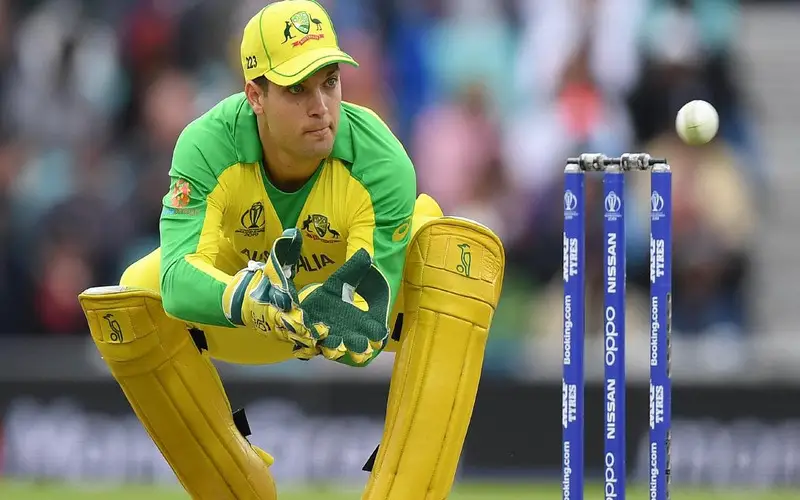
The wicketkeeper is the most crucial fielder positioned directly behind the stumps. His job consists of taking catches, stumping, and advising bowlers on field placement. The keeper stands either far back for the fast bowlers or close for spin variations. Sharp reflexes and eyesight are mandatory for fulfilling all the duties.
2. Slip
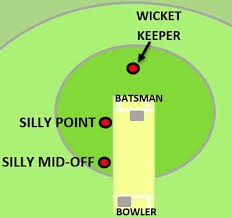
Slip fielders will, by definition, always stand at an angle from the wicketkeeper to catch edges from the fast bowlers. Usually, one or two slips are employed by teams; however, there can indeed be up to four slips depending on the situation. These days, you may also see a leg slip standing across if there is frequent edging by the batsman to the leg side.
3. Gully
The gully position is a little wider than the slipping cordon. The gully fielder is very important in grabbing those slices from the batsman that come off the bat at very sharp angles. It is commonly employed early in the innings or when the pitch assists the seam.
4. Point
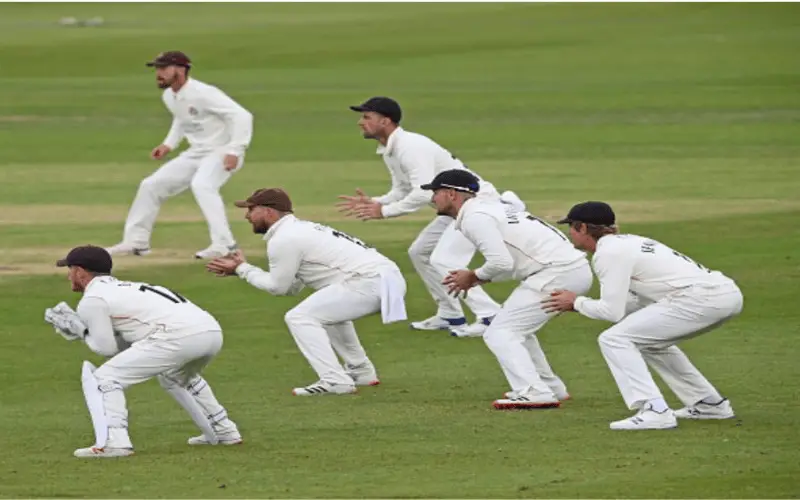
On the off side square stands the point who has to stop very aggressive square cuts and drives. Usually, an agile and quick cricketer is placed here because the ball comes to him at lightning speed.
5. Cover
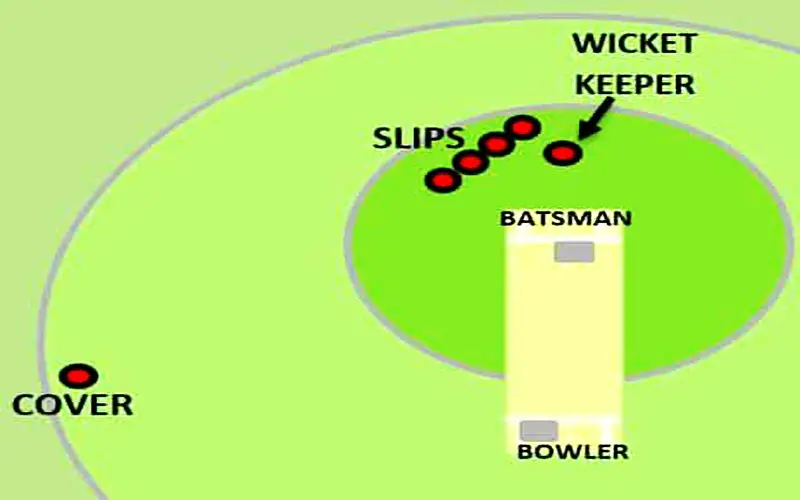
This is the place of artistry-terrain, which lures many beautiful cover-drives. The fielder’s athletic demands are often the highest, as he has to stop boundaries and quickly chase the ball. Depending on the situation, the cover fielder usually moves to either short cover or deep cover.
6. Third Man
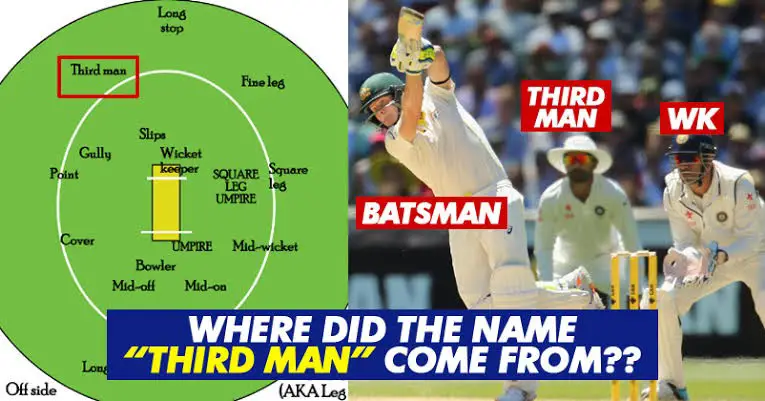
Behind the slip cordon and close to the boundary stands the third man. A useful placement when batsmen are attempting late cuts or when edges have gone past slips, it is common in the shorter forms of the game.
7. Fine Leg
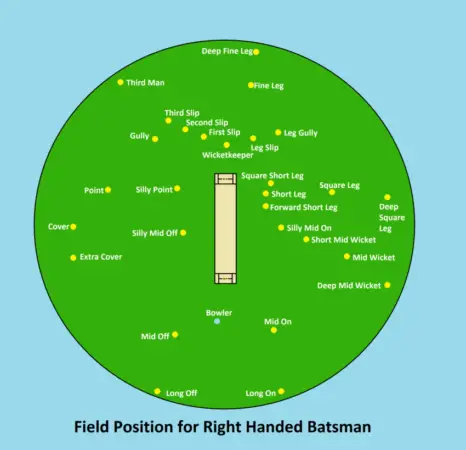
The fine-leg position is behind the batsman on the leg side and stops sweep shots or glances that go behind square. This position is equally important for fast bowlers, who benefit when the batsmen edge the fast deliveries down to the leg side.
8. Mid-Wicket
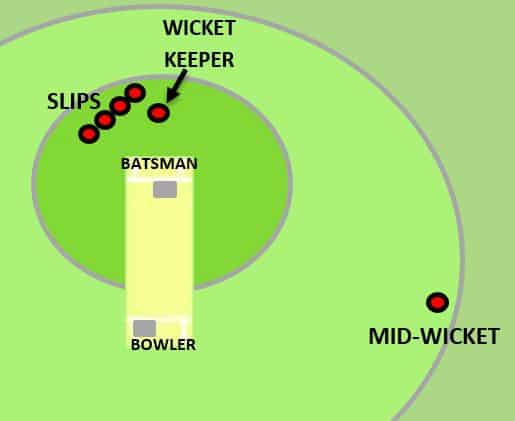
Between square leg and mid-on lies the mid-wicket area. This position attempts to curb shots hit on the leg side and to save singles. Mid-wicket takes quick decisions; hence, good throwing skills are demanded.
9. Mid-Off and Mid-On
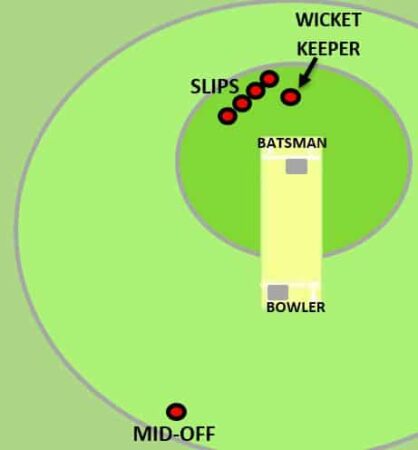
Both these fielding spots lie just on either side of the pitch, with mid-Off standing on the off-side, whereas mid-on is on the leg-side. These stand-out spots are where the captain or any leader of the team usually fields to maintain a communication level with the bowlers and guide them.
10. Square Leg
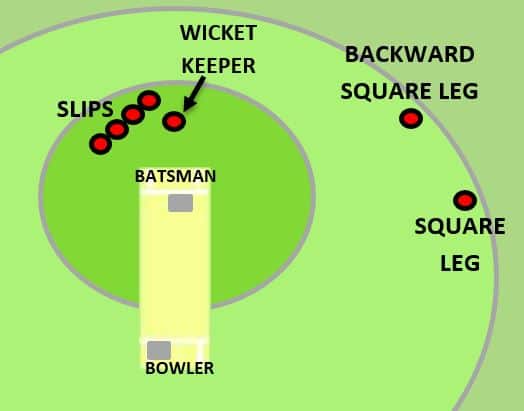
A square leg stands on the leg side and is among the constituents of an alert position for pull and hook shots. The concentration in this field is very important since many shots are directed here.
About the Author