

The history of the first newspaper published in India
Newspapers have been the mirror of society, which they reflect through the thoughts, events, and transformations. In the case of India, journalism's growth was out of the colonial period and039; it’s gradual evolution into a very powerful form of communication and expression. That which we see in the case of the first newspaper in India is not only the print of news, but also the birth of public opinion, awareness, and resistance.
The Birth of Indian Journalism
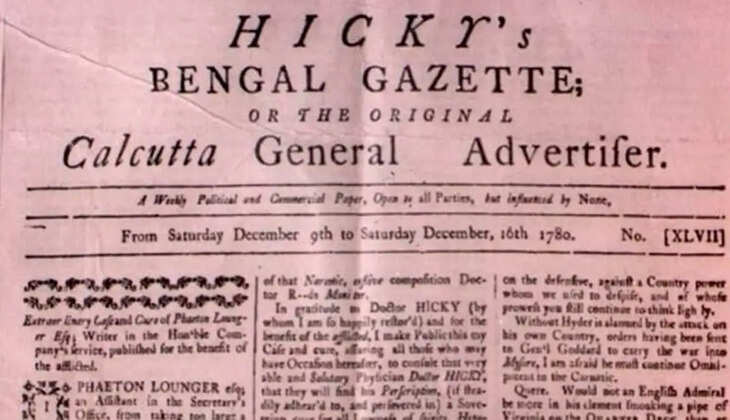
The press in India saw the light of day on 29 January 1780 at the hands of James Augustus Hicky. That which came into being was The Bengal Gazette, also known as The Calcutta General Advertiser. What the public came to call Hicky’s Gazette, this weekly newspaper which he put out, was the beginning of print journalism in India.
The press, which was of a very basic structure, put out only two pages that had large-scale ads. Although it was a small-scale publication that did not have much to offer, it gained great popularity with the British officials and residents. What made it stand out was Hicky’s no-holds-barred approach, which he took in bringing to light the issues of corruption and the administration, which was under British rule, a very rare thing to do at that time.
Early Growth of Newspapers
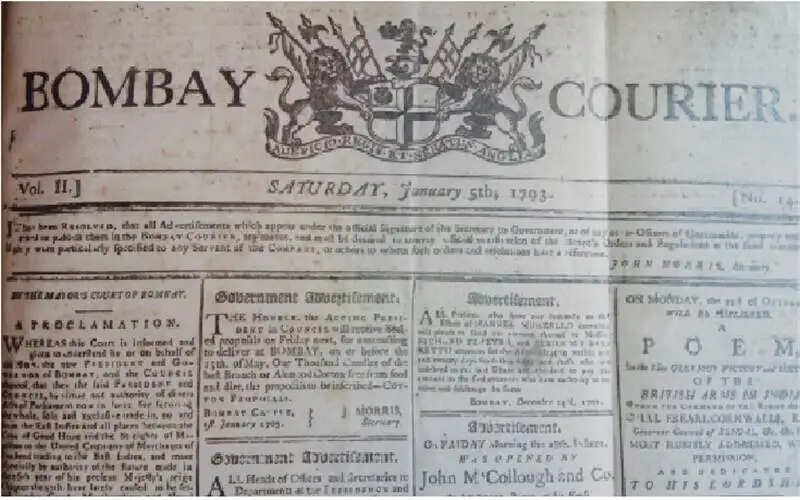
Following the success of The Bengal Gazette, other newspapers came into being. That same year saw the launch of The Indian Gazette, which was followed by The Calcutta Gazette in 1784, The Bengal Journal in 1785, and The Madras Courier in 1785.
In early times, newspapers were very much in British hands. The press was not free, and out of 500 who criticized the government were to be avoided. Also, as a result, many newspapers put out large amounts of ads and official notices instead of independent reportage.
Rise of Indian Voices in Journalism
In 1821, a major turning point came when social reformer Raja Rammohan Roy put out Sambad Kaumudi, which was a Bengali weekly. What made this press publication different from the past was that it covered social, political, and religious issues,s which in turn reflected the issues of Indian society.
At the same time, Bombay Samachar was put out in Gujarati, which we are still publishing today. These newspapers also played a key role in shaping public opinion and spreading awareness about social reforms and colonial policies.
Growth in the 19th Century
In the 19th century, Indian journalism saw great growth. We had the emergence of what is today The Times of India, which at the time was The Bombay Times, Amrita Bazar Patrika, and The Hindu, which also began in that era.
While some newspapers in the early days did support the British rule, large scale Indian owned press instead promoted nationalism and reform. The press, over time, became forums for political talk, critique, and the putting forward of revolutionary thoughts.
Role in Nationalism and Social Change
As we went on, newspapers became agents of change. Publications like Amrita Bazar Patrika played a key role in awakening national sentiment and supporting the freedom struggle.
Journalism, which once was the domain of reporting, broke out to become a voice for the people. It played a role in bringing together diverse communities and in the resistance against colonial rule.
Technological Advancements and Expansion
At the start of the 20th century, technology advanced in the field of printing and distribution. We saw growth in regional languages in newspapers, which in turn increased access and readership.
Through the years, newspapers also transitioned from reporting only on social and political issues to also including business, entertainment, and lifestyle news. Although they became commercialized, which changed their model somewhat, they still mainly function as informers of what is going on in the world.
Conclusion
In 1780, with The Bengal Gazette, we see the beginning of what would grow to be a very large and influential newspaper industry in India. From a 2-page weekly to today’s multi-edition daily papers, Indian journalism has come very far.
Each year on the 29th of January, we see a celebration of the National Newspaper Day in India to mark the founding of our country’s press. Through the years, newspapers have grown with our society, dynamic, diverse, and ever progressing.