

How to Design Warehouse Logistics Around Intelligent Automation in India
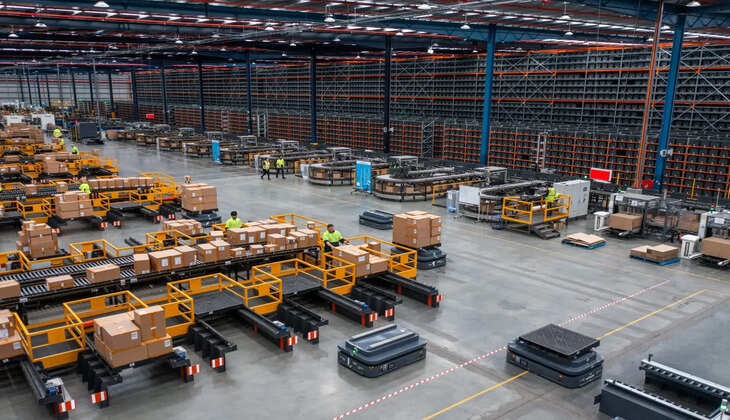
Warehouses in India are undoubtedly taking a new turn. More orders are being handled by businesses than before, and a wider variety of products are being managed. There is also an increased emphasis on fulfilling orders quickly, covering Tier 1, Tier 2, and Tier 3 cities. In all these aspects, there is a change in the way warehouses are being operated. The traditional methods, which were highly dependent on manual work, are finding it hard to keep up.
To maintain efficiency, warehouse logistics must be designed based on intelligent automation. This is not just a matter of incorporating machines into existing spaces, but also about thinking differently about the entire warehouse operation. There must be a smooth, connected operation among layouts, workflows, as well as systems. In India, logistics costs remain high, and labour availability is becoming less predictable, which is why businesses are looking to build systems that are flexible and able to handle the changing demands without compromising speed.
How Should Warehouse Layouts Be Designed for Automation-First Logistics in India?
When planning a warehouse to be automated, the main idea should be to keep everything simple and organised. Separating the area according to the frequency of movement of the items also plays a significant role. Items that are frequently moved can be kept closer to the picking area, whereas items that are not frequently moved can be kept further away.
It is also important to ensure that there are clear and direct paths for goods to move from one point to another within the warehouse. This ensures that when all the areas, such as the incoming, storage, and outgoing sections, are logically connected, efficiency in the warehouse improves. Space should also be left for robots to move, recharge, and even pause when needed. This helps ensure smooth operations within the Indian warehouse.
How Do You Align Material Flow Design with Intelligent Automation Systems?
The material flow needs to reflect how work happens on the floor. This means it is important to consider how goods move from receiving to storage, to picking, and finally to dispatching. Once the flow is understood, automated systems can be positioned to support it while ensuring no delays or confusion.
It is important to make sure that all systems work together seamlessly without any friction. This means that conveyors, sortation systems, and robotics need to be able to transfer goods from one stage to another efficiently. The system needs to be able to adapt in case of a change in the volume of orders or a change in priority. This ensures stability in a warehouse, whether it is a busy period or not.
What System Architecture Is Required to Support Intelligent Automation in Warehouse Logistics?
Having a robust system setup is important for efficient management of automation in warehouse logistics. There needs to be integration among different software layers to facilitate the fast and efficient flow of information in the warehouse.
Event-based systems are particularly important in helping to trigger actions based on real-time data, such as order status or inventory levels. This helps minimise any need to make manual decisions, ensuring that all processes continue seamlessly without any delays. At the same time, dashboards offer a simple view of performance, which helps in tracking progress and detecting any possible issues early. This ensures that warehouse activities are controlled appropriately.
How Do You Design for Scalability and Peak Handling in Indian Warehouse Logistics?
The warehouses in India face a surge in demand, especially during festivals and sales. It is vital to design systems that can support peak demands without disruptions.
-
Modular automation makes it easier to increase capacity step by step as demand grows.
-
Flexible storage supported by storage racking systems helps adjust to changing inventory levels.
-
Buffer zones provide extra space to manage higher volumes during busy periods.
-
Planning for peak demand ensures operations continue smoothly even under pressure.
The above steps are practical and assist warehouses in being prepared for unexpected peak demands, hence reducing the chances of disruptions.
How Addverb Enables Automation-First Warehouse Logistics Design
The warehouse logistics solutions offered by Addverb are focused on integrating software and automation systems. Its platform helps in coordinating robots, conveyors, and storage systems in a way that ensures no time is wasted in the process.
The company also provides storage and material movement solutions that help in better utilisation of available space. This is particularly important in an environment that is fully automated, and efficiency is required at all levels. Addverb's approach enables businesses to transition from a completely manual system to an automated one while maintaining performance.
Conclusion
When designing warehouses with intelligent automation, there needs to be a clear focus on layout, material flow, and system integration. Having a proper approach towards warehouse logistics can be helpful in achieving maximum efficiency and meeting the varying needs of different regions in India. The integrated solutions provided by Addverb aim to help businesses achieve an efficient and future-proof warehouse system.