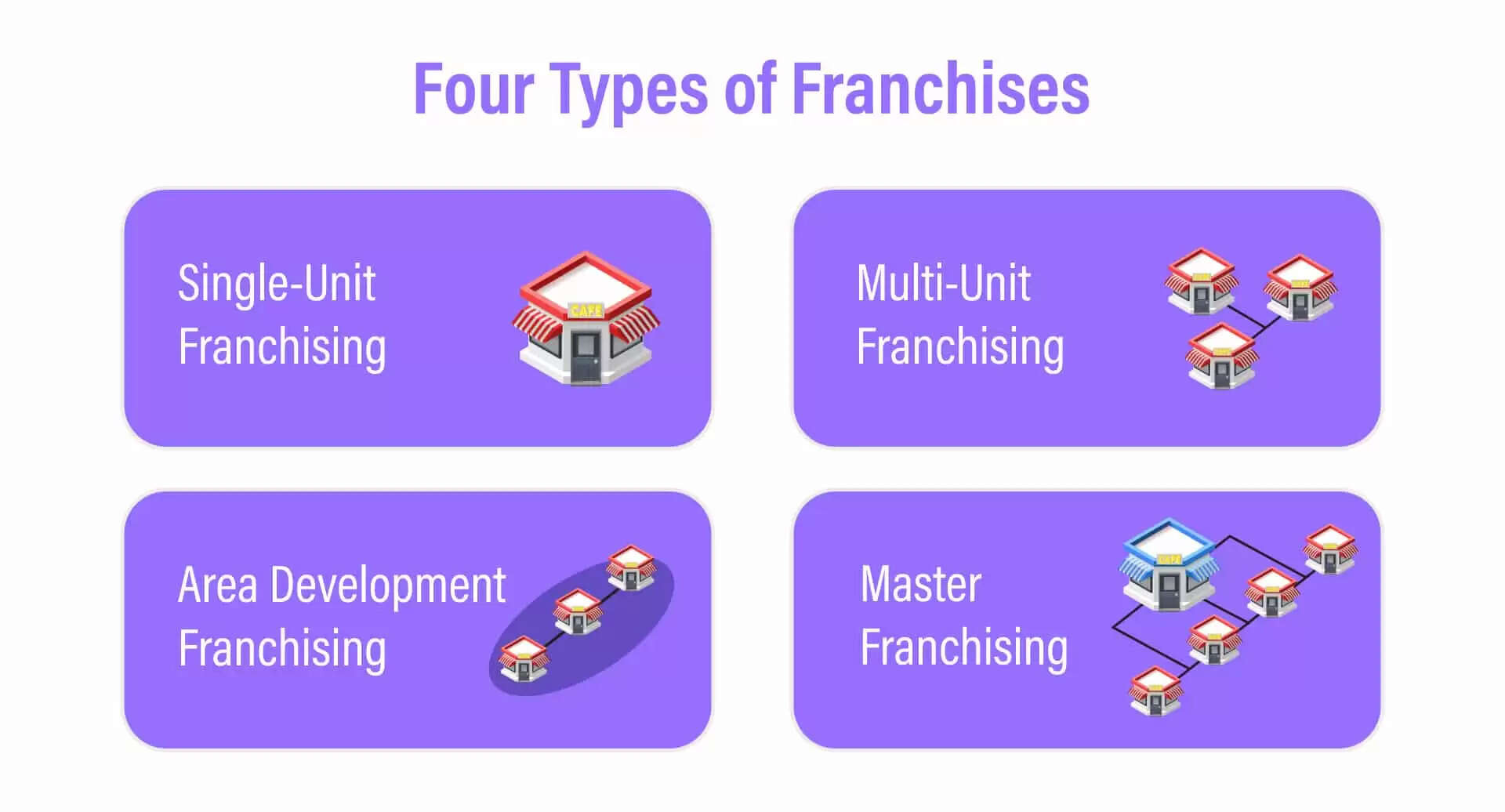


Understanding Different Types of Franchise Business Models
Franchising presents a means for a business idea whereby the entrepreneur comes to be under the wings of an already established brand name, hence tapping into a system that has been tested for success. The franchise types take into consideration different levels of investments, operational styles, and business goals. A potential entrant into the franchising world must understand these models.
Business Format Franchise
This is the most well-known franchise format. In a business format franchise, the franchisor provides a complete operational system, including the brand name, marketing strategies, training, and continuous support to franchisees. Under the regulation of these accepted methods, the franchisees run their own businesses, whether fast food, retail outlets, or service-based businesses, with consistent quality assurance at all locations. The benefit for a franchisee is that he can rely on the proven system while gaining from the brand name.
Product Distribution Franchise

In this model, the franchisee is responsible for selling the franchisor’s products. The franchisor manufactures the products, while the franchisee handles distribution and retail. This model is common in industries like automotive dealerships, fuel distribution, and beverage bottling. Franchisees benefit from selling well-known products and enjoy brand trust, while focusing mainly on sales and customer service.
Manufacturing Franchise
Manufacturing franchises allow franchisees to produce and sell products using the franchisor’s brand and trademark. Common in sectors like food processing, apparel, and other standardised products, franchisees are responsible for production and distribution within a particular territory. The franchise model is supposed to suit an entrepreneur who has operational skills and is interested in manufacturing processes.
Operating Job Franchise

These franchises are also called owner-operator franchises, meaning that the franchisee must be involved in operating the business. It is usually a low-investment opportunity and best for persons looking to remain active in business opportunities. Examples included within this type are cleaning services, mobile repair units, and personal service businesses. Depending on costs for overhead, various job franchises have to put the stake of success in the franchisee’s hand; this actually necessitates active participation from the franchisee, in some others, less.
Master Franchise
Master franchising allows a franchisee to establish in a large territory and further sub-franchise to other entrepreneurs. This system enables franchisors to rapidly multiply without having to directly manage individual units. Master franchisees, thus, train and support sub-franchisees and ensure that superior levels of performance are met within the territory.
Conversion Franchise
Conversion franchise involves converting existing independent businesses into franchise units. The franchisor provides branding, marketing, and operational support, thereby allowing independent owners to affiliate with a bigger network. This gives franchises a rapid mode of growth while providing the benefits of an established industry to existing businesses.
Each franchising model comes with its own set of pros and cons. The appropriate model depends on your capacity for investment, the level of involvement desired, and long-term goals. Choosing correctly improves your chances of success and a rewarding business experience.
About the Author