

Know About Pistachio Farming in India: How to Grow, Setup Cost, Profit In 2025
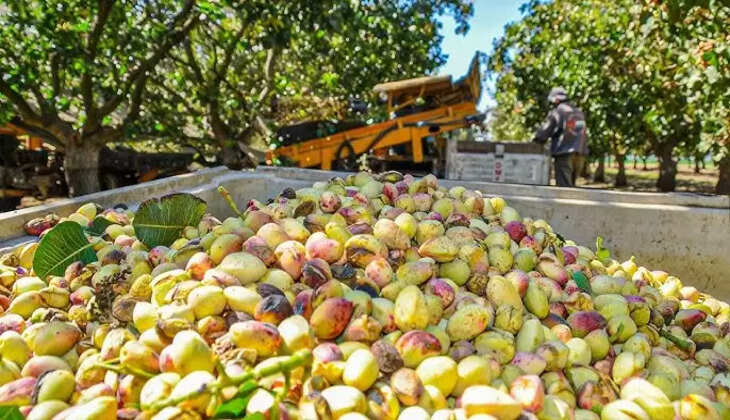
Pistachio, frequently called the" Green Gold," is one of the world's most precious nuts, commanding a decoration price due to its high demand, especially in India, where nearly 90 of consumption is met through significances. For Indian growers, this high domestic demand and decoration pricing present a unique and potentially economic agrarian diversification occasion. While a long- term investment, ultramodern husbandry ways are making pistachio civilization decreasingly feasible in select Indian regions.
Then's a comprehensive companion to understanding pistachio husbandry, its setup, and its profitable eventuality in the current request script of 2025.
Part 1 How to Grow Pistachios in India
Pistachio( Pistacia vera) civilization is largely dependent on specific climatic and soil conditions. Success hinges on opting the right position and scrupulous operation.
1. Climatic and Soil Conditions
Climate is crucial Pistachio trees thrive in a classic arid orsemi-arid climate with distinct seasons.
Cold Winters( Chilling Requirement) They bear a minimum of 600 to 1,000 nipping hours( temperatures below 7 ∘ C or 45 ∘ F) during downtime for proper cub break, flowering, and fruit set.
Hot Summers Long, hot, and dry summers( temperatures up to 35 ∘ C to 40 ∘C) are essential for proper nut growing and kernel development.
Avoid Humidity High moisture and inordinate downfall during the growing season increase the threat of fungal conditions and reduce nut quality.
Suitable Regions Traditionally, Jammu & Kashmir is naturally suited. still, airman systems and marketable interest are growing in dry areas of Himachal Pradesh, Rajasthan, and indeed corridor of Gujarat and Maharashtra that meet the temperature criteria.
Soil Type The ideal soil is deep, well- drained flaxen gault
with a slightly alkaline pH( range of 7.0 to 7.8). The tree has a strong taproot system and is largely sensitive to waterlogging, which can beget root spoilage.

2. Planting and Propagation
Factory Material Always use pukka grafted seedlings from dependable nurseries. Grafted trees start bearing fruit much earlier than those grown from seed.
Dioecious Nature( manly-womanish rate) Pistachios are dioecious, meaning manly flowers and womanish flowers grow on separate trees. For effective wind pollination, both must be planted. The standard rate is 1 manly tree for every 8 to 10 womanish trees.
Planting Season and Distance
Season Late downtime to early spring( February- March) during the tree's dormant period.
Distance A common distance for standard vineyards is 6m × 6m, allowing about 112 trees per acre. High- viscosity planting is also being explored to maximize yield.
3. operation and Care
Irrigation Though failure-tolerant, harmonious humidity is vital during the flowering and fruit- filler stages. Drip irrigation is largely recommended for effective water use and to help waterlogging.
Fertilization Kin trees do n't bear toxin in the first time. From the alternate time, a balanced governance of Nitrogen, Phosphorus, and Potassium( NPK), supplemented with organic ordure and biofertilizers, is used.
Pruning Trees are generally pared to an open- vase shape to allow maximum sun penetration, which aids in flower conformation and fruit set. Pruning is generally done in downtime.
Harvest Trees begin to bear fruit after 5 to 7 times, with peak product reached after 10 to 12 times. Harvest occurs when the external housing turns sanguine and splits( August to September). Pistachio trees parade an alternate bearing pattern, with heavier crops in alternate times.
Part 2 Setup Cost and Profit Implicit( Estimate for 1 Acre in 2025)
Pistachio husbandry is a long- term adventure. The original investment is significant, but the high returns in after times make it a compelling proposition.
1. Estimated Setup Cost( original Investment Per Acre)
Cost element Details Estimated Cost( INR)
Land Preparation Tilling, soil testing, contouring ₹ 20,000- ₹ 40,000
Planting Material 112- 120 grafted seedlings( high- quality) ₹ 70,000- ₹
Drip Irrigation Setup Installation of an effective system ₹ 50,000- ₹ 80,000
hole Digging & Planting Labor Labor for digging recesses and planting ₹ 15,000- ₹ 25,000
Diseases & Ordure( Time 1) Organic ordure and original diseases mulch ₹ 10,000- ₹ 20,000
Fencing/ Staking Protection for youthful shops ₹ 10,000- ₹ 30,000
Total Estimated original Investment( Time 1) Approximate Range ₹- ₹
2. Periodic conservation Cost(Post-Setup)
Cost element Details Estimated Cost( INR)
Irrigation & Electricity Water charges and running drip system ₹ 15,000- ₹ 30,000
Diseases & Pest Management Annual NPK,micro-nutrients, organic fungicides ₹ 20,000- ₹ 40,000
Labor Pruning, weeding, general keep ₹ 30,000- ₹ 50,000
Total Estimated Periodic conservation Approximate Range ₹ 65,000- ₹
3. Profit Implicit( Long- Term after Maturity)
Pistachio husbandry is known for its high return on investment( ROI) once the estate matures.
Metric Details( After 10- 12 Times)
Average Yield per Mature Tree 10 to 20 kg of nuts annually( alternate bearing)
Estimated Yield per Acre 1,000 to 2,000 kg( varies by time and operation)
Current Market Price( Wholesale, High Quality) ₹ 1,200 to ₹ 1,800 per kg( varies)
Estimated Gross Annual Income( 1,500 kg/ acre at ₹ 1,500/ kg) ₹
Estimated Net Periodic Profit ₹( Abating conservation, processing, and harvesting costs)
Gestation Period The break-even point is generally reached between the 6th and 8th time when accretive income surpasses original and running costs.
Life A healthy pistachio tree can produce for 50 to 60 times, offering a steady, high- income source for generations.
Conclusion A High- Value Future for Indian Agriculture
Pistachio husbandry is a high- threat, high- price investment. The primary challenges are the long gravidity period and the demand for specific, well- defined climatic conditions — especially the nipping hours. still, with harmonious high prices and strong, growing domestic demand, it offers one of the most promising avenues for high- value agrarian product in India's thirsty andsemi-arid zones.
For growers with the land, tolerance, and access to the necessary specialized knowledge( particularly concerning grafting and technical care), pistachio civilization in 2025 represents an occasion to transition from traditional crops to a luxury commodity, significantly boosting ranch income and contributing to India's tone- adequacy in dry fruits.