

Know About Sunflower Farming in India A Complete Guide for 2025
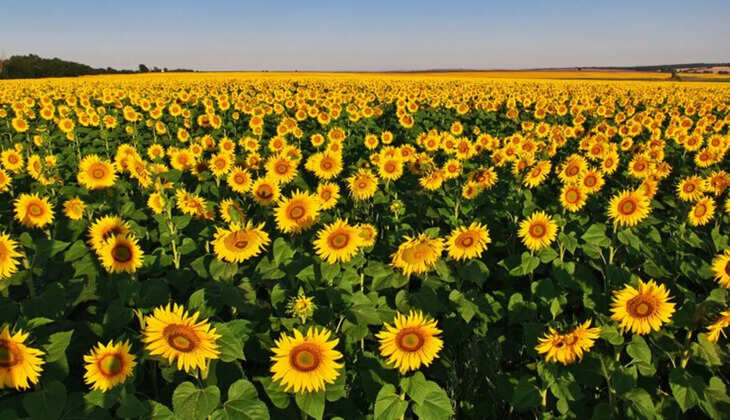
Know Almost Sunflower Cultivating in India: A Total Guide for 2025
Sunflower cultivation in India plays a crucial part in reinforcing the country’s edible oil segment and serves as a productive venture for numerous farmers. With the government taking dynamic steps to advance sunflower development and decrease reliance on imported edible oils (Monetary Express, April 28, 2025), adopting cutting-edge development procedures has gotten to be essential. This total direct for 2025 diagrams everything you require to know approximately effective sunflower cultivating in India—from seed determination to harvesting.
The Significance of Sunflower Cultivation in India
Sunflower is one of the most profitable oilseed crops, ranking fair underneath nourishment grains in financial noteworthiness (pjtau.edu.in). The major sunflower-producing states include Karnataka, Andhra Pradesh, Maharashtra, Bihar, Odisha, and Tamil Nadu (Testbook, Walk 26, 2025). The National Mission on Consumable Oils is advancing sunflower development by advertising financial support setting up oil processing units, and supporting farmers to increase production and profitability.
Ideal Climate and Soil
Sunflowers flourish best in warm and sunny climates with temperatures between 20°C and 30°C. The trim develops well in well-drained loamy soil, rich in natural matter. Agriculturists ought to furrow the field 2–3 times to get fine tilth, and blend 5–10 tons of yard fertilizer (FYM) per hectare to upgrade fertility.
Seed Choice, and Prevalent Varieties
Choosing the right crossover seed is vital for higher yields and infection resistance. The driving assortments prescribed for 2025 include:
KBSH-44 – Broadly versatile with tall oil content.
DRSH-1 – High-yielding and appropriate for numerous regions.
RSFH-700 – Prescribed for Karnataka.
KBSH-78 – Develops in 82–85 days with tall and attractive potential.
TilhanTech-SUNH-1 & SUNH-2 – Modern cross-breeds with early development and infection resistance (Krishi Jagran, February 28, 2025).
Sowing and Water System Practices
Sowing time changes by season—Kharif (June–July), Rabi (October–November), and Summer (January–February). Keep up a push dividing of 60 cm and plant dividing of 30 cm, with seeds sown 3–4 cm deep.
For the water system, guarantee satisfactory moisture, particularly during blooming and seed filling stages. The Dribble water system is suggested for much better water utilization productivity. As a rule, 3–4 irrigations are required, depending on soil and rainfall.brilliant
Nutrient and Weed Management
Apply supplements as per the soil test results. For the most part, 60–90 kg Nitrogen, 60–90 kg Phosphorus (P₂O₅), and 40–60 kg Potassium (K₂O) per hectare are exhorted. Part nitrogen applications between sowing and pre-flowering stages. For weed control, perform manual weeding 2–3 times or utilize Fluchloralin as a pre-emergence herbicide.
Pest, Malady, and Gather Management.
Common bugs include aphids leafhoppers, and head borers, whereas major infections are wool mold Alternaria leaf spot and stem decay. Utilize safe assortments, follow after edit revolution and treat seeds with fungicides for protection.
Harvest when the back of the bloom head turns yellow and the seeds have 12–15% dampness.
Growth Potential and Future Outlook
Currently, sunflower development covers 1.48 million hectares in India (khetigaadi.com), with an average yield of 0.6 metric tons per section of land. With progressed cross-breed seeds and superior procedures, yields can reach 1.5–2.5 tons per hectare. The government’s target to cut consumable oil imports from 57% to 28% by 2032 places sunflower at the heart of India’s oilseed transformation (Budgetary Express, April 28, 2025).
Conclusion
Sunflower cultivation offers Indian agriculturists an amazing opportunity to increase their income and reinforce the country’s edible oil production. By embracing high-yielding cross-breeds, advanced water systems, and government-supported homes, ranchers can open the full potential of this era in 2025 and past.