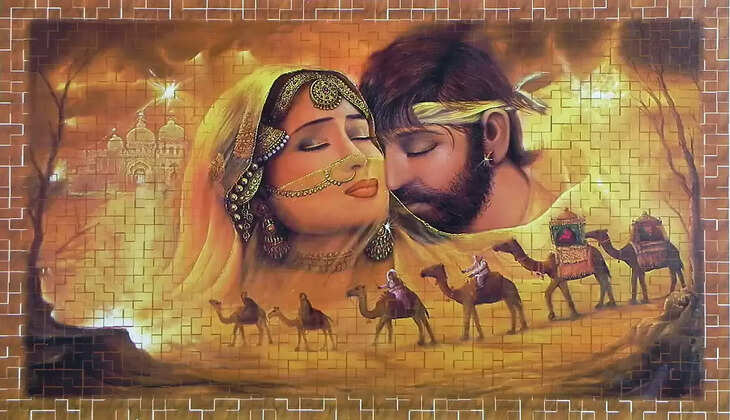
Laila Majnu is not only a love tragedy, but it is one of the strongest love legends in world history. This story originated in the deserts of Arabia. It was later adapted into Persian, Arabic, and South Asian literature, embodying a love so strong that it overcomes reason, society, and even life itself. With their love, Laila and Majnu have always been an image of innocence and unconditional devotion to their beloved, a feeling never affected by the material world.
Who Were Laila and Majnu?
The myth dates back to 7th-century Arabia. Qays ibn Al-Mulawwah, the talented poet became so much in love with a beautiful girl known as Layla bint Mahdi. They fell in love when both were young, and their love was so popular that it was given much publicity in the love poems of Qays. He was always obsessed with Layla to the extent that he was known as Majnun, which means madman in Arabic. Qays was in love with each other, unlike a casual romance, but in a spiritual way, which was consuming and absolute.
The Real image of Laila Majnu
Love Forbidden by Society
Although both of them love each other, Layla's family did not approve of Qays because of his increasing status as a crazy lover. In the traditional Arab society, it was perceived that it was disgraceful to declare love publicly. Layla later got married off to another man. Thus, the lovers were separated forever. This sadistic turn of the circumstances was the starting point of the change that occurred to Majnu, who abandoned society and became a vagrant who wanders in the wilderness and writes poetry dedicated to Layla alone.
Majnu’s Madness: Love as Devotion
The madness experienced by Majnu was not madness but a great spiritual submission. He retired into the world and lived in deserts and high places in honor of Layla, saying her name as a prayer. His affection became a divine experience--without a physical desire. Later on, the Sufi philosophers used Majnu as the metaphor of the human soul that is striving to be united with the divine.
Tragic End, Eternal Legacy
Layla was married, but she never ceased to love Majnu. She has led an emotionally captive life and died as a result of grief. When Majnu heard of her death, he fell upon her grave and soon joined her in death, though not in life. Their tragic fate made them eternal heroes of that immortal love.
Cultural Impact and Literary Immortality
The tale has become known throughout the world in a 12th-century Persian epic of Layla o Majnun by Nizami Ganjavi. It has since inspired many poems, paintings, films, and songs throughout the Middle East, India, Pakistan, and other countries. Laila Majnu is still the greatest example of unconditional love, even in modern times.
Conclusion: Why Laila Majnu Still Matters
The actual tale of Laila Majnu lingers on as it appeals to the fundamental human desire, which is the need to love unconditionally. It makes us remember that love is not about having but being devoted, not consummating but sacrificing. Laila and Majnu are timeless reminders of love that require no conditions but reward all in a world of convenience.