From Single Frames To Moving Stories Without Editing Tools
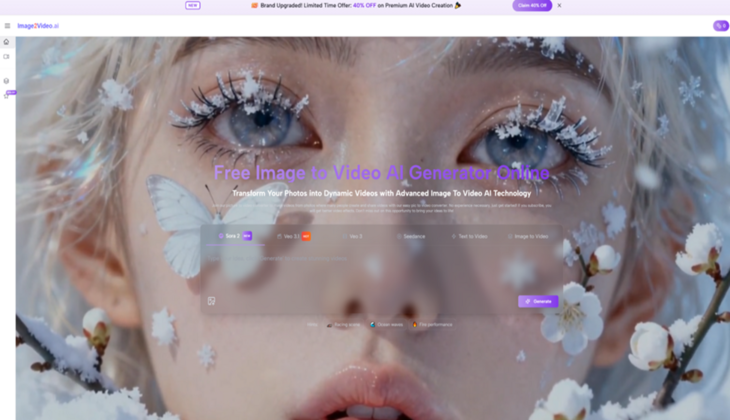
There is a subtle difference between editing a video and imagining one. Most tools are designed for the former, not the latter. What stood out to me when using Image to Video AI is that it aligns more closely with imagination than with editing.
You begin with a still image, but you think in motion.
Why This Changes The Creative Entry Point
The first step is no longer technical—it is conceptual.
Images Become Starting Points Instead Of End Products
A photo is no longer the final output. It becomes:
- a base scene
- a structural reference
- a foundation for motion
Motion Is Described, Not Constructed
Instead of building movement frame by frame, you define:
- how things should move
- how the scene should feel
This reduces friction significantly.
Understanding The Internal Logic Of Generation
Language Drives Transformation
Prompts act as translation layers between:
- human intent
- machine interpretation
The Role Of The Base Image
The image anchors:
- composition
- perspective
- subject relationships
Everything else adapts dynamically.
Model Variations Influence Results
Different models seem to impact:
- cinematic quality
- motion realism
- stylistic interpretation
Even without technical controls, differences are visible.
How The Process Works Step By Step
Three Practical Steps
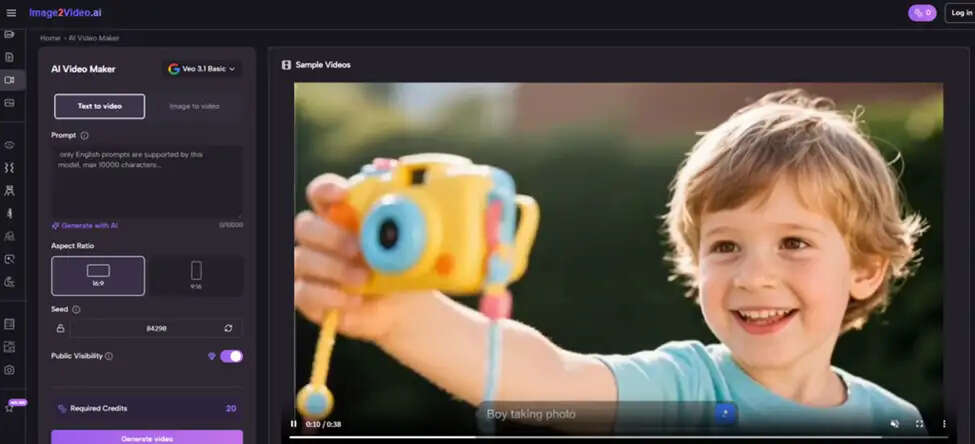
Step 1 Upload Your Image
Provide a visual starting point.
Step 2 Write A Motion Prompt
Describe movement, environment, and tone.
Step 3 Generate The Video
Wait for processing and download the result.
The simplicity is intentional.
Comparing With Conventional Video Production
| Factor |
AI-Based Method |
Traditional Workflow |
| Setup Time |
Minimal |
High |
| Technical Skill |
Low |
High |
| Creative Control |
Medium |
High |
| Speed |
Fast |
Slow |
| Flexibility |
High |
Medium |
Each method serves different needs.
Where This Approach Fits Best
Content Creation For Social Platforms
Fast turnaround is often more important than perfect detail.
Visual Experimentation
Trying multiple ideas quickly becomes possible.
Memory And Story Reconstruction
Turning photos into motion adds emotional depth.
Recognizing The Limitations
Prompt Sensitivity
Results depend heavily on how clearly the idea is described.
Motion Imperfections
Some outputs may feel slightly artificial.
Iteration Is Part Of The Process
Multiple attempts are often needed.
These are part of the current state of generative tools.
How Photo To Video Expands Creative Thinking
The idea of Photo to Video introduces a new workflow:
- start with an image
- imagine motion
- describe it
- let the system interpret
This removes several steps from traditional pipelines.
What Creators Should Pay Attention To
Clarity Over Complexity
Clear prompts often outperform complex ones.
Iteration Over Perfection
Quick iterations lead to better outcomes.
Observation Over Assumption
Watching how the system responds helps refine future inputs.
Why This Direction Matters
The transition from editing to describing is significant.
It lowers the barrier to entry while changing the nature of creative work.
The result is not just faster production—it is a different way of thinking about motion itself.