

Top 10 Common Indian Surnames & Their Spellings In 2025
Indian surnames are not just identifiers of family; they denote rich family, caste, geographic, and linguistic heritage about the stunning diversity of the country. With thousands of languages and traditions that have stood the test of time, even very minor differences in spelling can signify migration, colonisation, or merely phonetic spellings. Surnames only started becoming widespread during the British settlement period, at that time when naming conventions began combining traditional Indian practices with Western-based names like: "first name + last name"
Let's take a look at ten common Indian surnames while noting some of the spelling differences amongst identities:
Patel, originally from Gujarat, denotes a village headman or the head of landowners. In Maharashtra, Patel is often rendered as Patil.
Sharma, literally meaning "bliss" or "one who protects," is a common Brahmin surname. In Assam, Sharma can also be written as Sarma and sometimes Sarmah.
Singh, which means "lion", is commonly used amongst Sikhs, Rajputs, and many other communities. Spelling variations include Sengh, or Singgh! These no doubt derive from local or phonetic variations.
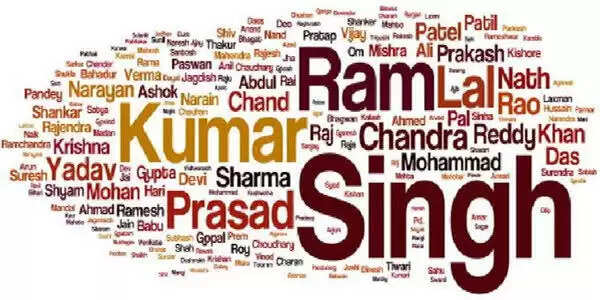
Das (the devotee) is usually found in eastern and northern India. There are variations such as Dass or Daash, which are transliterations stemming from Bengali, Punjabi, or English forms.
Yadav, a surname associated with the descendants of Krishna, is found mostly in Uttar Pradesh and Bihar. However, among dialects, the surname Yadav is also varied as Ndaduv or Yadaav.
Gupta means "protector" and is used as a surname with various castes like Brahmin, Baniya, and Kayastha. The same surname may appear as Gupt or Guptaa, and still means "protector".
Kapoor (or Kapur), which means "camphor," is a surname commonly used by Punjabi Brahmins, but the spelling Kapuhr is also found in some westernised texts.
The surname Khan, common to many Muslims, but also among some Sikhs and Hindus, is sometimes spelt Khann, or Khaan, in areas that took on Persian or Arabic traditions. Family names that derive from the princely title Shah are an example, where Shah has variants, such as Sahu or Sheth, that are commonly used in Gujarat and Rajasthan, with Shah meaning "king" or "honest merchant." Chakraborty is an example of a surname that has different but related forms, such as Chakrabarti, Chakravarty, or Chakrabartty and is a Bengali Brahmin surname that means, "one whose chariot wheels roll unhindered."
Also, family names in South India, and particularly Tamil Nadu or Karnataka, are not necessarily familial so much as they are patrilineal initials from the first name of the father rather than names fixed as family names. Many individuals of South Indian descent did not embrace or adapt to Western naming principles and had all forms of names like symbols or patterns; therefore, they later adopted fixed names or initials that indicate bloodlines in documentation.
There are innumerable spelling variations of the surname, due to a dialectal variation in spelling, a transliteration of a regional script to English, standardisation from British colonial times, or personal preference (numerology, simplification).
One single variation, a trailing "a," a repeated consonant, or a phonetic twist, can signal vast cultural differences. Spelling a surname correctly is an indication of cultural competence, respect for cultural heritage, and identification in a culture where the surname is a cultural characterisation of ancestry, religion, region, and history.
When we acknowledge all these differences, such as Patel to Patil, or Sharma to Sarmah in our posts, we acknowledge the interplay in our shared cultural history and how every name is a lineage of origin, migration, caste, and community.