Image Credit: Times of India

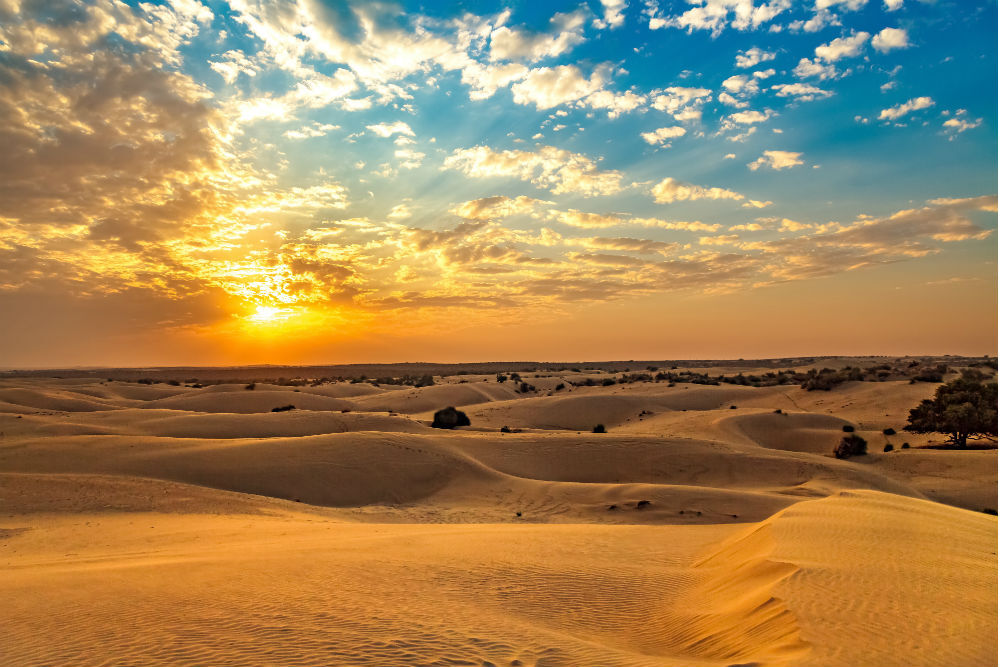
The Great Indian Desert, or Thar Desert, is one of India’s most iconic desert natural landscapes. The Thar extends beyond its sands of gold across the borders of neighbouring states, and it is much more than a wasteland. It hosts colourful cultures, historic forts, unique wildlife and millions of people who have lived through one of the world’s most difficult climates.
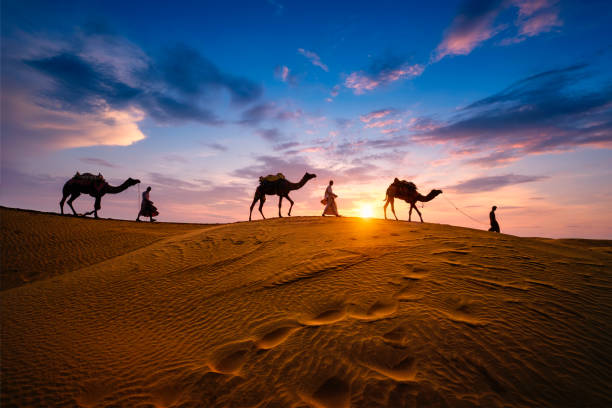
When I visualise the desert of Thar, what comes to my mind is the awe-inspiring camel caravans at sunset near Jaisalmer. Beach images of endless golden dunes make me think of the natural beauty that can be found even in the driest area of the world. It’s one of those places which any traveller must see at least once.
Where is the Thar Desert Located?
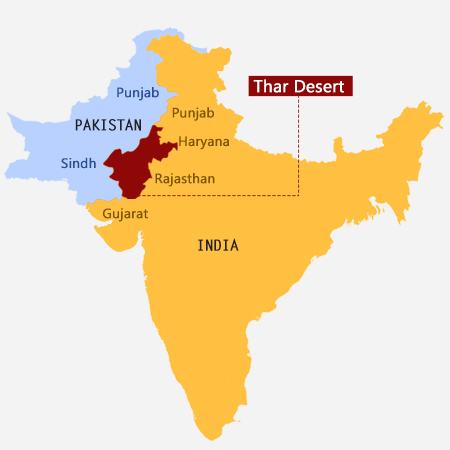
The Thar Desert is located in the northwest of India and extends into the southeast of Pakistan. Approximately 85% of the desert is in India, and the other 15% is in Pakistan. The desert is primarily spread in the state of Rajasthan and extends in some parts of Gujarat, Punjab and Haryana in India. It covers about 200,000 sq. km., which is India’s largest desert.
Thar Desert Map Overview
So, if you glance at a map of India, the Thar Desert seems to be located in the western part of Rajasthan, right on the border between India and Pakistan. It is bordered by:
- The eastern flank of the Aravalli Range
- Indus Basin towards Pakistan
- The Rann of Kutch in the south
- In the north, the Punjab plains.
The area has been significant in history for trade, defence, and cultural exchange.
Interesting Facts About the Thar Desert
1. India’s Largest Desert
The Thar Desert is the largest desert in India and one of the world’s largest subtropical deserts.
2. World’s Most Densely Populated Desert
The Thar is different from other deserts like the Sahara, which are inhabited by millions of people. It is the most populated desert in the world, having very dense villages, towns, agriculture and traditional communities.
3. Home to Massive Sand Dunes
It is characterised by impressive dunes which can reach heights of more than 150 metres in some areas in the south, a popular spot for tourists and photographers.
4. A Desert Rich in History
The evidence of archaeology shows that tribes of olden times lived around the Thar thousands of years ago. The area has a close association with the history of the Indus Valley Civilisation and still has interesting archaeological finds.
5. Unique Water Sources
There is less water, but the Luni River is the main desert river. It starts in Rajasthan and ultimately vanishes in the marshy areas of Gujarat without entering the sea.
Climate of the Thar Desert
The Thar experiences an extreme climate.
- The weather is often hot in the summer, with temperatures reaching over 45°C.
- Winters can be surprisingly cool, especially during the night.
- The annual rainfall generally is less than 250 mm, and the majority of rain occurs during the southwest monsoon (July to September).
Wildlife in the Thar Desert
In spite of the dryness, the Thar Desert is host to remarkable biodiversity. Some animals that are normally seen here are:
- Indian Gazelle (Chinkara)
- Desert Fox
- Blackbuck
- Desert Cat
- Great Indian Bustard
- Monitor Lizards
- Numerous migratory birds
It has been proven that this ecosystem can thrive in extreme conditions.
Why is the Thar Desert Important?
The Thar Desert is a vital area in the economy and ecology of India.
- It can help in livestock farming, particularly sheep and camel husbandry.
- Rajasthan is India’s leading wool-producing region.
- The tourism industry creates many jobs in desert safaris, cultural festivals, and heritage sites.
- Desert regions are growing quickly in solar and wind power development because of the sun and the available open areas in the desert regions.
Popular Tourist Attractions
The most popular and well-known ones are:
- Jaisalmer Fort
- Sam Sand Dunes
- Khuri Sand Dunes
- Mehrangarh Fort in Jodhpur
- Desert National Park
- Camel Safari experiences
These are the places that would allow you to see the rich culture of Rajasthan and, at the same time, fabulous desert views.
Final Thoughts
The Thar desert isn’t all about sand. It’s resilience, culture, history, biodiversity and the incredible achievement of people in living in difficult places. Whether you are a geography enthusiast, a traveller, or simply curious about India’s natural wonders, the Great Indian Desert continues to surprise visitors with its beauty and significance.
In 2026, the Thar Desert is still a very interesting geographical region in India, a region which is incredibly memorable due to its golden dunes, ancient history, colourful culture and modern development.
About the Author