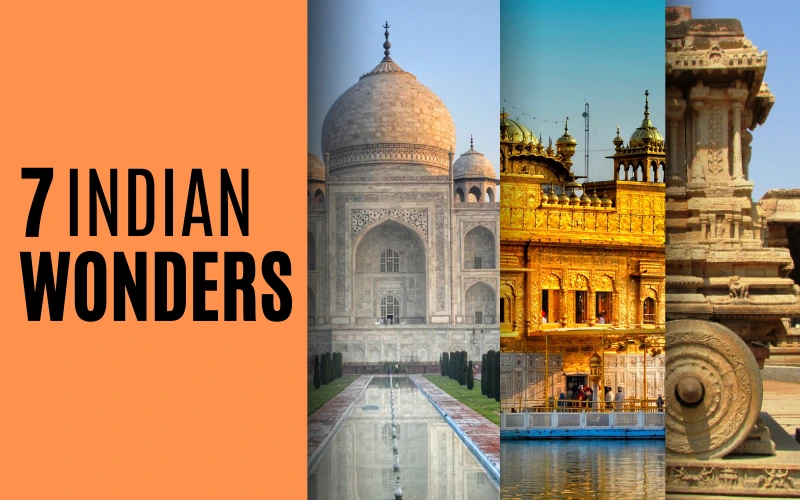

India is a land of extraordinary diversity, where ancient traditions, magnificent architecture, and breathtaking landscapes come together to create some of the world’s most remarkable destinations. Among its countless attractions, the Seven Wonders of India stand out as timeless symbols of the country’s rich history, artistic brilliance, and cultural heritage. From majestic temples and ancient universities to iconic monuments and sacred pilgrimage sites, each wonder tells a fascinating story of India’s glorious past.
Whether you are a history enthusiast, architecture lover, or passionate traveler, these seven wonders deserve a place on your travel bucket list.
Also read: Top 5 Alia Bhatt & Varun Dhawan Movies
1. Taj Mahal, Agra
The Taj Mahal is India’s most celebrated monument and a global symbol of eternal love. Commissioned by Mughal Emperor Shah Jahan in memory of his beloved wife Mumtaz Mahal, this magnificent white marble mausoleum is admired for its perfect symmetry, intricate floral carvings, and exquisite marble inlay work.
Construction began in the 17th century and took more than two decades to complete with the efforts of thousands of skilled artisans. The monument changes its appearance throughout the day, displaying soft pink hues at sunrise, brilliant white during the afternoon, and a silver glow under the moonlight.

Surrounded by beautifully landscaped Mughal gardens and reflecting pools, the Taj Mahal remains one of the finest examples of Mughal architecture and continues to captivate millions of visitors every year.
Highlights
- Located in Agra, Uttar Pradesh
- Built entirely from white Makrana marble
- Symbol of love and architectural excellence
- Stunning views during sunrise and sunset
2. Konark Sun Temple, Odisha
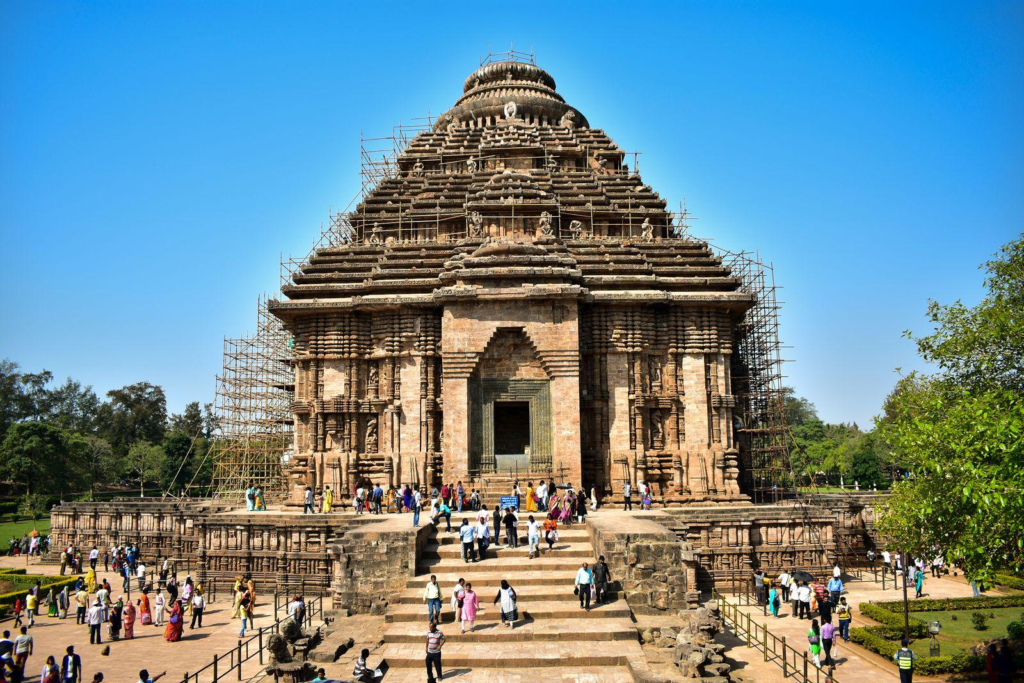
The Konark Sun Temple is one of India’s greatest architectural masterpieces. Dedicated to the Sun God Surya, the temple was built during the 13th century and is designed in the shape of a colossal stone chariot drawn by seven horses with twenty-four intricately carved wheels.
Every corner of the temple showcases remarkable sculptures depicting mythology, celestial beings, musicians, dancers, animals, and scenes from everyday life. The beautifully carved stone wheels are believed to have functioned as ancient sundials, demonstrating the advanced engineering skills of the era.
Although parts of the temple have weathered over time, it continues to stand as a magnificent example of India’s artistic and architectural heritage.
Highlights
- Built in the form of a giant stone chariot
- Famous for its detailed stone carvings
- Features twenty-four ornamental wheels
- Celebrated for its architectural brilliance
3. Nalanda University Ruins, Bihar
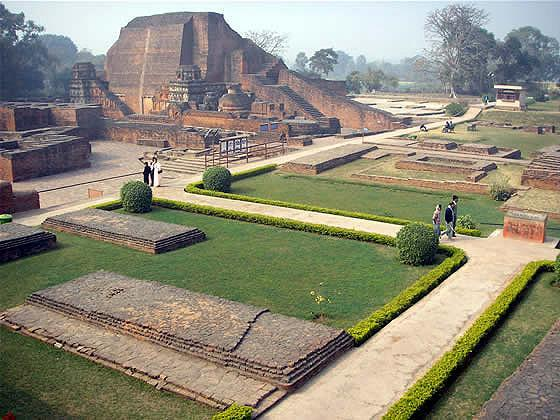
The Nalanda University Ruins represent one of the world’s oldest and most prestigious centers of higher learning. Established during the 5th century, Nalanda attracted scholars from across Asia who came to study philosophy, astronomy, medicine, mathematics, literature, and Buddhist teachings.
The university consisted of monasteries, lecture halls, libraries, temples, and residential quarters spread across a vast campus. It flourished for centuries before eventually falling into decline, leaving behind archaeological remains that continue to inspire historians and researchers.
Today, the ruins offer visitors a glimpse into India’s rich educational legacy and its contribution to global knowledge.
Highlights
- One of the world’s earliest residential universities
- Major center for ancient education and research
- Attracted students from several Asian countries
- Significant archaeological site
4. Khajuraho Group of Monuments, Madhya Pradesh
The Khajuraho Group of Monuments is renowned for its extraordinary temple architecture and intricate sandstone sculptures. Built between the 9th and 11th centuries by the Chandela dynasty, these temples beautifully combine spirituality, art, and everyday life.
Although the temples are often associated with their famous erotic sculptures, these carvings represent only a small portion of the artwork. Most sculptures depict gods, goddesses, musicians, dancers, warriors, and scenes from daily life, reflecting the cultural richness of medieval India.
The remarkable craftsmanship and architectural precision make Khajuraho one of India’s most treasured heritage destinations.
Highlights
- Finest example of Nagara-style temple architecture
- Intricately carved sandstone sculptures
- Rich depiction of Indian culture and mythology
- Popular destination for art and history enthusiasts
5. Golden Temple, Amritsar
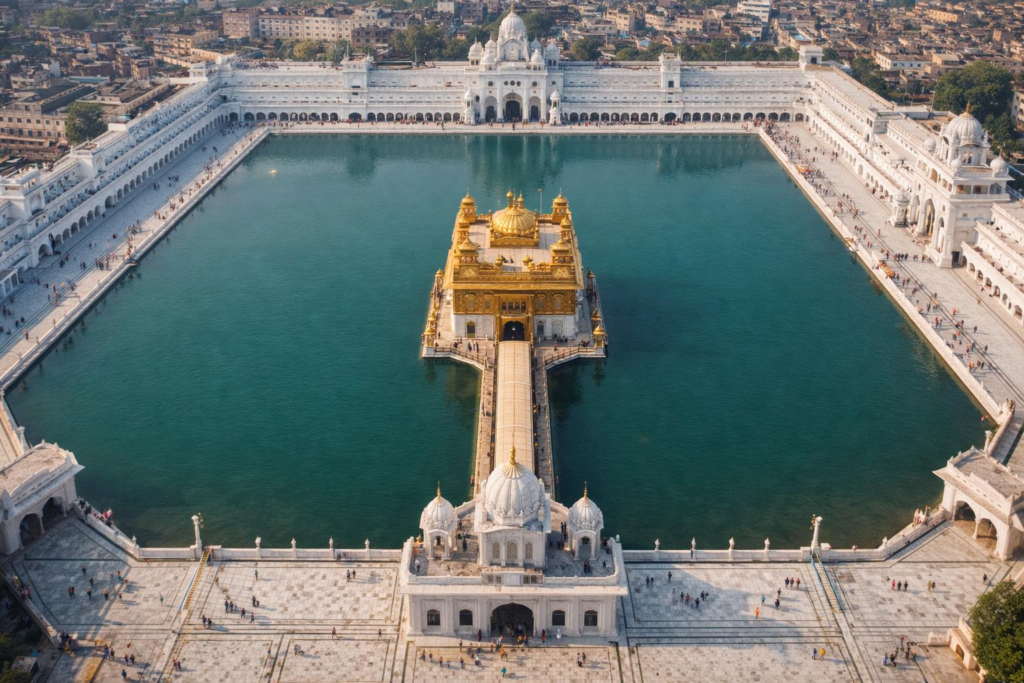
The Golden Temple, also known as Harmandir Sahib, is the holiest shrine of Sikhism and one of India’s most peaceful spiritual destinations. Covered with shimmering gold and surrounded by the sacred Amrit Sarovar, the temple creates a breathtaking reflection that attracts visitors throughout the year.
One of its most inspiring features is the community kitchen, known as the Langar, where thousands of people from all walks of life are served free meals every day. This tradition reflects the Sikh values of equality, compassion, and selfless service.
The Golden Temple welcomes people of every religion and nationality, making it a symbol of unity, faith, and humanity.
Highlights
- Holiest place of worship in Sikhism
- Beautiful gold-covered architecture
- Famous for its free community kitchen
- Open to visitors of all faiths
6. Hampi, Karnataka
Once the magnificent capital of the Vijayanagara Empire, Hampi is now one of India’s most remarkable archaeological sites. Spread across a dramatic landscape of giant granite boulders, the ancient city is home to impressive temples, royal complexes, marketplaces, stepwells, and monuments.
Among its most famous attractions is the iconic Stone Chariot located within the Vittala Temple complex. Every structure reflects the engineering brilliance and artistic excellence of one of South India’s greatest empires.
Today, Hampi attracts historians, photographers, pilgrims, and adventure seekers from around the world.
Highlights
- Former capital of the Vijayanagara Empire
- Home to the famous Stone Chariot
- Spectacular ruins spread across a rocky landscape
- Rich blend of history and architecture
7. Gomateshwara Statue, Karnataka
The Gomateshwara Statue, also known as the Bahubali Statue, is one of the tallest monolithic statues in the world. Carved from a single block of granite, the statue stands approximately 57 feet tall and represents Bahubali, a revered figure in Jainism known for his message of peace, self-control, and spiritual enlightenment.
The statue has stood for nearly a thousand years and continues to inspire millions of devotees and visitors. Every twelve years, a grand ceremonial event called the Mahamastakabhisheka is held, during which the statue is anointed with milk, sandalwood paste, saffron, flowers, and other sacred offerings.
Its impressive size and spiritual significance make it one of India’s most extraordinary monuments.
Highlights
- One of the world’s tallest monolithic statues
- Carved from a single block of granite
- Major Jain pilgrimage destination
- Famous for the Mahamastakabhisheka festival
Conclusion
The Seven Wonders of India reflect the country’s extraordinary cultural diversity, architectural excellence, and historical legacy. From the timeless romance of the Taj Mahal and the engineering marvel of the Konark Sun Temple to the educational heritage of Nalanda, the spiritual serenity of the Golden Temple, the artistic brilliance of Khajuraho, the imperial grandeur of Hampi, and the peaceful symbolism of the Gomateshwara Statue, each destination offers a unique journey through India’s rich past.
Exploring these iconic landmarks is more than just sightseeing—it is an opportunity to experience the traditions, craftsmanship, and stories that have shaped India’s civilization for centuries. Whether you are planning a family vacation, a cultural tour, or a solo adventure, these seven wonders promise unforgettable memories and a deeper appreciation of India’s remarkable heritage.
Also read: https://amzn.to/4wpxv1h
About the Author