Experts Reveal the Functional Wall Duo That Makes Morning Routines More Organized
Why a Well-Planned Wall Can Transform Your Morning Routine
Mornings tend to run smoothly or fall apart over small frictions. Not knowing the time at a glance. Fumbling to check an outfit right before rushing out the door. Most of these trace back to one particular wall in the bedroom, usually the one nearest the door or closet, a stretch of space glanced at dozens of times before nine in the morning that somehow never gets the design attention the bed or wardrobe does.
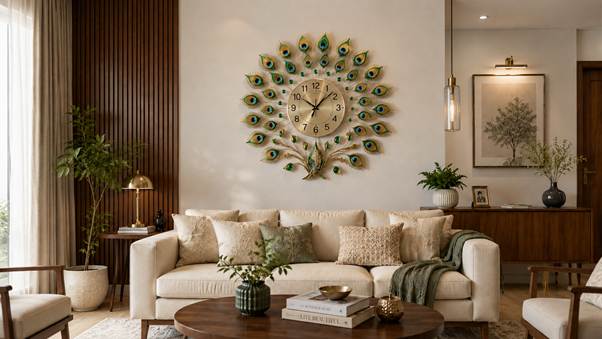
Treat that wall as a functional zone instead of a blank backdrop, and the whole rhythm of the morning shifts. Two items do most of the work: a full length mirror and a clock placed where it can be seen without turning the head. Together they cover the two things almost everyone checks before leaving a room, appearance and time, and placing them thoughtfully removes a surprising amount of daily friction.
Interior planners sometimes call this wall the room’s control point, the spot people return to instinctively no matter how the rest of the space is arranged. Ignore it, and the room’s most repeated daily interaction gets left to chance, which is exactly how so many households end up with a mismatched mirror leaned against a wardrobe and a clock hung wherever there happened to be a free nail.
Ask most people what’s hanging on that wall right now and they’ll pause before answering, which says a lot about how little thought it usually gets compared with everywhere else in the room.
Creating a Functional Wall That Simplifies Your Morning Routine
The logic behind pairing a mirror and clock on the same wall is simple once it’s pointed out. Both are quick check points people return to during a short window each morning, and keeping them close together cuts down the movement needed while getting ready. A mirror near the door, rather than tucked inside a closet, also encourages a final glance before leaving, something a lot of people skip entirely when the nearest mirror sits somewhere inconvenient.
Height matters more than most people think through when planning this. A mirror mounted too low or too high forces an awkward angle no matter how good the frame looks. Same goes for the clock. Set above eye level but not so high that reading it means tilting the head back, and it becomes something checked at a glance instead of hunted for.
Making Better Use of Vertical Space Without Adding Clutter
Bedrooms, especially in smaller homes, rarely have floor space to spare, which makes vertical surfaces genuinely valuable. A wall dedicated to a mirror and clock uses almost none of that floor space while still adding real function, unlike a freestanding mirror stand that eats into walking room. This matters most where every other wall is already claimed by a bed, wardrobe, or window.
Sizing pieces to fit the actual wall keeps the setup from feeling cramped, or sparse at the other extreme. A mirror running near floor to ceiling suits a taller wall. Something smaller and better proportioned suits a compact one. The clock should scale the same way, big enough to read without a squint, small enough that it doesn’t dominate everything around it.
Wall colour behind the pair changes how well they read at a glance too. Mount a mirror and clock against a busy pattern or a dark, low contrast shade, and both tend to disappear into the background instead of standing out the way they’re meant to. A plain or lightly textured wall keeps them easy to spot the second someone walks in, which matters most in the rushed final minutes before leaving.
Balancing Style and Everyday Function on a Single Wall
A wall built around two functional items doesn’t have to look purely utilitarian. Frame choice does a lot of the work here. A premium dressing mirror for bedroom price ranges now spans everything from simple wood frames to more detailed metal finishes, giving plenty of room to match the mirror to the rest of the decor instead of treating it as an afterthought.
The clock deserves the same consideration. Anyone looking for the best stylish wall clock for home will find options from minimal dial designs to bolder statement pieces, and the right pick usually depends on how much visual weight the rest of the wall already carries. A large, detailed mirror pairs better with a simpler clock. An understated mirror can carry a bolder one just fine.
Metal frames tend to read cooler and more contemporary, while wood keeps things feeling warmer and closer to how most Indian bedrooms are already furnished. Neither is the wrong answer. It comes down to what the rest of the room is doing already.
Small Design Details That Make Busy Mornings Feel Easier
A few smaller additions round out this wall without cluttering it. A narrow shelf or hook beside the mirror gives somewhere to hang a bag or scarf while checking an outfit, which removes the need to hunt for it separately once running late already feels inevitable. Soft lighting near the mirror, rather than relying on overhead light alone, makes a real difference checking appearance in the dim light of early morning.
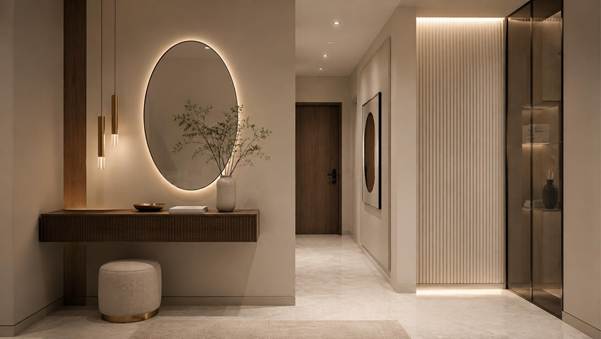
Keep the surrounding wall space sparse on purpose. Crowd it with frames and decor and it starts competing for attention, slowing down the quick glance the whole setup exists to support. The most effective versions of this idea tend to be the simplest: two well chosen pieces given room to actually work.
A small tray on the shelf handles keys, watches, or jewellery that would otherwise get left on the bed overnight. It sounds minor, but one designated spot removes another small daily search, exactly the kind that adds up to real frustration when someone’s already running behind.
Building a Bedroom That Supports a More Organised Start
A mirror and a clock seem like minor additions compared with a new bed or wardrobe, yet together they shape a part of the day that repeats without fail, every single morning. Position them thoughtfully on one wall and a routine stretch of blank space turns into something genuinely useful, cutting the small delays that add up to a rushed start more often than people realise.
This is one of the simpler bedroom changes to make, and one of the more immediately noticeable. No full room overhaul needed, just a clear sense of where these two items belong and pieces chosen to suit the wall and the room around them. Mornings tend to feel calmer almost immediately once it’s in place.
Start with whichever piece the room is missing and add the other once budget allows. Even one half of the pair, placed well, beats both crammed in wherever there happened to be room.
Give it two weeks before deciding whether the placement is right. Mornings have a way of exposing the small mistakes that looked fine on a Sunday afternoon while everything was still being measured and hung.
A wall like this rarely gets a second look once it’s finished. That’s the whole point. It should work quietly enough that nobody thinks about it again, only that mornings feel a little less rushed.
About the Author