

A blood transfusion may be a vital treatment option if there is a need to replace blood volume or specific blood components. The procedure is done under medical supervision, such as after significant blood loss, in some medical conditions, or if it is prescribed as part of another treatment.
A question which is regularly asked by families is how much will it cost to donate blood in India? There is no set figure for the answer. The cost of the final bill may vary by hospital, city, facility type and patient’s condition and other services needed.
What Is a Blood Transfusion?
A blood transfusion is a procedure in which a patient receives blood or certain blood elements via an i.v. (intravenous) line. Doctors might recommend whole blood or blood components like red blood cells, platelets or plasma, depending on the patient’s needs.
Healthcare professionals check the patient’s condition and conduct the necessary tests prior to transfusion to identify the type of blood component required and to make sure that the blood is compatible.
Blood Transfusion Cost in India
The indicative cost of blood transfusion in India, as provided by ManipalCigna, is approximately ₹3,000 per transfusion. The estimated cost is around ₹2500 in Tier-2 cities and ₹5000 in Tier-1 cities. These quotes are indicative and should not be considered a tariff for the hospital.
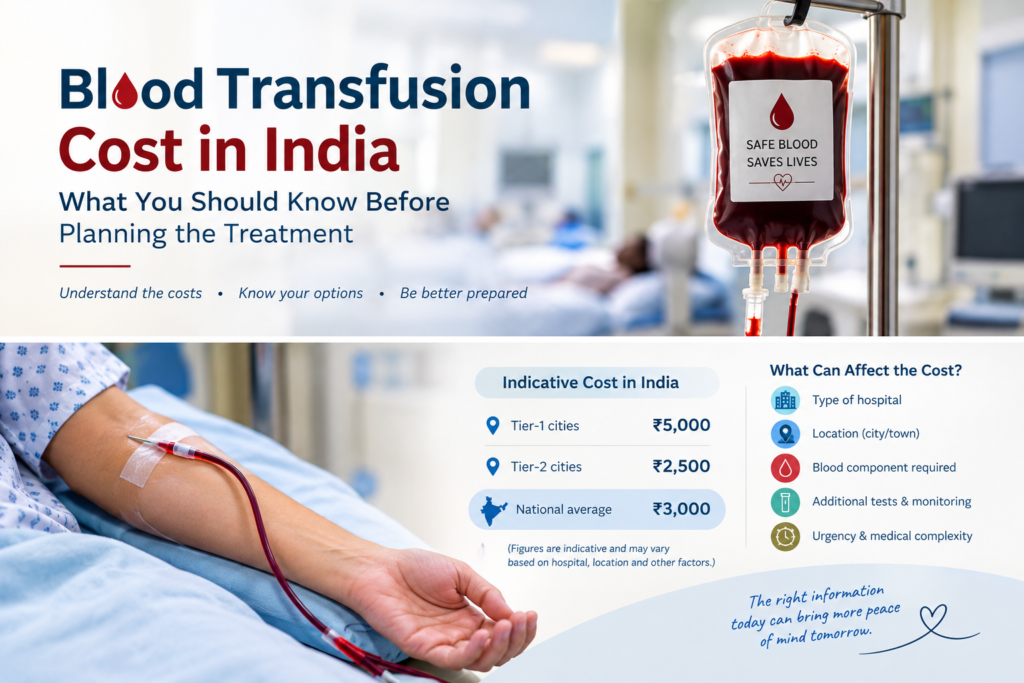
The reference list includes tier-1 cities like Delhi, Mumbai, Bengaluru, Chennai, Hyderabad and Kolkata, and tier-2 cities include Jaipur, Lucknow, Patna and Nagpur.
Why Can the Cost of Blood Transfusion Differ?
It is important to remember that the transfusion charge may not represent every expense associated with the patient’s treatment. There are a number of things which can affect the overall bill.
1. Type of Hospital
The costs of transfusion-related services at government hospitals, private hospitals and specialised medical centres may differ.
2. Location
The cost of treatment varies significantly between metropolitan cities and smaller towns, as hospitals are not built in the same way and have different operating costs.
3. Blood Component Required
Either red blood cells, platelets, plasma or another component is needed depending on the patient’s medical condition. The associated expenses may therefore vary.
4. Additional Tests and Monitoring
The total medical expense can be increased by blood grouping, compatibility testing, consultations, monitoring and other investigations.
5. Urgency and Medical Complexity
It may also cost more if the transfusion is an emergency or might be a more complicated case that requires further monitoring or medical attention by a specialist.
Does Health Insurance Cover Blood Transfusion?
If the person is in need of a blood transfusion, the expenses may be covered by the healthcare policy, but it will depend upon the terms and conditions of the policy. Eligibility can be impacted by waiting periods, exclusions, sub-limits and inpatient, outpatient or daycare status.
This is one thing that reading the policy document in advance of a medical emergency can make a difference. It is a better idea to consult with the insurance company to see what coverage is available for the transfusion cost, since this may not be covered in its entirety.
How Can You Plan for the Expense?
In a planned transfusion (not emergency), request the hospital to provide an estimate in writing. It can assist you in determining if the quoted price is just for the transfusion or if it is a full package that consists of investigations, consultation, transfusion, blood components, monitoring and other hospital services.
Note that if you are planning on using a cashless facility, it’s worth finding out if the hospital is part of your insurance provider’s network as well. Pre-authorisations may apply.
A Small but Important Reminder
The cost of blood transfusion can be easily talked about only in terms of the monetary value. But safety never comes at the cost of safety. Transfusions are only to be used when medically indicated and supervised by qualified health care personnel.
If you’re about to be admitted to the hospital, you want to know about the cost before you go. Meanwhile, due to fluctuating prices between hospitals and on a case-by-case basis, the hospital will be the most authoritative source for the latest quote.
Final Takeaway
The indicative cost of blood transfusion in India is approximately ₹3,000, with a reference range of approximately ₹2500 in Tier-2 cities and ₹5000 in Tier-1 cities. This may vary from hospital to hospital, site to site, blood component to blood component, investigations, urgency and the patient’s medical needs.
If you or a family member has been advised to undergo a transfusion, don’t hesitate to ask the hospital for a complete cost estimate and check your health insurance policy beforehand. A little preparation of finances can help you concentrate on what matters most—the patient’s recovery.
About the Author