
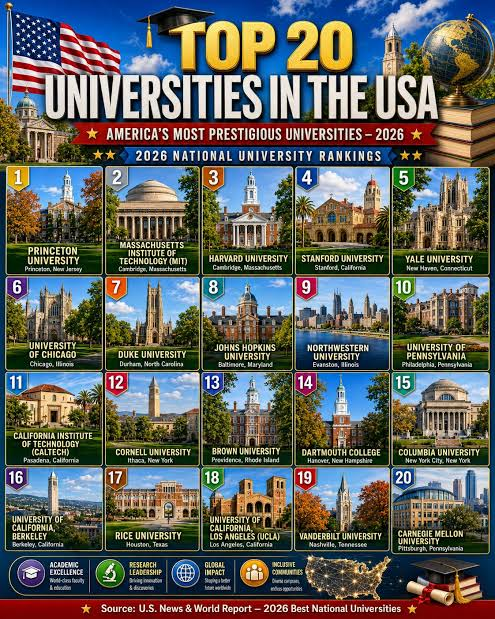
Here are 50 of the largest colleges and universities in the United States, listed based on their Fall 2024 enrollment numbers from the most recent 2026 data. This list includes a wide range of institutions—such as online learning providers, large community colleges, and traditional campus-based universities.
- Western Governors University
- Southern New Hampshire University
- Grand Canyon University
- University of Phoenix–Arizona
- Ivy Tech Community College
- Liberty University
- Arizona State University – Campus Immersion
- Texas A&M University–College Station
- Lone Star College System
- Arizona State University – Digital Immersion
- Dallas College
- University of Central Florida
- University of Maryland Global Campus
- Ohio State University
- University of Illinois Urbana-Champaign
- Miami Dade College
- Purdue University
- University of Washington–Seattle
- New York University
- University of Minnesota–Twin Cities
- Northern Virginia Community College
- University of Arizona
- University of Florida
- Florida International University
- University of Texas at Austin
- Georgia Institute of Technology
- Houston Community College
- University of Michigan–Ann Arbor
- Rutgers University–New Brunswick
- Michigan State University
- University of Wisconsin–Madison
- Pennsylvania State University
- American Public University System
- University of South Florida
- Walden University
- Indiana University Bloomington
- University of Houston
- Kennesaw State University
- Capella University
- Valencia College
- University of California, Los Angeles
- University of North Texas
- Utah Valley University
- University of Southern California
- University of California, Berkeley
- Purdue University Global
- Brigham Young University–Idaho
- University of Cincinnati
- University of Texas at Arlington
- University of California, San Diego
So what can we take away from this list?
The largest schools in the country are spread out in different ways—both geographically and in terms of their educational approach. Some, like Western Governors University or Southern New Hampshire University, are known for their extensive online programs. Others serve as local commuter campuses with many students from the surrounding areas, while others, such as Texas A&M or UCLA, are large institutions that feel like small cities. There’s an option for almost every student type.
However, the size of a school doesn’t guarantee the right fit for every student.
Just because a large number of students attend a particular institution doesn’t mean it’s the best choice for you. It’s important to consider tuition costs, accreditation, the types of courses offered, the location of the campus, the support services available, and the career outcomes for graduates.s Focusing on these factors can help you find a school that truly meets your needs—not just the one with the highest enrollment.
About the Author