

Know About The Marathas: Chatrapati Rajaram Maharaj
Dec 7, 2025, 23:35 IST
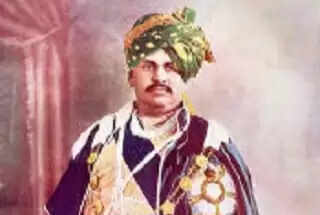
The Maratha Empire had many heroic rulers; however, Chhatrapati Rajaram Maharaj is remembered as the symbol of resilience, bravery, and the ability to make sound strategic decisions. Rajaram is often ignored when it comes to the contribution to the Maratha legacy, particularly when his father, Chhatrapati Shivaji Maharaj, is mentioned and his elder brother, Sambhaji Maharaj, whose contribution has been vital in the struggle of saving the Maratha legacy, especially in its darkest days.
Early Life and Rise to Power
Rajaram Maharaj was born on 24 February 1670 at the Raigad fort and was the son of Shivaji Maharaj and Soyarabai. His training towards the early years in administration and statecraft was to enable him to lead a life of responsibility, not that of war.
The Maratha Empire, however, experienced a crisis following the capture and martyrdom of its brother Sambhaji Maharaj in 1689. Rajaram Maharaj was crowned the third Chhatrapati at the age of 19, which made him an inheritor of the leadership during the period of extreme Mughal attacks.
Struggle Against Aurangzeb
As the empire was collapsing, the Maharaj Rajaram took extreme measures to make sure that the Marathas would live on.
Escape to Gingee Fort
He escaped fearfully to Gingee (Jinji) Fort in Tamil Nadu to evade capture by the Mughals. Aurangzeb was shocked by this tactical move, and it allowed the Marathas to arrange themselves and recover their troops.
Establishing Gingee as the Maratha Capital
Gingee Fort gave birth to a new administrative centre under Rajaram Maharaja. He still led war efforts, put commanders in place, and boosted the morale of his troops even though years later, he was under siege.
Revival of Guerrilla Warfare
During his reign, some of the best Maratha generals, such as Santaji Ghorpade, Dhanaji Jadhav, and Khanderao Dabhade, launched guerrilla warfare throughout Maharashtra. Their attacks were very fast and unpredictable, thereby undermining the supply lines of the Mughals and tiring the forces of Aurangzeb.
This time turned out to be the turning point of the Maratha-Mughal battle, and it was discovered that the empire would not come so readily.
Legacy and Early Demise
Rajaram Maharaj, the chhatrapati, died on 2 March 1700 at Sinhagad Fort at the age of 30 years only. The loss of his life was great, yet his manliness had already restored the spirit of the Maratha.
He was later assumed by his wife, Rani Tarabai, who carried on the fight until she successfully led the Mughal Empire to its downfall.
The strength of Rajaram Maharaj helped to ensure that the Maratha Empire not only survived but also grew to become one of the strongest empires in 18th-century India.
Conclusion
Chhatrapati Rajaram Maharaj was a ruler who never allowed the fire of Maratha sovereignty to diminish even in the most difficult period of time. His dream, tactical retreat to Gingee, and sponsoring of genius generals served to save the dream of Shivaji Maharaj.
The life of Rajaram Maharaj is the story of perseverance and leadership, which is why it should not be underestimated; he is one of the greatest personalities in Indian history.