

What is Primitive Subsistence Farming
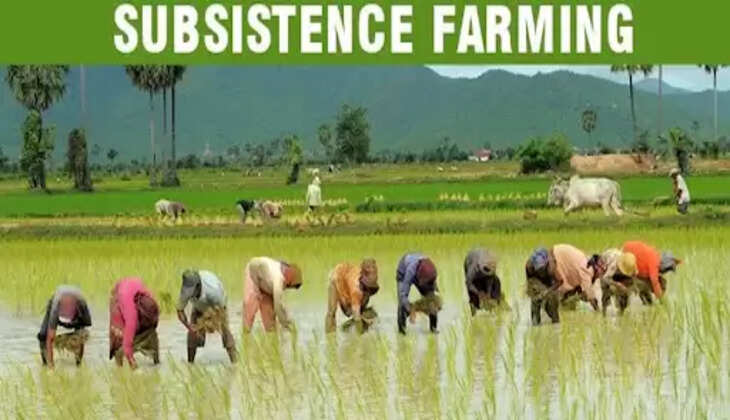
One of the most ancient ways ever known to mankind of producing food is primitive subsistence farming. While modern commercial agriculture seeks to make profits and caters to markets, this kind of farming is oriented purely toward self-sufficiency. It produces just enough to feed the farmer's family or a small community, with which it becomes just an issue of survival, culture, and tradition.
Core Idea and Purpose

Self-sufficiency encapsulates the idea behind this mode of farming. Crops grown by these farmers are indeed not for exchange or big markets; they are for the sustenance of their own household, whereas sometimes there may be what may be considered a very small supply left over from what immediately goes into consumption. Usually, those are exchanged in a form somewhere in the neighborhood. Because it relies heavily on nature and simple tools, it is often practiced in hilly, forested, or remote regions where modern methods are difficult to implement.
Key Characteristics
In this way, primitive subsistence farming can be distinguished from other systems by the following features:
Small Landholdings: Cultivation goes on in small, scattered plots.
Traditional Tools: The tools used consisted of just the digging sticks, hoes, and daos, no machines whatsoever, not even animal power.
Family Labor: The labor itself is maximally intensive; all members of the family or community perform the activity.
Natural Dependence: Rainfall, soil fertility, and natural vegetation determine productivity, as there is little external intervention.
Minimal Inputs: Fertilizers, pesticides, or HYV seeds are seldom used.
Low Productivity: Modern methods are absent; hence, production per acre is usually much lower.
Classes of Primitive Subsistence Farming
-(1).jpg)
1. Shifting Cultivation (Slash-and-Burn Technique)
Here, farmers select a forest patch, clear it by felling the vegetation, and burn it. These burns create ash, which acts as a fertilizer for the soil. This allows crops to be cultivated for a few years. Once fertility declines, they move to a new patch, leaving the old one fallow so it can regenerate naturally.
Indian Examples: Jhum (Northeast India), Podu (Andhra Pradesh & Odisha), Kumari (Western Ghats), Khil (Himalayan belt).
Global Examples: Known as Milpa in Mexico, Ladang in Indonesia, and Masole in Central Africa.
Pros: Free fertilization by the ash.
Cons: Deforestation, soil erosion; it is now unsustainable due to population pressure.
2. Nomadic Herding
Communities move with their animals in search of pasture and water. Animals found in India give milk, meat, wool, and hide for grain.
Places: It is common in the dry and mountainous regions of Central Asia, the Sahara, and some parts of India.
Indian Examples: Gujjars and Bakarwals (Jammu & Kashmir), Gaddis (Himachal Pradesh), Bhotiyas (Uttarakhand).
Challenges: Shrinking grazing lands, climatic changes, and clashes with settled farmers.
Why It Still Exists in India
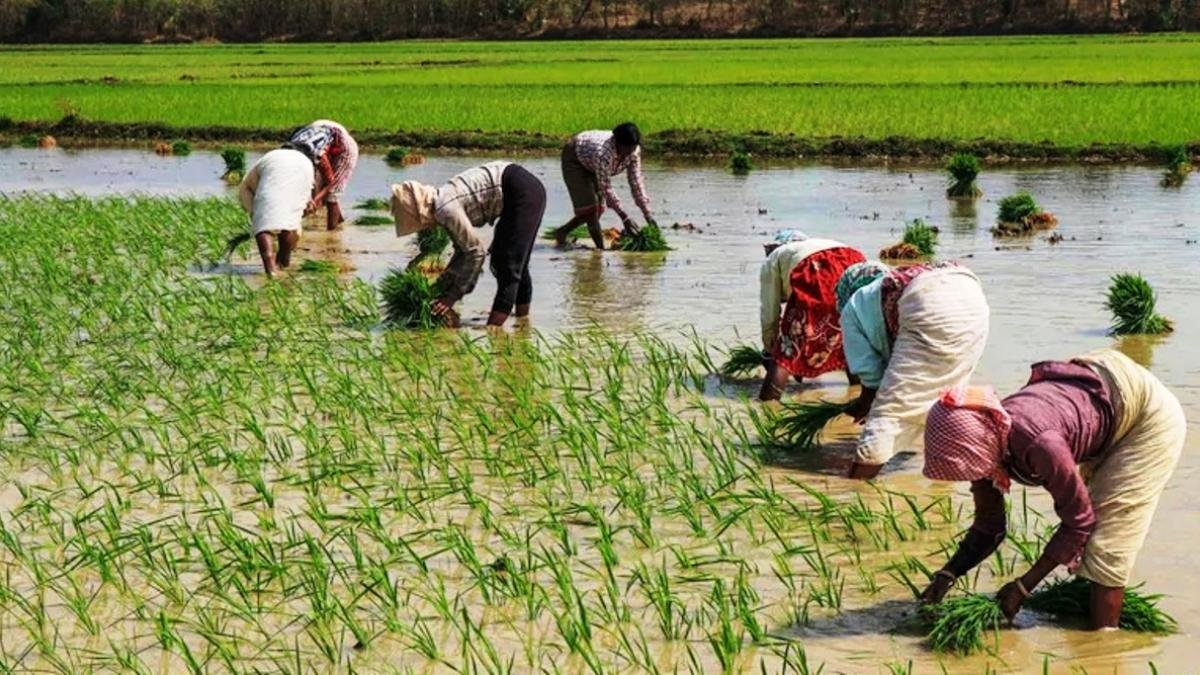
However, despite modernization, this kind of agriculture still exists among tribal populations of the Northeast, Central India, and the Western Ghats. Factors being:
Firm cultural roots and way of life.
Rugged terrain where mechanized farming is impossible.
Lack of alternative livelihoods.
Fragmented landholdings that prevent commercial farming.
Challenges in the Modern Era
Some of the difficulties faced are:
Degradation of the soil and declining fertility of the soil.
Deforestation and biodiversity loss through slash-and-burn practices.
Climate vulnerability, especially with erratic monsoons.
Lower yields bring about food insecurity and continuous poverty.
Policy challenges, including a lack of recognition of traditional rights.
Future Outlook
The disappearing act is probably out of the act for extremely retrograde subsistence farming, and thus adaptation to present realities is a must. It might become more and more viable with modified sustainable agroforestry, better fallow cycles, and market access. The government has already been trying to aid traditional farmers through schemes like Paramparagat Krishi Vikas Yojana (PKVY) and the Forest Rights Act (2006). The challenge lies in striking a balance between cultural preservation and economic development.