Image Credit: Google

Although almonds, walnuts or fruits are usually the first thing that springs to mind when thinking of healthy snack ideas, these are not the only options available. But a simpler option deserves more attention: sunflower seeds. These seeds taste slightly nutty and crunchy, and they can be added to salads, made into breakfast toppings or used as a snack.
One thing about sunflower seeds that is interesting is that they contain several nutrients in relatively small amounts. They are rich in healthy fats, plant-based protein, dietary fibre, vitamin E, Mg and other minerals. Sunflower seeds are not a miracle food that will cure all of your health ailments; it’s better to consider them one small, important addition to a well-rounded diet.
1. A Natural Source of Vitamin E
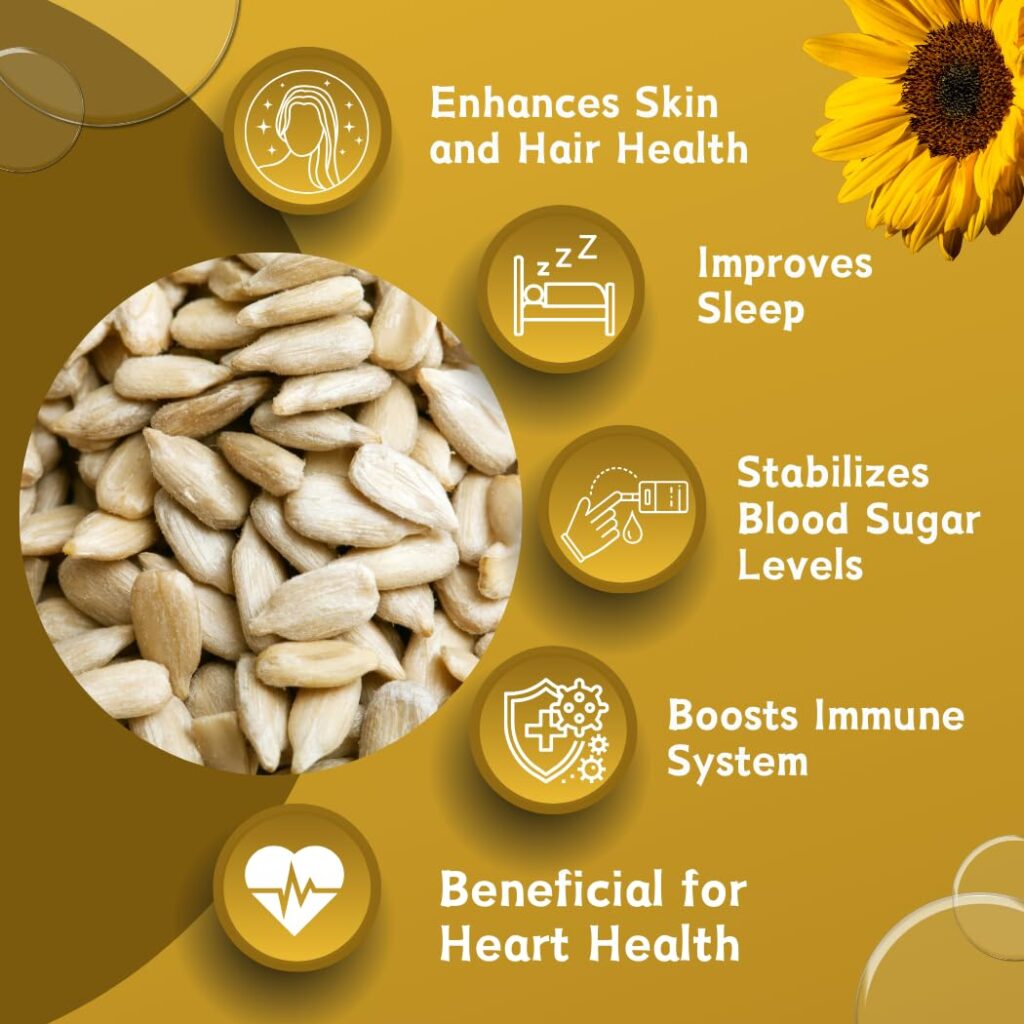
Sunflower seeds are one of the top nutrition benefits because they contain vitamin E. One of the roles of Vitamin E is to act as an antioxidant, preventing oxidative damage to cells. It is also important for healthy immune function.
That is one way sunflower seeds can be a convenient addition to your daily diet to get more antioxidant food. Vitamin E compounds are naturally occurring in a few foods, such as sunflower seeds. Vitamin E compounds occur naturally in several foods, including sunflower seeds.
2. May Support Heart Health
Sunflower seeds are rich in unsaturated fats and magnesium as well as other nutrients. Switching foods rich in saturated fat for foods with unsaturated fat may be a heart-healthy diet change.
Another important role of magnesium is its role in normal muscle and nerve functions, and in the normal regulation of blood pressure and heart rhythms.
But consuming sunflower seeds doesn’t necessarily prevent a person from getting heart disease. The benefit is that they can be part of a whole diet that is also healthy.
3. Helps Add Plant-Based Protein to the Diet
Sunflower seeds are a good source of protein for those looking for a plant-based protein source. It doesn’t take much effort to incorporate them into your meals without having to make any significant dietary changes.
Consider putting a spoonful in oatmeal, vegetable salad or homemade snack mixes. This is especially useful for vegetarians looking to get their protein from more sources than just plants.
4. Supports Healthy Digestion
Sunflower seeds contain dietary fibre, which helps maintain the digestive system. Consuming enough fibre will help maintain healthy bowel movements and healthy eating patterns.
Taking a small amount of food at a time is more feasible, rather than ingesting a large amount in one sitting. For individuals who normally eat a low fibre diet, it can be easier to make the change by slowly increasing fibre intake and drinking plenty of water.
5. Provides Important Minerals
These minute seeds have minerals like magnesium, selenium, copper and phosphorus. Each has different functions in the body.
Magnesium is involved in hundreds of biochemical reactions, such as those that take place in muscle and nerve functions. Selenoproteins require selenium to function in processes such as antioxidant defence, DNA-related functions and thyroid hormone metabolism.
This blend makes sunflower seeds more nutritionally intriguing than you’d think.
6. May Help You Feel Satisfied Between Meals
Sunflower seeds are high in protein, fibre and fat and can make a filling snack or meal. Some people may find that this will help to control their hunger between meals.
There’s a trick to this, though: sunflower seeds pack a lot of energy. It can be hard to keep portion sizes in check if they are eaten from a large packet. A portion check of a snack may be a good solution.
7. Can Complement a Skin-Friendly Diet
Several factors are critical for keeping skin healthy, such as genetic predisposition, hydration, sleep, protection from the sun and overall nutrition. Sunflower seeds are a source of nutrients important for skin health, such as vitamin E and essential fatty acids.
While the antioxidant effects of Vitamin E are well known, consuming sunflower seeds is no replacement for using sunscreen or dermatological treatments.
8. A Convenient Addition to Everyday Meals
Sunflower seeds are undoubtedly one of the most overlooked health benefits, but it is also one of the easiest to use. They are essentially ready-to-use and can often be used to spice up a normal meal.
You can try them in:
- Breakfast oats or yoghurt
- Fresh fruit and seed bowls
- Vegetable salads
- Homemade granola
- Soups
- Stir-fried vegetables
- Homemade trail mixes
For everyday eating, plain or lightly roasted, unsalted seeds are generally a more sensible choice than heavily salted varieties.
How Much Should You Eat?
Everyone does not need to consume a fixed number of sunflower seeds per day. A little bit or a small spoonful may be added to a well-balanced diet depending on the person’s calorie and nutritional requirements.
Keep in mind that foods that are healthy can still pack a lot in when consumed in large amounts. When counting calories, the size of the portion counts.
Are There Any Precautions?
As long as sunflower seeds are part of a diverse diet, they are a safe seed to eat for most people, although some people may have a seed allergy. Very large amounts can also lead to an upset stomach.
The salty ones may have a significant amount of sodium, so it’s worth looking at the nutrition panel. Those who are on specific medications or with a medical condition should speak to their health care practitioner about major dietary changes.
The Bottom Line
Although they are small, the nutritional value of the sunflower seeds makes them a good ingredient in a balanced diet. They contain vitamins and minerals, especially vitamin E, magnesium, fibre, protein and healthy fats, which can help improve nutritional quality.
From my own perspective, I believe they are the simplest. No complicated dish or health product is necessary to incorporate them into your daily routine, as they can be incorporated into a food you eat regularly and help make it a healthier, yummy meal.
The secret is to not think of sunflower seeds as a miracle food. They can be a component of a diverse diet that includes vegetables and fruits, whole grains, legumes, nuts and seeds, and other minimally processed foods. And that’s the consistency that’s more important than any “superfood.
About the Author