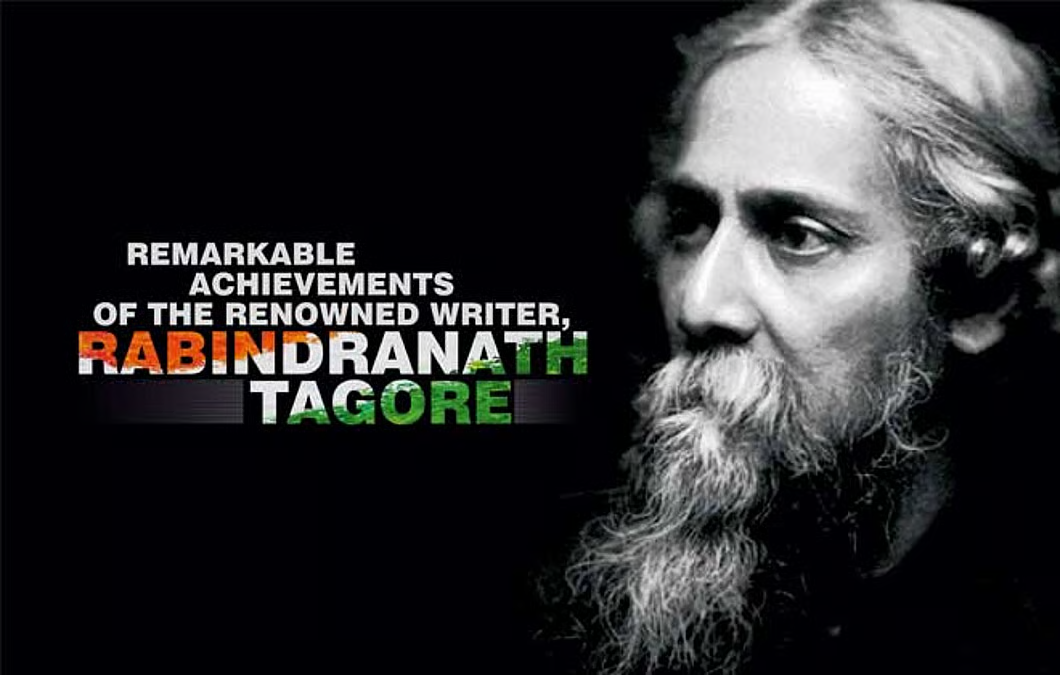

Rabindranath Tagore: Remarkable Achievements and Biography.
Introduction
Rabindranath Tagore remains one of India’s most prominent scholarly and social symbols. Affectionately known as “Gurudev,” he was an artist, writer, rationalist, performer, painter, and educationist whose commitments proceeded to rouse eras. His work played a critical part in forming present-day Indian writing and culture.
Early Life and Family
Rabindranath Tagore was born on May 7, 1861, in Calcutta (presently Kolkata), India. He was the most youthful child of Debendranath Tagore and Sarada Devi. Growing up in a socially wealthy family, Tagore was exposed to writing, music, craftsmanship, and logic from an early age, which incredibly affected his imaginative development.
Education and Scholarly Journey
Tagore gotten much of his instruction at domestic , some time recently traveling to Britain for higher studies. Even though he briefly went to College London, he did not earn a formal degree. In step, he has given himself to writing and imaginative pursuits.
His scholarly career started at a young age, and he went on to compose lyrics, books, papers, shows, and brief stories. His popular works incorporate Gitanjali, Kabuliwala, Gora, and Ghare-Baire. He is, moreover, credited with presenting the present-day brief story in Bengali literature.
Nobel Prize and Scholarly Achievements
In 1913, Rabindranath Tagore got to be the to begin with Asian to win the Nobel Prize in Literature for his collection of sonnets, Gitanjali. This noteworthy accomplishment brought worldwide acknowledgment to Indian writing and built up Tagore as a worldwide scholarly figure.
Throughout his life, he wrote thousands of lyrics and melodies, along with various books and expositions. His works investigated topics of humankind, otherworldly existence, nature, and freedom.
Contribution to Music and Art
Tagore composed more than 2,000 tunes, collectively known as Rabindra Sangeet. His melodic bequest remains profoundly compelling in Bengali culture.
He moreover made a surprising commitment to craftsmanship, making over 3,000 depictions in the latter part of his life. His craftsmanship was shown in presentations across Europe and Asia.
National Songs of devotion and Instructive Reforms
Tagore holds the interesting qualification of creating the verses of India’s national song of devotion, Jana Gana Mana, and motivating the national song of devotion of Bangladesh, Amar Shonar Bangla. His impact also expanded to Sri Lanka’s national anthem.
Believing in all-encompassing instruction, he established Visva-Bharati College at Santiniketan. The institution emphasized learning through nature, inventiveness, and social exchange.
Political Sees and Legacy
Although not a lawmaker, Tagore effectively spoke against treachery and colonial abuse. Taking after the Jallianwala Bagh Slaughter, he disavowed the knighthood granted to him by the British government as a stamp of protest.
Rabindranath Tagore passed away on December 7, 1941, but his bequest proceeds to flourish through his writing, music, instructive logic, and imaginative accomplishments. Indeed, in 2026, he remains an ageless image of inventiveness, intelligence, and humanism.
About the Author