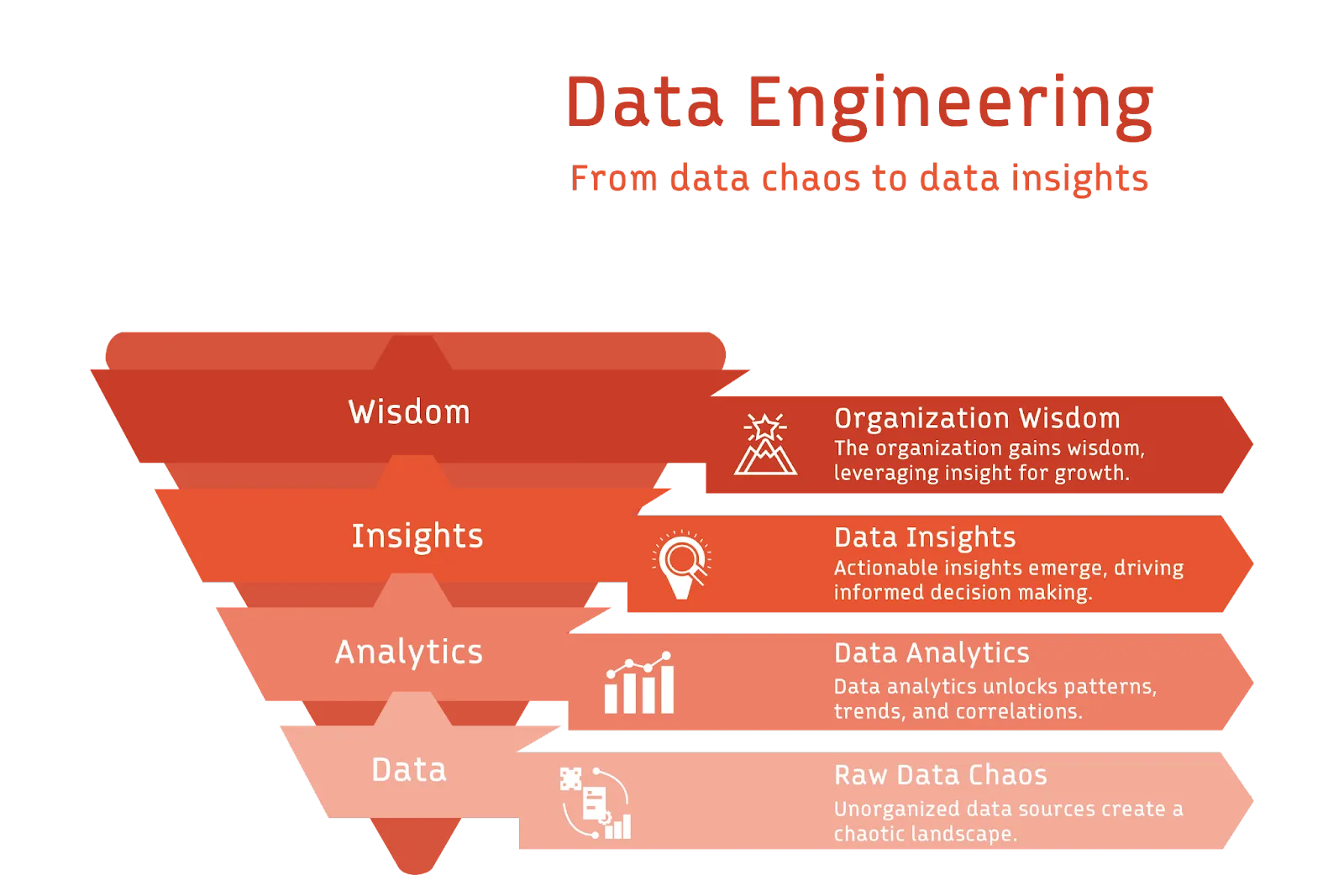

Data engineering is one of the most important areas of modern technology. As organizations generate massive amounts of data from websites, mobile applications, transactions, social media, IoT devices, and business operations, they need professionals who can collect, organize, process, and deliver that data for analysis and decision-making.
Also read: Top 15 Best Bollywood Movies of 2010
What Is Data Engineering?
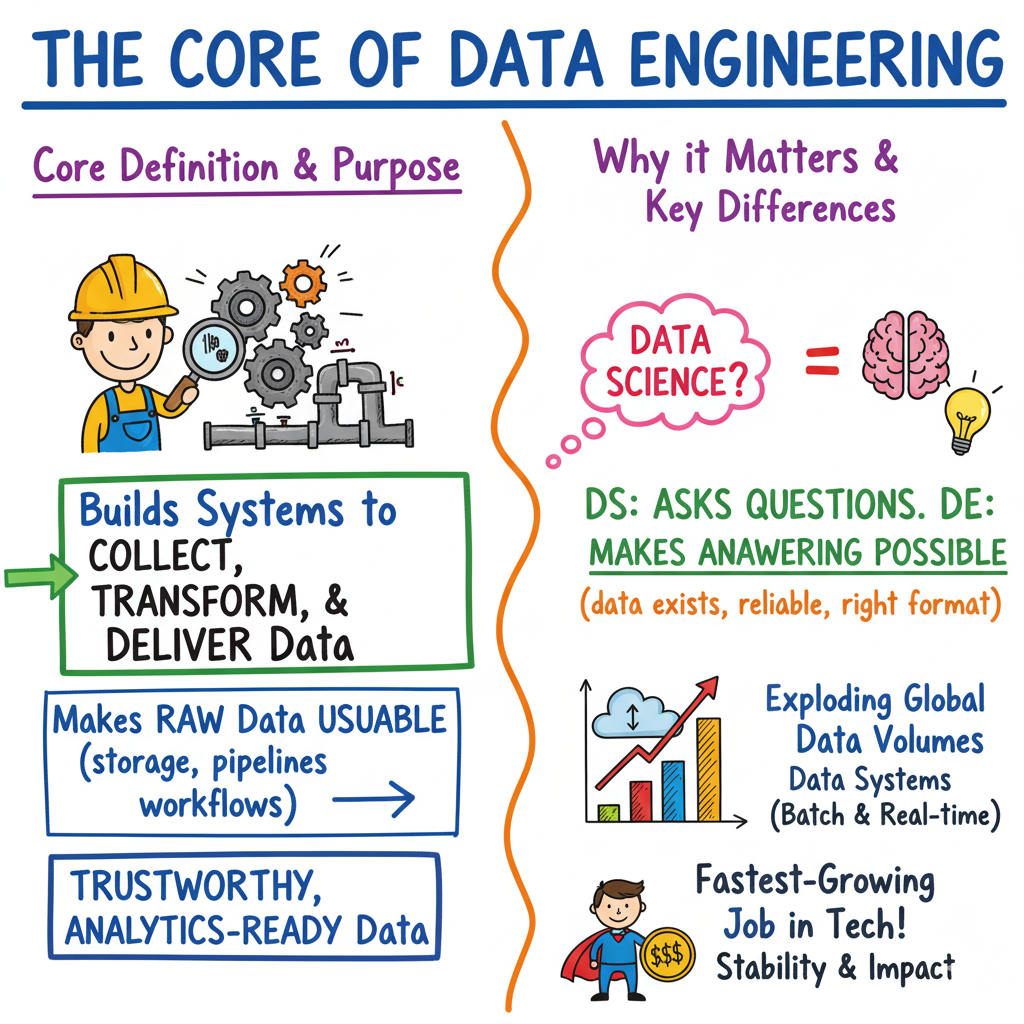
Data engineering is the process of designing, developing, and maintaining systems that collect, store, transform, and manage data.
A Data Engineer builds the infrastructure and pipelines that allow organizations to work with large volumes of reliable and accessible data.
For example, when you make an online purchase, information such as the product, price, payment status, customer details, and delivery information may be generated. Data engineers help ensure that this information is collected, processed, stored, and made available to applications, analysts, and data scientists.
What Does a Data Engineer Do?
A Data Engineer is responsible for creating and maintaining the systems through which data moves.
Common responsibilities include:
- Collecting data from different sources
- Designing data pipelines
- Cleaning and transforming data
- Managing databases and data warehouses
- Building ETL and ELT workflows
- Integrating data from multiple systems
- Monitoring data pipelines
- Ensuring data quality and reliability
- Managing large-scale datasets
- Implementing data security and access controls
- Supporting data scientists and analysts
What Is a Data Pipeline?
A data pipeline is a system that moves data from one or more sources to a destination where it can be stored, analyzed, or used by applications.
A simple data pipeline can be represented as:
Data Sources → Data Ingestion → Data Processing → Data Storage → Data Analysis
For example:
Website → Data Pipeline → Data Warehouse → Business Dashboard
Data engineers design and maintain these pipelines so that data reaches its destination accurately and efficiently.
ETL and ELT in Data Engineering
Two important concepts in data engineering are ETL and ELT.
ETL
ETL stands for:
Extract → Transform → Load
Data is extracted from different sources, transformed into the required format, and then loaded into a target database or warehouse.
ELT
ELT stands for:
Extract → Load → Transform
In this approach, data is first loaded into a powerful storage or processing environment and transformed afterward.
Modern cloud data platforms increasingly use ELT because they can process large datasets efficiently.
Important Data Engineering Technologies
Data engineers work with a wide range of technologies.
Programming Languages
- Python
- SQL
- Java
- Scala
Python and SQL are particularly important skills for beginners.
Databases
Data engineers may work with:
- MySQL
- PostgreSQL
- Oracle
- MongoDB
- Cassandra
Data Warehouses
Popular data warehousing technologies include:
- Snowflake
- Google BigQuery
- Amazon Redshift
- Microsoft Azure Synapse
Big Data Technologies
For processing large datasets, professionals may use:
- Apache Spark
- Apache Hadoop
- Apache Kafka
- Apache Flink
Cloud Platforms
Cloud data engineering commonly involves:
- AWS
- Microsoft Azure
- Google Cloud
Data Engineer vs Data Scientist
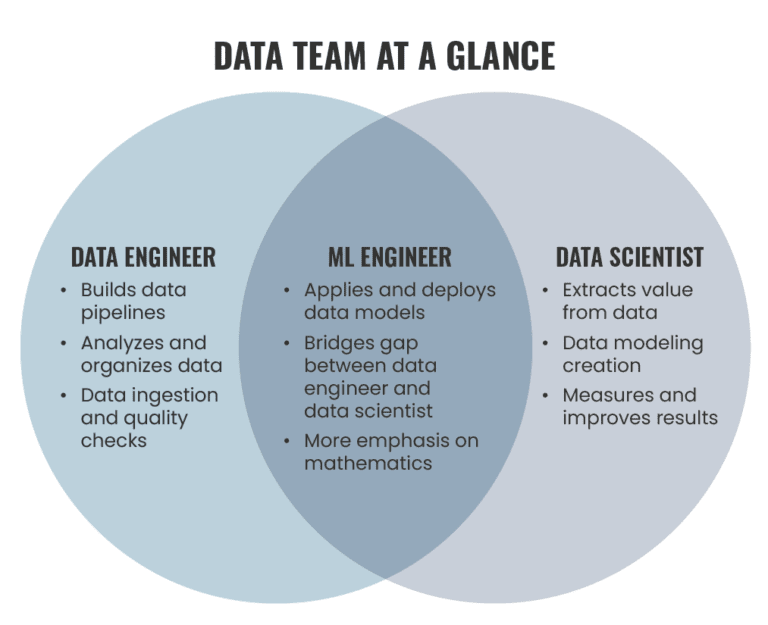
Although Data Engineers and Data Scientists often work together, their responsibilities are different.
| Data Engineer | Data Scientist |
|---|---|
| Builds data pipelines | Analyzes data |
| Manages data infrastructure | Develops statistical and ML models |
| Cleans and transforms data | Finds patterns and insights |
| Works extensively with databases | Works extensively with statistics and machine learning |
| Focuses on data availability and reliability | Focuses on predictions and business insights |
In simple terms, Data Engineers build the systems that make data usable, while Data Scientists use that data to generate insights and build models.
Skills Required to Become a Data Engineer
A successful Data Engineer generally needs a combination of programming, database, cloud, and data-processing skills.
Essential Skills
- SQL
- Python
- Data structures and algorithms
- Database management
- ETL/ELT
- Data warehousing
- Data modeling
- Linux
- Git
Advanced Skills
- Apache Spark
- Apache Kafka
- Airflow
- Docker
- Kubernetes
- Cloud platforms
- Data lake architecture
- Distributed computing
- Infrastructure as Code
Educational Qualifications
There is no single degree required to become a Data Engineer.
Students commonly enter the field through degrees such as:
- B.Tech/B.E. in Computer Science
- B.Tech in Information Technology
- B.Sc. Computer Science
- BCA
- MCA
- Degrees in Mathematics, Statistics, or related technical disciplines
Professionals from other backgrounds can also transition into data engineering by developing strong programming, SQL, database, and cloud skills.
Data Engineering Career Path
A typical career progression can look like:
Junior Data Engineer
↓
Data Engineer
↓
Senior Data Engineer
↓
Lead Data Engineer
↓
Data Engineering Manager / Architect
Experienced professionals can also move into related fields such as:
- Data Architecture
- Cloud Engineering
- Big Data Engineering
- Machine Learning Engineering
- Analytics Engineering
- Data Platform Engineering
Data Engineering Salary in India
Data Engineer salaries vary according to experience, technical skills, location, company, and specialization.
An approximate range in India can be:
| Experience | Approximate Salary |
|---|---|
| Fresher | ₹4–8 LPA |
| 1–3 years | ₹6–15 LPA |
| 3–5 years | ₹10–22 LPA |
| 5–8 years | ₹15–35 LPA |
| 8+ years | ₹25–50 LPA+ |
Professionals with expertise in cloud platforms, big data, distributed systems, and data architecture may command higher salaries, particularly in product companies and specialized technology organizations.
Data Engineering vs Data Analytics
Data Engineering focuses on building the infrastructure and pipelines needed to collect, process, and store data.
Data Analytics focuses on examining data to identify trends, generate reports, and support business decisions.
For example:
Data Engineer: Builds the pipeline that collects sales data.
Data Analyst: Uses that sales data to determine which products are performing well.
Future Scope of Data Engineering
The demand for data engineering skills is closely connected to the increasing volume and complexity of organizational data.
Emerging areas include:
- Cloud data engineering
- Real-time data processing
- Data lakehouses
- Big data
- Data governance
- Data security
- AI and machine learning infrastructure
- Real-time analytics
- Generative AI data pipelines
The growth of artificial intelligence is also increasing the importance of high-quality, well-organized data. AI systems require large amounts of appropriately processed data, creating opportunities for professionals who understand both data engineering and AI infrastructure.
How to Start a Career in Data Engineering
A beginner can follow this learning sequence:
SQL → Python → Databases → Data Modeling → ETL/ELT → Data Warehousing → Git → Airflow → Spark → Cloud → Kafka
Start with SQL and Python, then build practical projects. For example, you could create a pipeline that collects data from an API, cleans it using Python, stores it in a database, and creates a dashboard from the processed data.
Conclusion
Data engineering is the foundation that enables organizations to turn raw information into usable data. Data Engineers build pipelines, databases, warehouses, and processing systems that support analytics, business intelligence, and artificial intelligence.
For those interested in programming, databases, cloud computing, and large-scale data systems, data engineering can offer a broad range of career opportunities in 2026 and beyond.
Also check: https://link.amazon/B03Gga9uw
About the Author