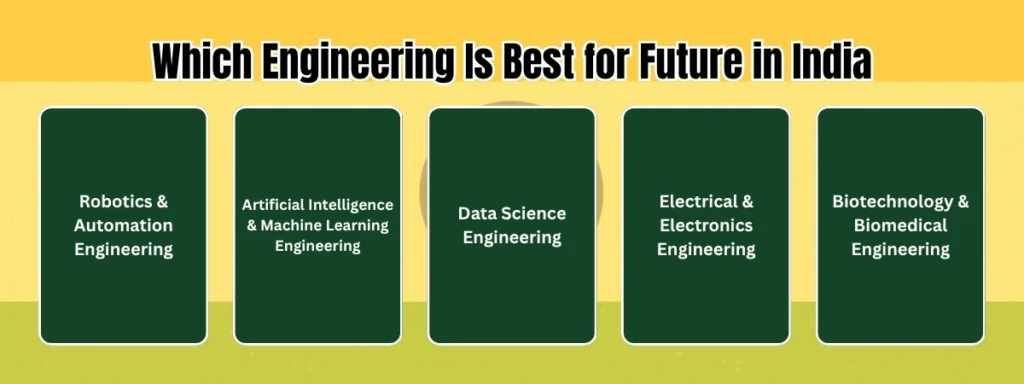

Engineering continues to offer diverse career opportunities, but the industry is changing rapidly. Artificial intelligence, semiconductors, cybersecurity, robotics, electric vehicles, renewable energy, and advanced manufacturing are creating new opportunities for engineers.

Also read: Top 10 Famous Romani People 2026
There is no single engineering branch that is the best choice for every student. The right branch depends on your interests, strengths, career goals, and the type of work you want to pursue.
Top Engineering Branches With Strong Future Scope
1. Computer Science and Engineering (CSE)
Computer Science and Engineering remains one of the most versatile engineering branches for students interested in technology.
Career opportunities include:
- Software development
- Artificial intelligence
- Machine learning
- Data science
- Cloud computing
- Cybersecurity
- DevOps
- Web and application development
- Software architecture
One of the major advantages of CSE is its broad curriculum. Students can later specialize in areas such as AI, data science, cybersecurity, cloud computing, or software engineering.
Suitable for: Students interested in programming, mathematics, logic, problem-solving, and technology.
2. Artificial Intelligence and Machine Learning
Artificial Intelligence and Machine Learning have applications across industries such as healthcare, finance, manufacturing, education, transportation, and technology.
Students may study:
- Machine learning
- Deep learning
- Python
- Statistics
- Data structures
- Natural language processing
- Computer vision
- Neural networks
- Generative AI
Students should look for programmes that provide strong foundations in computer science and mathematics along with AI subjects.
Suitable for: Students interested in programming, mathematics, algorithms, and artificial intelligence.
3. Electronics and Communication Engineering (ECE)
ECE is an important branch for students interested in hardware, electronics, telecommunications, embedded systems, and semiconductor technology.
Career areas include:
- VLSI design
- Semiconductor engineering
- Embedded systems
- Chip design
- Telecommunications
- Robotics
- IoT
- Electronics manufacturing
- Hardware engineering
ECE can also provide a pathway into software careers when combined with programming and computer science skills.
Suitable for: Students interested in electronics, circuits, chips, hardware, and technology.
4. Electrical and Electronics Engineering (EEE)
Electrical and Electronics Engineering continues to have applications in energy, transportation, automation, and industrial technology.
Career areas include:
- Power systems
- Renewable energy
- Electric vehicles
- Battery technology
- Smart grids
- Industrial automation
- Power electronics
- Electrical infrastructure
The growth of electric mobility, energy storage, and renewable energy is creating additional areas for electrical engineers.
Suitable for: Students interested in electricity, energy systems, electronics, EVs, and infrastructure.
5. Mechanical Engineering
Mechanical Engineering remains relevant across manufacturing, automotive, aerospace, energy, and robotics.
Career opportunities include:
- Automotive engineering
- Electric vehicles
- Robotics
- Aerospace
- Manufacturing
- Automation
- Industrial design
- Thermal engineering
- 3D printing
- Mechatronics
Mechanical engineering combined with automation, robotics, simulation, programming, and AI can provide access to emerging career areas.
Suitable for: Students interested in machines, manufacturing, design, physics, and hands-on engineering.
6. Robotics and Automation
Robotics combines multiple areas, including:
Mechanical Engineering + Electronics + Programming + Artificial Intelligence
Career opportunities can include:
- Industrial robotics
- Autonomous systems
- Manufacturing automation
- Drones
- Warehouse automation
- Medical robotics
- Autonomous vehicles
This field is suitable for students who enjoy working with both hardware and software.
Suitable for: Students interested in robots, automation, electronics, mechanics, and programming.
7. Civil Engineering
Civil Engineering continues to play an important role in infrastructure and urban development.
Career areas include:
- Infrastructure development
- Construction
- Transportation
- Structural engineering
- Urban development
- Smart cities
- Water management
- Environmental engineering
Civil engineers can work with construction companies, infrastructure organizations, consulting firms, government departments, and engineering companies.
Suitable for: Students interested in infrastructure, construction, structures, transportation, and large-scale projects.
8. Renewable Energy Engineering
The transition toward cleaner energy is creating opportunities in renewable energy and related engineering fields.
Career areas include:
- Solar energy
- Wind energy
- Battery storage
- Energy management
- Power systems
- Green hydrogen
- Electric mobility
- Energy-grid infrastructure
Students with backgrounds in electrical engineering, mechanical engineering, chemical engineering, and specialized energy programmes can enter this sector.
Suitable for: Students interested in energy, sustainability, electrical systems, and environmental technology.
9. Chemical Engineering
Chemical Engineering has applications across several industries.
Career areas include:
- Pharmaceuticals
- Petrochemicals
- Specialty chemicals
- Food processing
- Energy
- Materials
- Biotechnology
- Battery materials
- Environmental technologies
Chemical engineering can be particularly suitable for students interested in chemistry, industrial processes, manufacturing, and materials.
10. Biomedical Engineering
Biomedical Engineering combines engineering principles with healthcare and biological sciences.
Potential career areas include:
- Medical devices
- Biomaterials
- Medical imaging
- Biotechnology
- Rehabilitation technology
- Healthcare instrumentation
- Biomedical signal processing
It is a specialized field, so students should examine the curriculum, laboratory facilities, internships, and career opportunities before selecting a programme.
CSE vs AI/ML vs ECE vs Mechanical vs Civil
| Engineering Branch | Major Career Areas | Suitable For |
|---|---|---|
| CSE | Software, AI, cloud, cybersecurity, data | Programming and technology |
| AI/ML | AI, ML, NLP, computer vision | AI, mathematics, and coding |
| ECE | VLSI, chips, embedded systems, telecom | Electronics and hardware |
| EEE | Power, EVs, renewable energy | Electrical and energy systems |
| Mechanical | Manufacturing, EVs, robotics, aerospace | Machines and design |
| Civil | Infrastructure, construction, transportation | Infrastructure and structures |
| Chemical | Chemicals, pharma, materials, energy | Chemistry and engineering |
| Biomedical | Medical devices, biotechnology, healthcare | Biology and engineering |
Should You Choose CSE or AI/ML?
This is an important consideration for engineering students.
If two colleges offer programmes of similar quality, CSE provides a broad foundation that can allow students to specialize later in:
- Artificial intelligence
- Machine learning
- Data science
- Cybersecurity
- Cloud computing
- Software engineering
AI/ML can also be a good choice when the programme includes strong foundations in:
- Programming
- Data structures
- Algorithms
- Mathematics
- Statistics
- Computer systems
- Machine learning
Students should therefore look beyond the programme title and carefully examine the curriculum.
What About CSE With a Specialization?
Many universities offer programmes such as:
- CSE with AI and ML
- CSE with Data Science
- CSE with Cybersecurity
- CSE with Cloud Computing
- CSE with IoT
These programmes can be useful, but students should check whether they continue to provide strong computer science fundamentals.
A combination of core CSE knowledge and specialized skills can provide flexibility when technology and job requirements change.
Skills That Can Help Future Engineers
Regardless of the engineering branch, developing additional technical skills can improve career opportunities.
For Technology Careers
Programming + AI + Data + Cloud + Cybersecurity
For Electronics
VLSI + Embedded Systems + Semiconductor Design + Programming
For Mechanical Engineering
CAD + Automation + Robotics + Simulation + AI
For Electrical Engineering
Power Electronics + EVs + Renewable Energy + Automation
For Civil Engineering
BIM + Structural Software + GIS + Sustainable Construction + Project Management
The broader trend is toward engineers who can combine domain expertise with digital and technological skills.
How to Choose an Engineering Branch
Before selecting a branch, consider:
- Your interests – Choose subjects you genuinely enjoy studying.
- Your strengths – Consider whether you are stronger in mathematics, programming, physics, chemistry, design, or practical work.
- Career options – Look at the different careers available after the degree.
- College quality – Faculty, laboratories, infrastructure, internships, and placement opportunities matter.
- Curriculum – Compare the actual subjects rather than relying only on the branch name.
- Future specialization – Consider whether the branch allows you to move into emerging areas.
- Practical exposure – Projects, internships, competitions, and industry experience can strengthen your profile.
Final Takeaway
Different engineering branches offer opportunities in different industries.
CSE offers broad opportunities in software and technology, while AI/ML focuses more specifically on artificial intelligence. ECE is relevant to electronics and semiconductor technology, while EEE connects strongly with energy, EVs, and automation. Mechanical Engineering remains important for manufacturing, robotics, and automotive industries, while Civil Engineering continues to support infrastructure and urban development.
The best choice ultimately depends on the student’s interests, abilities, preferred career path, college, curriculum, and willingness to develop additional skills. In 2026, combining a strong engineering foundation with digital, analytical, and practical skills can be valuable across almost every engineering discipline.
Also read: https://link.amazon/B03Gga9uw
About the Author