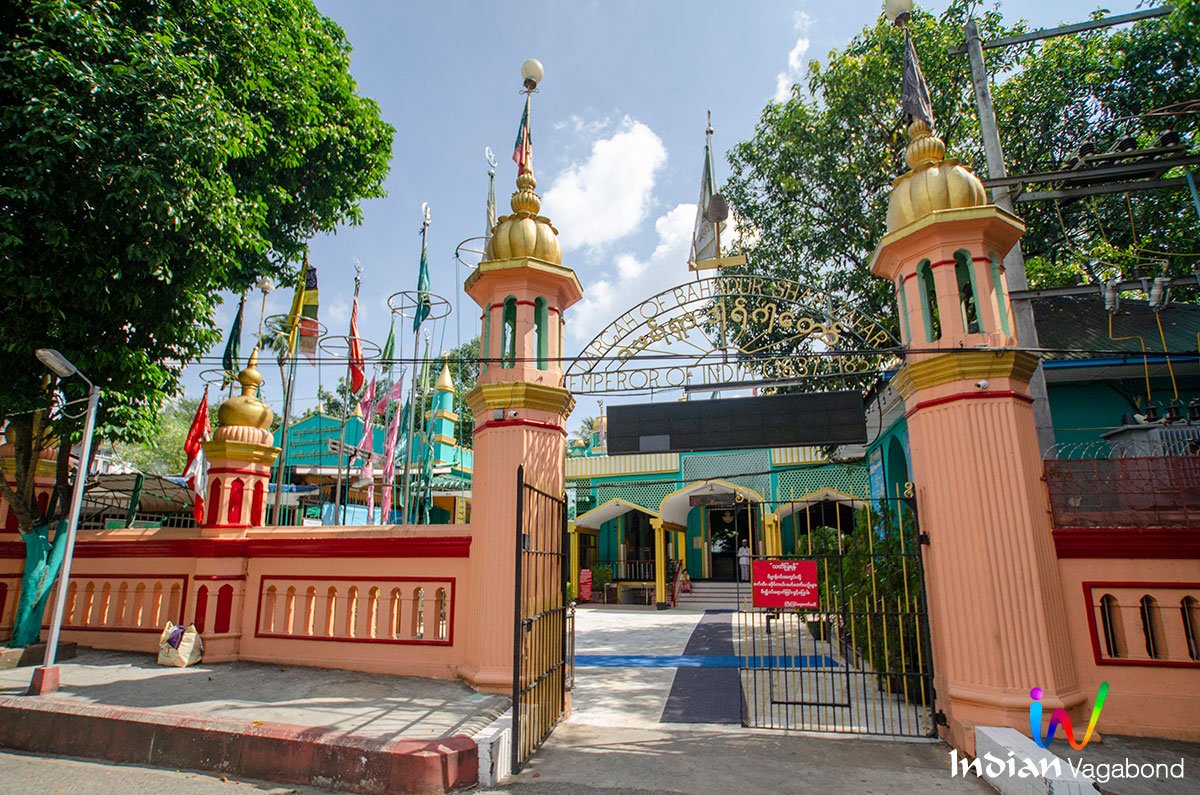

Yangon, Myanmar: The Tomb of Bahadur Shah Zafar is an historical and religious landmark of India’s last Mughal emperor. Bahadur Shah Zafar was exiled by the British after the Revolt of 1857, and lived his remaining life in Rangoon (now Yangon) before he died in 1862. His tomb is now visited today by history lovers, Indian tourists, and those interested in Mughal history and the freedom movement in India.
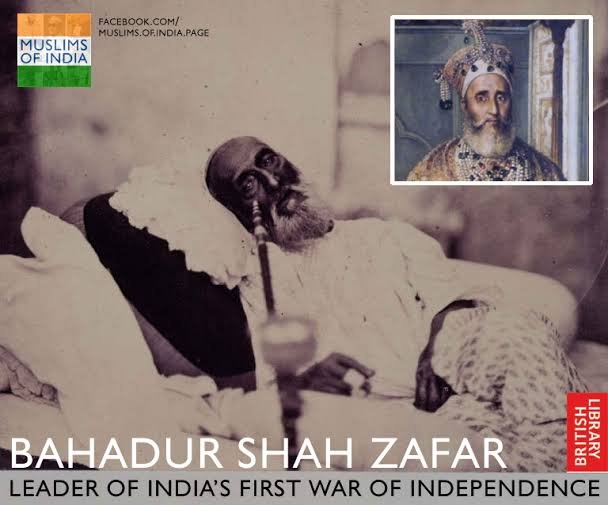
The story of the tomb of Bahadur Shah Zafar
Bahadur Shah Zafar was the last Mughal Emperor of India from 1837 to 1857. In 1857, the British exiled him to Rangoon, Burma, after the revolt. He came to Yangon in December 1858 and passed away on 7 November 1862. The British authorities did not advertise his death, and his grave was not easy to find.
Location of the Tomb in Yangon
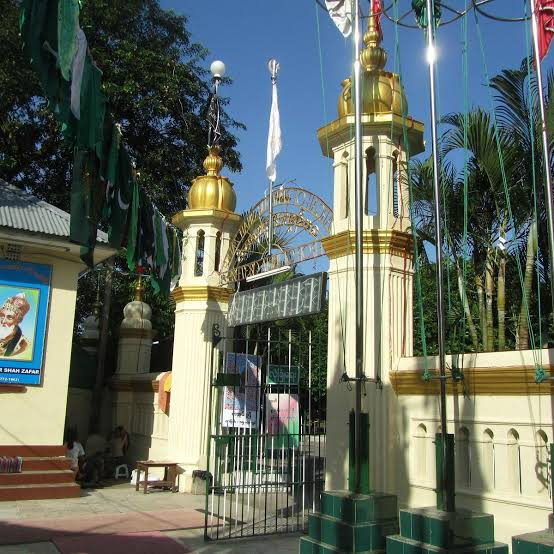
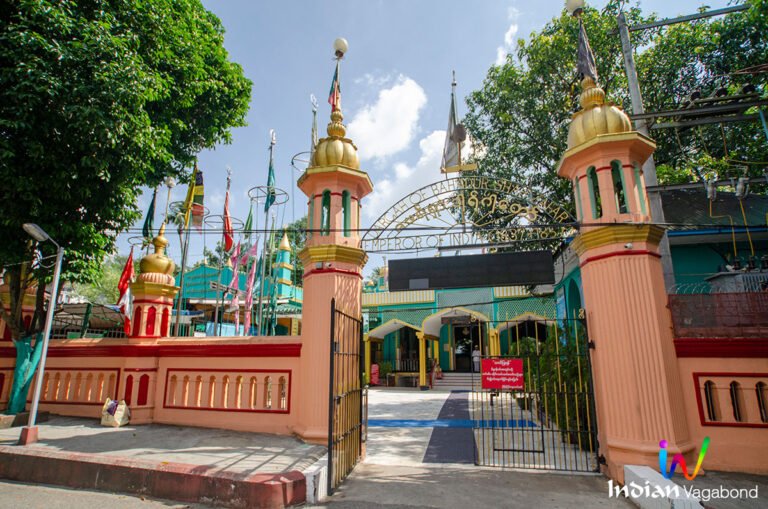
The Dargah of Bahadur Shah Zafar is located on Zi Wa Ka Street, Yangon, Myanmar, near the famous Shwedagon Pagoda. The complex also features a mosque and a shrine where visitors pray and pay their respects. I think the fact that it is situated between two historical and cultural landmarks of Yangon is particularly interesting to me.
Discovery of Bahadur Shah Zafar’s Grave
The discovery of this tomb in 1991 is one of the interesting things about the tomb. On 16 Feb, a brick-lined grave that may belong to the last Mughal emperor was accidentally discovered by the workers. The graveyard was then restored, and the current mausoleum was opened in December 1994.
Religious or architectural significance
The tomb is located in the Shah Zafar Dargah complex, which is a major centre of Sufi religious activities. The shrine has a decorated resting place, which is covered with embroidered cloth and flowers. It is visited by people for its religious significance and as a remembrance of the emperor’s history and literature.
Bahadur Shah Zafar’s role as a Poet and Emperor
Bahadur Shah Zafar was an Urdu poet, among other things, and the last Mughal emperor. His poems frequently revealed feelings of isolation, alienation, sadness, and his profound connection to his homeland. The literature of his exiled years is special and emotional for Urdu lovers, for it is a literature full of significance and meaning.
The tomb of Bahadur Shah Zafar will be a tourist destination in 2026
The tomb is still a fascinating site for historical and religious tourism in Yangon in 2026. Visitors can visit the memorial and learn about the emperor’s life as well as experience the spiritual ambiance of the Shrine. It is of special significance for Indian tourists who want to know the historical relationship between India and Myanmar.
The Dargah has been restored and preserved
Various preservation campaigns have been initiated for the shrine. The Turkish Cooperation and Coordination Agency (TİKA) changed the carpets of the Shah Zafar Dargah and Tomb in December 2024 for the preservation of the heritage. These activities contribute to the religious and historical values of the site.
Conclusion
The Tomb of Bahadur Shah Zafar in Yangon is an extraordinary historical site to see, having ties to Mughal history and Myanmar culture. The monument is a reflection of the last Mughal emperor, from his tragic exile to the discovery of his grave in 1991. In particular, its history, in my opinion, is quite emotionally charged, and it brings to mind the emperor’s lifelong connection with his homeland.
About the Author