Image Credit: Google

In the Hindu belief system, the celestial movements are always related to human experiences, destiny and the rhythm of life. Navagraha Shanti Pooja is one of the numerous spiritual rituals associated with Vedic astrology. This is a traditional Hindu ritual dedicated to the nine planetary deities, which is performed to get their blessings, mitigate the impact of the bad planetary positions and bring peace, harmony and prosperity in life.
For me, the unique feature of this ceremony is the merging of astrology, mythology, and prayer with ancient ritual practices. Navagraha Shanti Pooja doesn’t focus on a single planetary lord; it gives all nine planets symbolic status, and it suggests that everyone seek balance through devotion.
What Is Navagraha Shanti Pooja?
Navagraha is derived from the Sanskrit word, which translates to ‘nine planetary influences’ or ‘nine celestial bodies’. In Hindu astrology, these nine grahas are thought to have a strong impact on various facets of life, such as relationships, career, health, money and personal development.
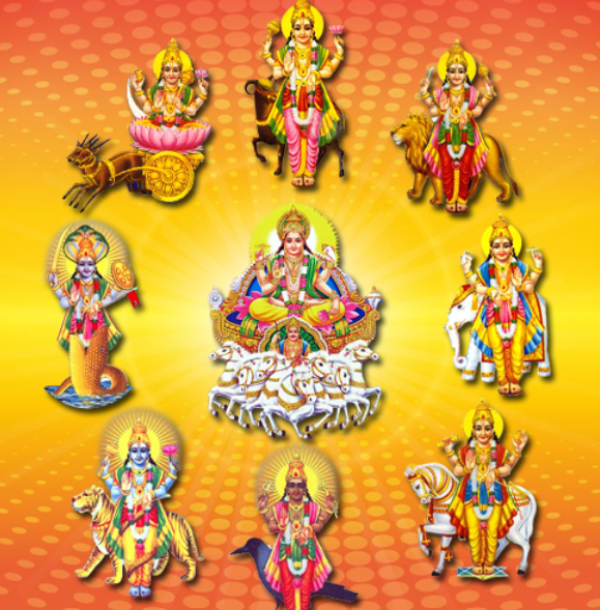
The Navagrahas include:
- Surya (Sun): Associated with authority, confidence, vitality and leadership.
- Chandra (Moon): Represents emotions, mental well-being and intuition.
- Mangal (Mars): Symbolises courage, energy and determination.
- Budha (Mercury): Connected with intelligence, communication and learning.
- Brihaspati (Jupiter): Represents wisdom, knowledge, spirituality and prosperity.
- Shukra (Venus): Associated with love, beauty, relationships and material comforts.
- Shani (Saturn): Symbolises discipline, responsibility, patience and karma.
- Rahu: Represents ambition, worldly desires and unexpected changes.9. Ketu: Associated with detachment, spiritual growth and liberation.
What is interesting is that Rahu and Ketu are not planets. From an astronomical point of view, they are the intersections of the Moon’s orbit with the ecliptic plane. The presence of these makes the Navagraha system very unique.
Significance of Navagraha Shanti Pooja in Hindu Tradition
Traditional astrology in the Vedic system suggests that the placement of the Navagrahas in a horoscope affects various aspects of life. Some planetary conjunctions are considered to be unfavourable, and the devotees seek spiritual solutions with the help of Navagraha Shanti Pooja.
The main intention of this is to invoke the blessings of all nine planets and pray for harmony, protection and positive changes.
Some of its commonly understood spiritual purposes include:
- Reducing planetary difficulties: Devotees perform the ritual to seek relief from unfavourable planetary influences identified through astrological interpretations.
- Promoting peace and harmony: The prayers are intended to encourage emotional balance and a peaceful atmosphere.People may plan the pooja when they are unsure about their path in life or their finances.
- To help celebrate other significant beginnings, such as marriage, children, housewarming, and more.
- Promoting spiritual growth: There is an opportunity to pray, to reflect on oneself and to renew one’s faith in the ritual.
The most significant part of this tradition is the balance, in my opinion. Each of the grahas corresponds to attributes, and the ceremony symbolically recognises that life brings both good and bad experiences.
Important Rituals and Traditions Followed During the Pooja
This is based on traditional Hindu rituals and involves various rituals, which may vary from place to place and temple to temple or even family to family.
1. Sankalpa and Preparation
}The ceremony normally starts by singing a sankalpa, or formal pronouncement by the devotee that he or she will perform the pooja. The worship area is cleaned and prepared, and necessary ritual materials are put in place.
2. Invocation of the Nine Planetary Deities
The priest chants the Navagrahas with appropriate mantras and prayers. Every planetary deity is worshipped separately, and offerings are placed before him in the form of flowers, rice, incense, lamps, etc.
3. Navagraha Mantra Chanting
Recitation of Mantras is one of the crucial elements of the ceremony. Nine mantras are chanted to revere each of the nine planets in a specific manner, known as a mantra, or in traditional ways.
Devotional offerings are frequently given with the chanting. I like this part of the ceremony because, in repeating sacred verses again and again, it makes the ceremony something meditative, a way of focusing.
4. Navagraha Havan or Homam
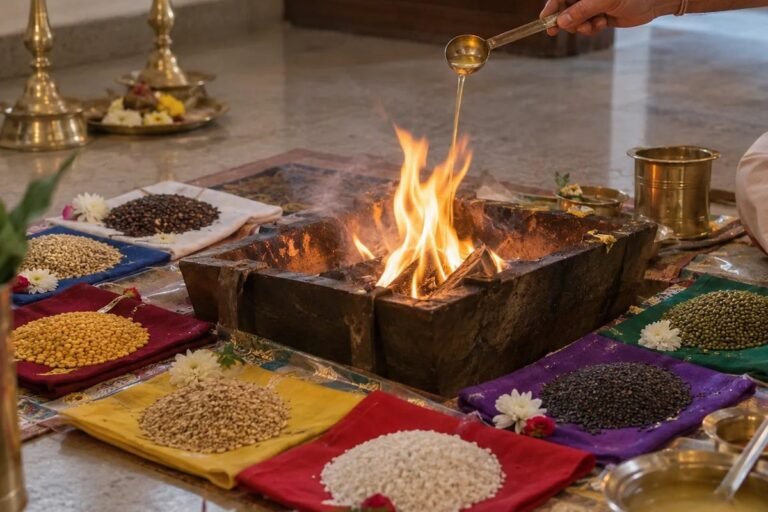
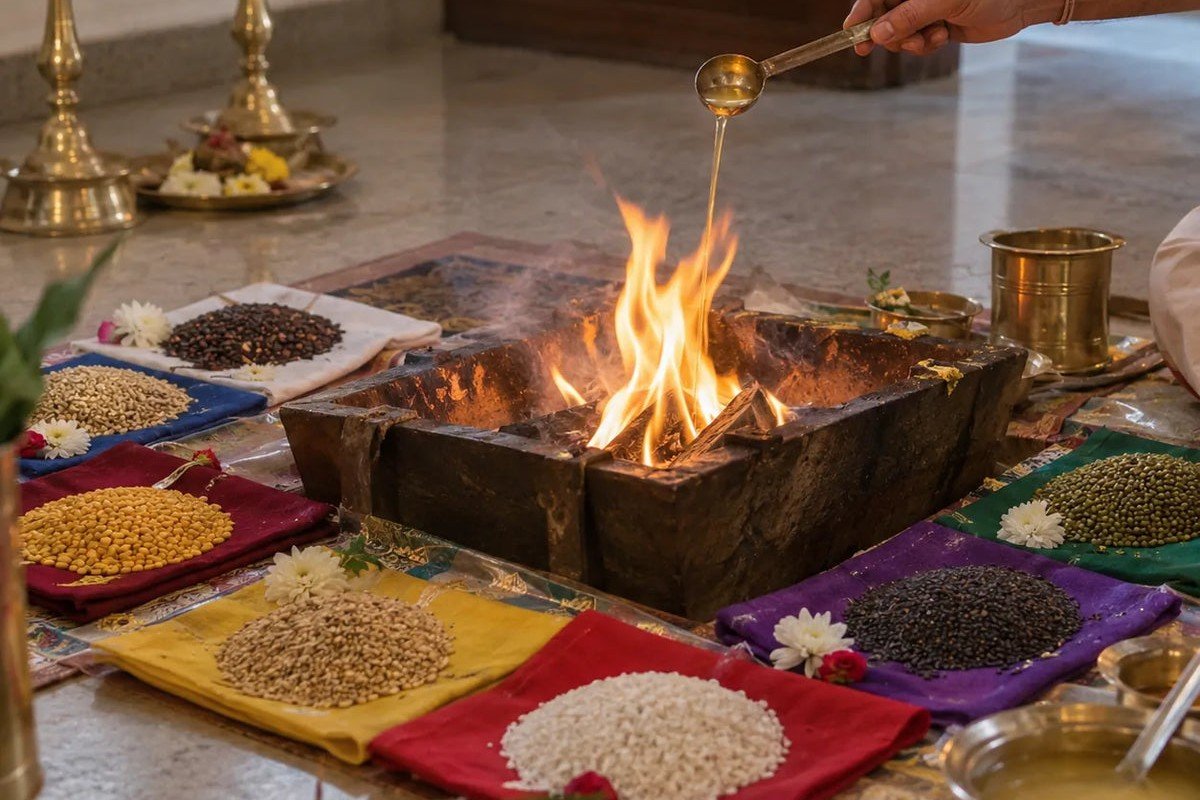
A havan or homam is conducted in many elaborate ceremonies. The priests recite appropriate mantras and offer ghee and other prescribed items into the ritual fire.Fire symbolises purification, devotion and prayer to the divine in the ceremony.
5. Aarti and Prasad Distribution
Finally, the ceremony ends with aarti and prayers of peace and prosperity. Prasad is then distributed to the devotees as a blessing from God.
When Is Navagraha Shanti Pooja Performed?
It is not advisable to fix a specific date for Navagraha Shanti Pooja. It can be based on a person’s horoscope and on the family tradition, according to the religious calendar and the advice of a knowledgeable priest.
Some commonly preferred occasions include:
- In case an astrologer determines that there are unfavourable conjunctions in a birth chart.
- During traditionally significant planetary periods, such as Shani Mahadasha or Rahu Mahadasha.
- Before important life events, including marriage and starting a new business.
- On special religious days which are auspicious to a specific family or religious custom.
The time and particular rituals might differ depending on the area.
Why Does Navagraha Shanti Pooja Continue to Hold Cultural Importance?
Navagraha shanti pooja continues to be popular because of the enduring link between the Hindu tradition and the traditional Indian system of astrology called Jyotish shastra.
The cult of the planetary deities also finds an interesting historical place in the architecture of Indian temples. The Navagraha figures are seen in temple sculptures, placed in clusters, either near the entrance or in a separate temple space.
One thing that I find interesting is that this tradition does not just include the elaborate ceremonies. The devotees also visit the temples at regular intervals and pray to the Navagrahas on specific weekdays and carry out charitable work, which is also a part of their religious practices.
It shows how a ritual can be transformative, moving beyond a set of ceremonies to become a part of the normal culture of a people.
Conclusion
Navagraha Shanti Pooja is more than just an astrological ritual. This is a melding of faith, mythology, sacred chanting and centuries of Hindu tradition. The worship of Surya, Chandra, Mangal, Budha, Brihaspati, Shukra, Shani, Rahu and Ketu is performed for peace and stability and to attain spiritual well-being.
I think the best thing about this tradition is the symbolism of harmony that is being passed on. It brings to mind that life’s uncertainties can be overcome with patience, faith and a sense of purpose. In times of a difficult planetary period or with regard to an important life event, Navagraha Shanti Pooja has continued to maintain significant links between spiritual beliefs and India’s rich cultural heritage.
About the Author