
Introduction
Chhatrapati Rajaram Maharaj, who was the younger son of the great Chhatrapati Shivaji Maharaj, takes a special place in Maratha history. Born into times of great political change, he grew up seeing the constant conflict between the Maratha and the Mughal empires. When fate put the crown upon his head, he inherited a kingdom that was at war and the aspiration of preserving Swarajya, which was left unfilled. While his lifeís story may be in the shadow of his fatherís massive legacy and his elder brother Sambhajiís valor, Rajaram’s role in the survival of Maratha power was very much that of a leader.
In the Eye of the Storm King
Rajaram’s entry onto the throne was a time of trouble. With the empire in poor health and Mughal forces at the borders, the young king was put into a position where he was to define the fate of Maratha independence. Unlike past rulers, Rajaram didn’t have a strong seat from which to rule; instead he had to take on the task of rebuilding, of reorganization, and of which also saw him ruling out of many different courts. That environment shaped him into a ruler known for his endurance rather than for victory.
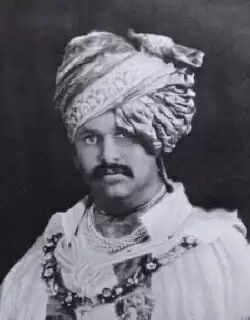
One of the king’s greatest achievements was to move the administrative capital to the fort at Gingee (Jinji) in Tamil Nadu. This bold strategic step which left the Mughal forces bewildered, also gave the Marathas a lot of time. From that remote fort, Rajaram carried on the war, issued orders, and inspired his commanders. His leadership in exile is what we see as the best in Maratha history, which also proves that a king’s reach may exceed his geographical borders.
The Silent Architect of Maratha Revival
Rajaram saw the growth of many a military leader, which in turn made history, Santaji Ghorpade, Dhanaji Jadhav, to name a few. Though these warriors did the fighting on the field, Rajaram was the base that held the administration together. With few resources at hand, he built a network of loyal generals and made sure that guerrilla war was the Maratha trademark.
Though Rajaram is at times seen as a less forceful ruler than Shivaji or Sambhaji, it was his administrative insight that, in the end, sustained Swarajya. He supported local chiefs in a large-scale reorganization of power, which was put in the hands of many instead of a few. He also introduced flexible military tactics, which set the stage for the Maratha revival, which came about after his time.
A Short Life, A Lasting Legacy
Rajaram Maharaj lived but a short life. Although he did not have many years, what he put into the world stood the test of time. His wife, Tarabai, went on to live out his legacy bravely; she ruled as regent and led the Maratha resistance with great valor. What we see in Tarabai’s strong and political skill was in large part due to the environment that Rajaram had created, one of survival and strategy.
Had it not been for Rajaram’s support, which saw through the empire’s most fragile times, the Maratha power may have crumbled at an early stage. He was able to guide the state through such difficult times that its existence might have been put in jeopardy, and this very fact provided the Peshwas of the future a solid base from which to grow into something unprecedented. Considering this, he was not merely a passive but rather an active participant in the process whose contribution was invaluable.
His Personality and Governing Style
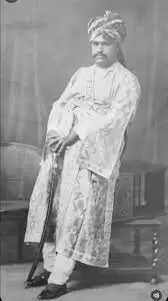
Rajaram was a person of the very calm type and probably was able. To stay well even in situations of considerable tension. Also, he was not at all showy or aggressive in what he did. Instead, he was into practical solutions, in-depth consultations, and in favor of group-based decision-making. At the time of our reports, he was a very approachable, soft, and reflective person. In the midst of the chaos that went on around him, he held to a certain internal code of discipline, which in turn inspired the officials who worked for him.
Interestingly, Rajaram also had a great interest in fort architecture and defense systems. Though not a popular topic of discussion, he put forth ideas for the strengthening of fortifications and improving supply routes.
Why Rajaram Maharaj Deserves More Recognition
Today, Chhatrapati Rajaram Maharaj is celebrated as the rock that held Swarajya up during its hardest times. He was not the commander of large battles, nor did he witness the peak of great wealth, and his tactical brilliance and unyielding courage were the pillars of the Maratha Empire.
His tale illustrates that bravery does not have to be spectacular; it can be silent, gradual, and resolute. Rajaram Maharaj’s existence is an illustration that even in the most difficult situations, leadership based on perseverance can change the course of history.
About the Author