
Have you at some point looked at the back of a food label and asked yourself why we use the term “Calories” for what is in fact “kilocalories”? In day-to-day talk, we see the terms calories and kilocalories used almost the same, which at times may be confusing. But the difference is very easy to see once you look at the numbers.
What Is a Calorie?
A calorie (cal) is a small unit of energy. In science, we note that one calorie equals about 4.184 joules. While calories are a fine unit in physics and basic science, we do not see them as a common unit for discussing food energy.
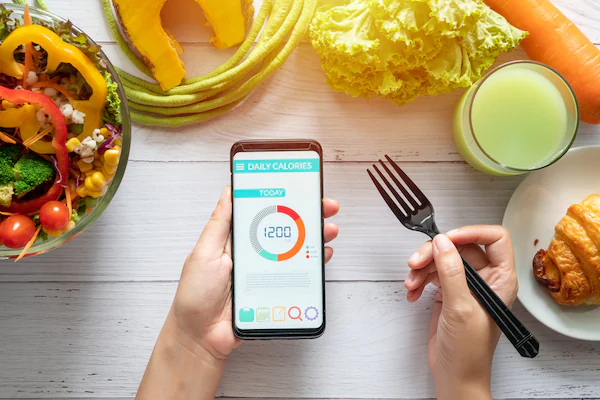
For example, we find it hard to fathom 200,000 calories. In nutrition, we rather use 200 kilocalories (kcal).
What Is a Kilocalorie?
A kilocalorie (kcal) is a thousand calories. It is the unit that we see the most in terms of food and beverage energy content.
Interestingly, when a food label reports that a product has 200 calories, what they in fact mean is that it has kilocalories. So that 200 Calories which you see on the Nutrition Facts box is equal to 200,000 small calories.
This is the main issue that causes confusion between the two terms.
Calories vs Kilocalories: The Easy Distinction
Here is an easy way to remember it:
1 kilocalorie = 1,000 calories
Therefore:
- 100 calories = 0.1 kcal
- 500 calories = 0.5 kcal
- 200 kcal = 200,000 calories
1 kcal is around 4,184 joules.
In health and fitness, we see energy listed in kcal all the time, which we also just call calories.
Why is this relevant to your day-to-day?
Understanding this distinction is useful when you are looking at food labels, planning meals, or tracking daily energy intake. For example, if someone reports eating “500 calories” in a casual setting, what they are referring to is usually 500 kilocalories, which is also called a Calorie (capital C) and not 500 small calories.
I recall that at the start of my studies in nutrition, I had a hard time noticing this difference. Food labels report “Calories,” which is also the same as kilocalories that the textbooks bring up, only they don’t do a great job at pointing out they are the same thing. In fact, they are related by a factor of 1,000.

Calories and Kilojoules in Weight Management
Energy intake is a key element of weight management, which also includes the use of dietary plans in terms of kilocalories. Being aware of what these units are will help to avoid mistakes in reading food labels and in meeting your energy target.
Also, calories are but a piece of the healthful diet picture. We see also to what degree foods are packed with protein, fiber, vitamins, minerals, and healthy fats.
Conclusion
The issue with calories and kilocalories is of scale. A calorie is the small unit, and a kilocalorie, which is 1,000 calories, is the unit that, in fact, is used in all of nutrition.
When you see “Calories” listed on a food label the next time, know that it is actually kilocalories they are reporting. This small detail in how info is presented can greatly improve your understanding of nutrition labels and everyday food choices.
About the Author