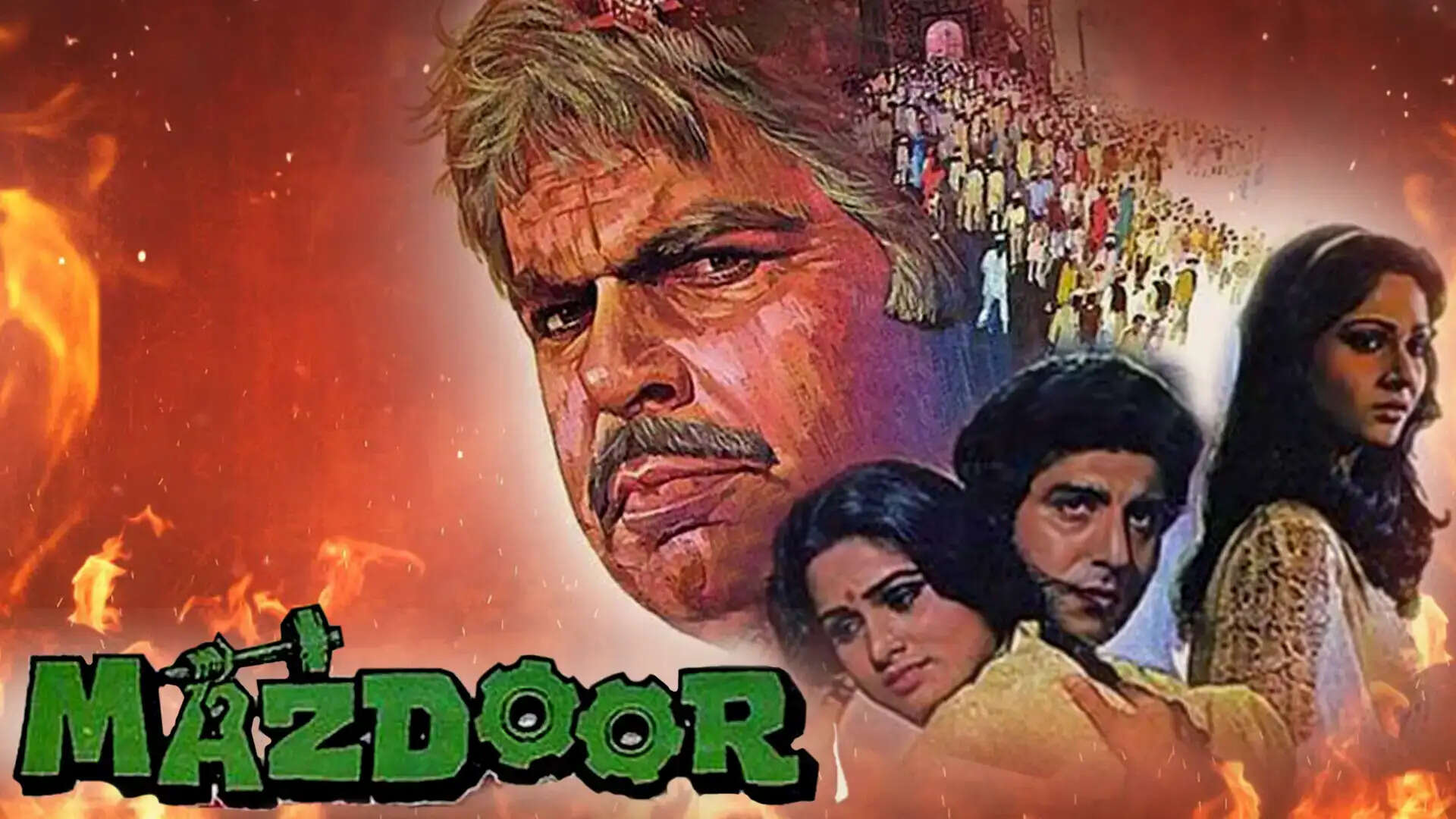


The film Mazdoor, a work by Ravi Chopra, also puts forward his father B. R. Chopra’s visionary ideas. It is very much a product of the classic Naya Daur (1957), which beautifully presented the struggle between man’s labor and machine growth. Although Naya Daur won time-honored appreciation, Mazdoor, which tries to rehash a similar story in a present-day context, does not quite achieve the same relevance.
The Plot: Workers, Power, and Transforming Values.
Sinha is the main character, who is a compassionate mill owner who puts his workers’ welfare first. Also, a close associate of his, Dinanath Saxena (played by Dilip Kumar), is of the same mind and is dedicated to bettering the laborers’ quality of life, which in turn will shape their future.
Ashok (Raj Babbar) is introduced into the story as a hard-working young man who is very much set out to become a textile engineer. Also, his willpower is a point of note, which in turn also brings in the support of the large family that sees in him a son. Also, the story delves into that of Dinanath’s home, which includes his wife Radha (Nanda) and the other children, which in turn brings a different dimension to the story.

In the wake of Sinha’s death, we see the turn. His son Hiralal (Suresh Oberoi) takes over the mill, which marks a large change in direction for the company. Unlike his father, Hiralal is out for profit at any cost and does not care for the workers’ issues. He brings in cuts to bonus schemes and puts in more machinery, which in turn causes trouble and unrest.
Conflict and Transformation
Dinanath is a man who does what is right, which at times means stepping down from his post if it forces him to compromise on principles. With Ashok’s support, he takes a large risk in reviving a shut-down mill and founding a worker-centered business from the ground up.
Despite what the finances and Hiralal’s interference threw at them, they overcame. The mill they ran is a success, which is a statement to their resilience and unity as a workforce. But what we see play out in the story is a gradual transition away from issues in the workplace to personal and emotional problems between the characters.
Love Triangle and Emotional Turmoil
In Ashok’s life, a complex love triangle develops with Meena and Smita. Meena is the one Ashok is for, but his soul mate is seen in Smita. Ashok gets into a reluctant marriage with Meena, which in turn causes heartbreak and tension.
This issue of the heart is what we focus on; we step away from the main issue of labor rights. Family issues blow up, which in the end cause Dinanath to disown Ashok. The workers’ response a go on strike brings us back to the main theme for a while, although.
Music and Performances
R. D. Burman’s music with lyrics by Hasan Kamaal falls short of the classic sound that defined Naya Daur’s score. Although we have tracks like Hum Mehnatkash Is Duniya Se that present peppy numbers, they, in turn, lack in originality and that certain appeal which makes them stand the test of time.

Performance as a whole, Dilip Kumar dominates with his presence, and in terms of lines, he does it very well. But at the same time, it has to be said that his mannerisms do become a bit repetitive as you go along. Other actors, who include Suresh Oberoi and Raj Babbar, do well, but the script really doesn’t give them enough to work with.
Final Thoughts
Mazdoor starts with a strong focus on labor issues and social justice, which over time fades away. We see a shift towards romance and family-oriented stories, which in turn weakens the film’s impact and makes it a less successful piece of work in comparison to its predecessor, Naya Daur.
Although it did very well and has a great message, the film doesn’t quite live up to being a classic. It is an interesting watch for what it tries to do, but not for how it does it.
About the Author