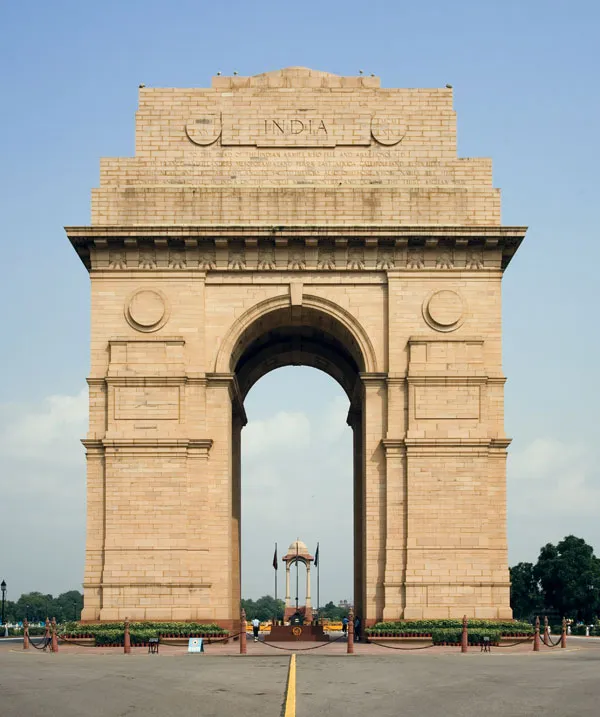

Delhi: The Heartbeat of India Across the Ages
Few cities on earth can claim to have watched empires rise and crumble on the very ground where they now stand. Delhi is one of them. Officially called the National Capital Territory of Delhi (NCT), this sprawling urban expanse along the Yamuna River is both a living museum and a fast-moving modern metropolis — a place where a seventh-century tomb might sit just a few streets away from a glass-fronted tech office.
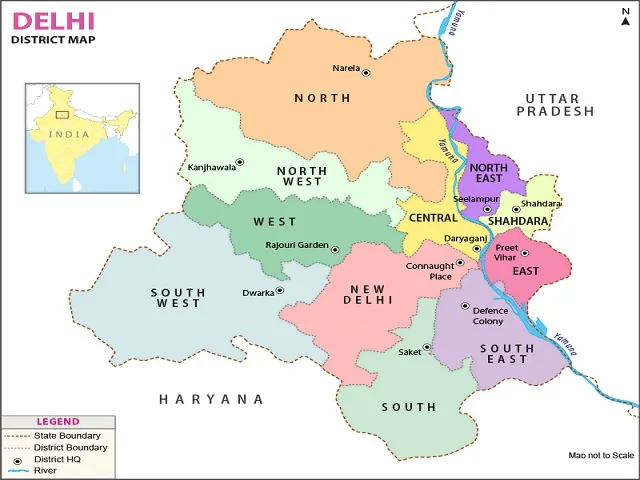
A City Wearing Many Crowns
Delhi isn’t quite a state and isn’t quite a plain old union territory either — it occupies a curious middle ground. It got union territory status in 1956, and by 1995 lawmakers had upgraded its standing further, giving it the formal title of National Capital Territory. That change came with real teeth: Delhi runs its own legislative assembly and elects its own Chief Minister, even though a centrally appointed Lieutenant Governor also has a hand in things. Spread across roughly 1,484 square kilometers, it was home to about 16.8 million residents when the last census was taken in 2011 — and if you widen the lens to the whole National Capital Region, which pulls in satellite cities like Gurugram, Noida, Faridabad, and Ghaziabad, the population balloons past 28 million, making it one of the largest urban clusters anywhere on the planet.
Where Empires Left Their Mark
People have been living on this land since at least the sixth century BCE, and over the centuries Delhi became something of a magnet for dynasties looking to rule from the center of the subcontinent. The Delhi Sultanate held court here, and later so did the Mughals, whose architectural fingerprints are still everywhere — the Red Fort and Humayun’s Tomb among them, both now recognized by UNESCO. Add the towering Qutub Minar to that list, and you start to see why the city reads like an open-air timeline of Indo-Islamic architecture. It was also a cultural capital in its own right: Urdu poetry flourished here, with figures like Mirza Ghalib and Mir Taqi Mir writing verses that are still recited today, and Sufi thought took deep root in the city’s soul. When the British shifted their colonial capital to Delhi in 1911, and later when India became independent in 1947, the city simply carried that legacy forward into a new political era.
Not Just a Postcard — A Working Capital
Beyond the monuments, Delhi hums as one of India’s economic engines, with strong footholds in IT, banking, telecom, and tourism, all knitted together by an expansive metro network and busy highways. It’s also where the machinery of the nation actually operates — Parliament House, Rashtrapati Bhavan, and the Supreme Court all call it home. Students flock here too, drawn by institutions like the University of Delhi, JNU, IIT Delhi, and AIIMS.
A City With Its Struggles
Of course, life in Delhi isn’t without friction. Punishing summer heat gives way to a drenching monsoon and then a surprisingly cold winter, and the city continues to wrestle with air pollution, water shortages, and traffic that can test anyone’s patience. Even so, Delhi has hosted the world before — the Asian Games, the Commonwealth Games, and the 2023 G20 Summit — proof that beneath the chaos lies a city that knows how to rise to the occasion.
About the Author