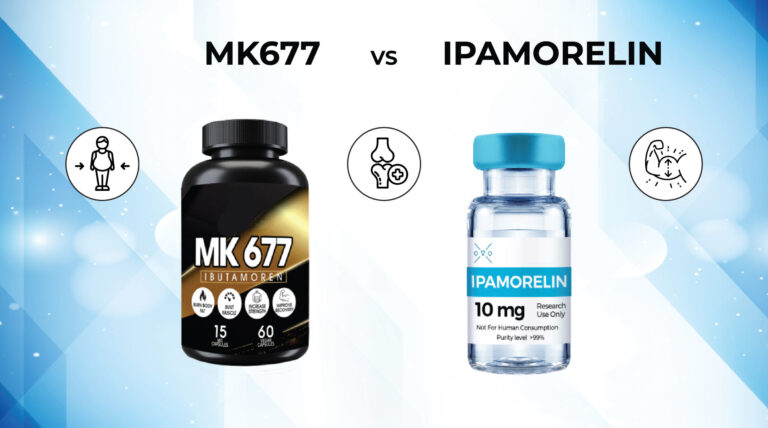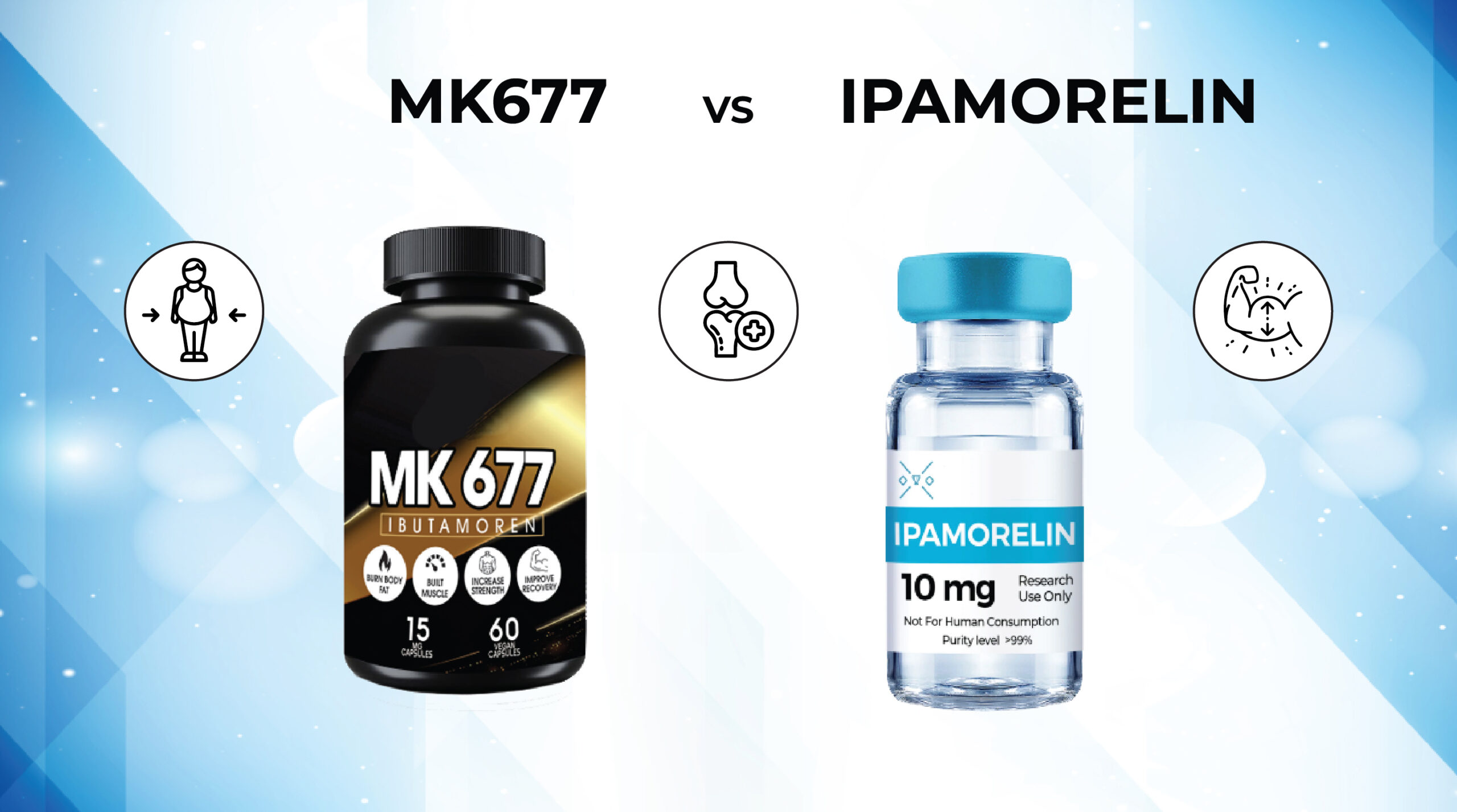

As the field of biomedical research continues to evolve, scientists and researchers are increasingly interested in the effects of various peptides and compounds to understand their potential applications. Among these, MK-677 and Ipamorelin have garnered significant attention due to their ability to stimulate growth hormone release. Whether you aim to delve into endocrinology or muscle physiology, choosing between MK-677 and Ipamorelin for your research is crucial.
Understanding MK-677 and Ipamorelin: A Comparative Overview
Often referred to by its developmental code name, MK-677, is a ghrelin receptor agonist that mimics the ghrelin hormone’s role in stimulating the release of growth hormone (GH). Its primary appeal in research revolves around its oral bioavailability and potential to increase both GH and insulin-like growth factor 1 (IGF-1) levels without altering cortisol levels. MK-677 is of particular interest due to its sustained effects, which can allow for extended study periods.
Ipamorelin, on the other hand, is a selective GH secretagogue known for its specificity in triggering GH release without significantly impacting other hormones such as cortisol or prolactin. As a pentapeptide, Ipamorelin closely imitates the natural growth hormone-releasing peptide (GHRP) and selectively binds to the ghrelin receptor in the pituitary gland. This targeted action makes it an intriguing subject for research focused on growth hormone pathways.
Pros and Cons of MK-677 for Research Applications
One of the advantages of using MK-677 in research is its oral bioavailability, which allows for non-invasive administration—a critical aspect when considering the welfare of animal subjects or the practicality of human clinical trials. Additionally, its ability to sustain GH and IGF-1 elevation over an extended period can provide meaningful data in longitudinal studies. However, its potency and broad GH-stimulating effects may introduce complexities in deciphering specific pathways or hormonal interactions.
Conversely, the primary concern with MK-677 is related to its wide range of action. It may inadvertently influence other aspects of physiology, including appetite regulation, energy expenditure, and substrate metabolism, which could confound results if not properly controlled. Researchers must also be cognizant of MK-677’s influence on fasting glucose and insulin levels, potentially intersecting with metabolic study parameters.
The variability in individual responses to MK-677 should be accounted for in research design, as it might affect the statistical power and reproducibility of results. This variability can arise from differences in endogenous ghrelin levels or varying sensitivities of subjects’ GH secretagogue receptors. Consistency in administration and careful monitoring of subjects can mitigate these issues to some extent.
Yet, the attractiveness of MK-677 in research is undeniable. Its feasibility in oral form and the substantial body of existing clinical data present a compelling case for its inclusion in GH-related studies. The breadth of potential effects captured in research involving MK-677 can significantly contribute to understanding GH’s role in health and disease states.
Evaluating the Benefits and Drawbacks of Ipamorelin
Ipamorelin stands out for its specificity and reduced side effect profile, particularly in the context of research where minimal off-target effects are desired. Unlike MK-677, Ipamorelin does not significantly impact cortisol or acyl ghrelin levels, thereby providing a cleaner GH stimulation profile. This makes it an excellent candidate for studies centered on probing GH function without the confounding influence of other hormones.
However, Ipamorelin’s highly focused action does come with limitations. Its research utility might be less suited for broad-spectrum hormonal studies where intertwined hormonal effects are under scrutiny. The precise modulation of GH may not fully illuminate the systemic interplay of different hormones, a consideration that could be vital depending on research aims.
Another drawback of Ipamorelin is its relatively limited penetration into mainstream research when compared with MK-677. Although this is not a direct reflection of its efficacy or safety, a smaller body of literature and fewer pre-existing studies may mean more groundwork is needed to establish frameworks for new lines of inquiry. Nevertheless, Ipsmorelin’s unique characteristics open opportunities for pioneering research in areas yet unexplored by its counterpart.
The administration route for Ipamorelin typically involves subcutaneous injections, which might be less appealing in some research scenarios, particularly those involving human subjects. Despite this, its capacity to yield targeted data on GH release and its favorable safety profile are important considerations that can outweigh the drawbacks in specific study designs.
Overall, whether MK-677 or Ipamorelin becomes the focal point of your research, the key lies in aligning your choice with the scientific inquiry’s scope and nature. By meticulously considering each compound’s unique characteristics and the desired outcomes of the study, researchers can harness their potential to advance the understanding of growth hormone’s profound influence on human physiology.
About the Author