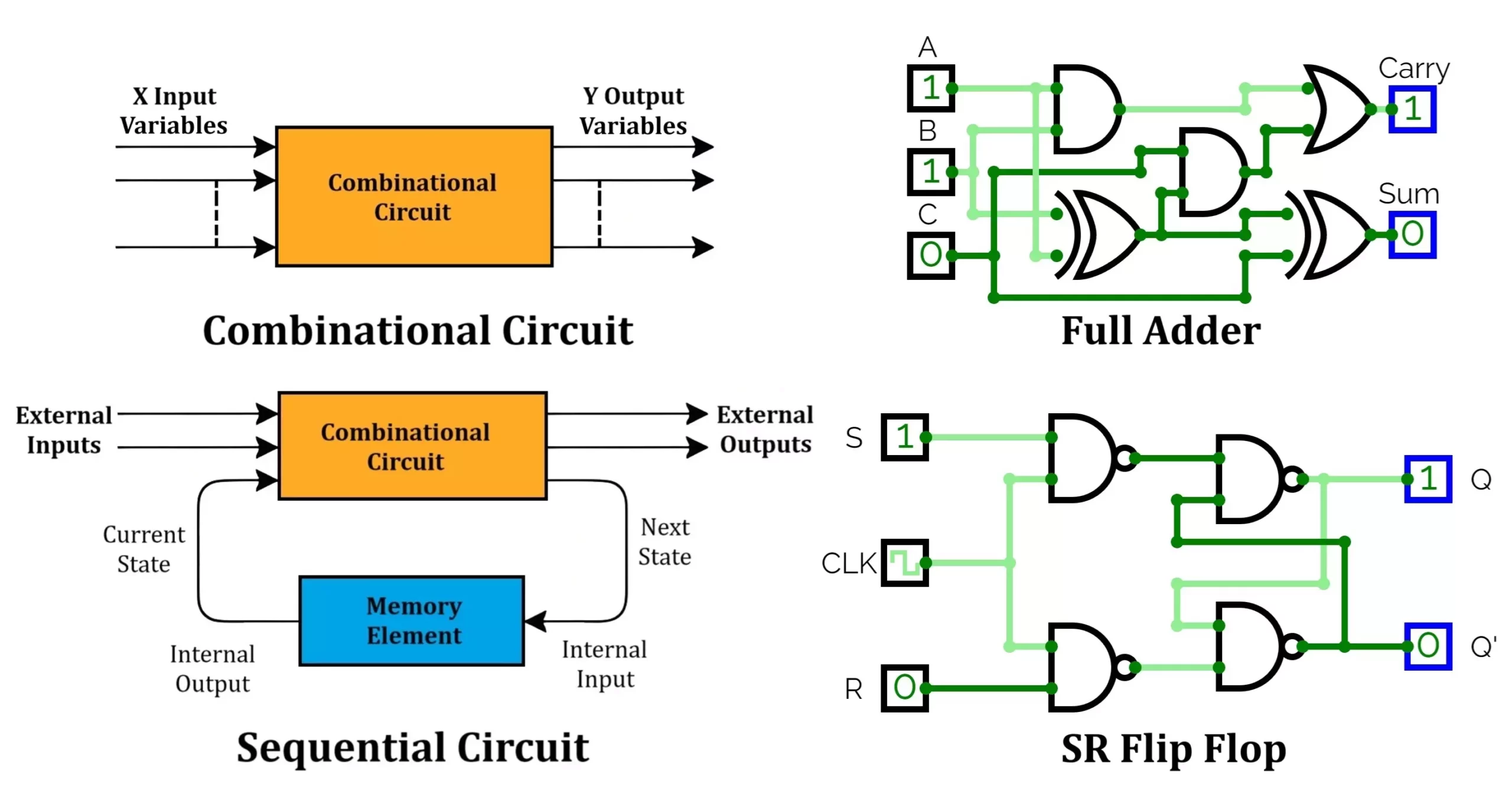

Digital electronics is a large aspect of modern tech. In fields ranging from smartphones and computers to washing machines, communications, and medical devices, digital circuits are used in everything. Two main types of digital circuits are combinational circuits and sequential circuits. Though both do indeed use logic gates and process in 0s and 1s, they differ in the way they produce output.
Understanding what is different is key for students and also for any beginner who is just starting in digital electronics, which in turn forms the base of more complex digital systems.
What Is a Combinational Circuit?
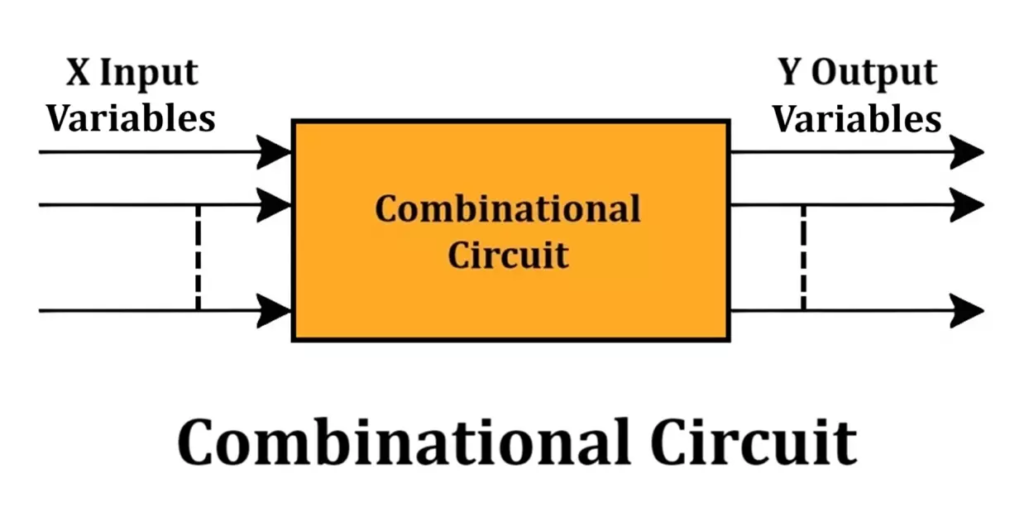
A digital circuit that, at any given time, has an output that is based on the present input values. Also, it does not keep a record of past input events. When input changes, the output will in turn change according to the logic that is designed into the circuit.
These circuits consist in large part of logic gates like AND, OR, NOT, NAND, and NOR. Also, we present the relationship between input and output via a Boolean expression or a truth table.
Some examples of combinational circuits are adders, subtractors, multiplexers, demultiplexers, encoders, decoders, and comparators.
For instance, take a simple two-input AND gate. What we see is that the output is 1 only when both inputs are 1. What the inputs may have been a few seconds ago is irrelevant. What determines the output is the present input.
This is what makes combinational circuits a good choice for operations which require immediate logical processing and not for the storage of previous info.
What Is a Sequential Circuit?
A sequential circuit is of a different nature in that its output is a function of present inputs as well as the past state of the circuit. In other words, a sequential circuit has memory.
This memory, in turn, preserves information about past states. In what we term as sequential circuits, these elements like flip-flops and latches are very common. Also, many of these sequential systems have a clock signal, which they use to determine when to store or change information.
Examples also include counters, registers, shift registers, and memory-related circuits.
In a digital counter, when we see that it is at 5, its next value will be determined by the present state and the input or clock, which causes it to advance. Also, the circuit has to remember its past state.
Sequential circuits also do the job very well when it comes to a digital system needing to carry out a set of operations in order.
Major Difference Between the Two
Here is a simple way to remember which is which:
Combinational circuit = no memory.
Sequential circuit = memory.
In a combinational circuit, the output is a function of the present inputs. In a sequential circuit, the output also includes the present input as well as that of the past state.
In other words, we see that a clock is used differently in each type of circuit. In combinational circuits, it is not a requirement for the determination of output. In the case of sequential circuits, which are also of the synchronous type, the clock is used to time state changes.
Difference in a Simple Table
| Feature | Combinational Circuit | Sequential Circuit |
|---|---|---|
| Output | Depends on present input | Depends on present input and past state |
| State | No past state | Past state is stored |
| Time | Usually not needed | Often used |
| Basic Components | Logic gates | Logic gates + storage elements |
| Feedback | Rarely present | Commonly present |
| Examples | Adder, Multiplexer, Decoder | Counter, Register, Shift Register |
| Action | Instant result | State-based operation |
How Do They Work Together?
In practical digital systems, combinational and sequential circuits are used together, which does not happen in theory.
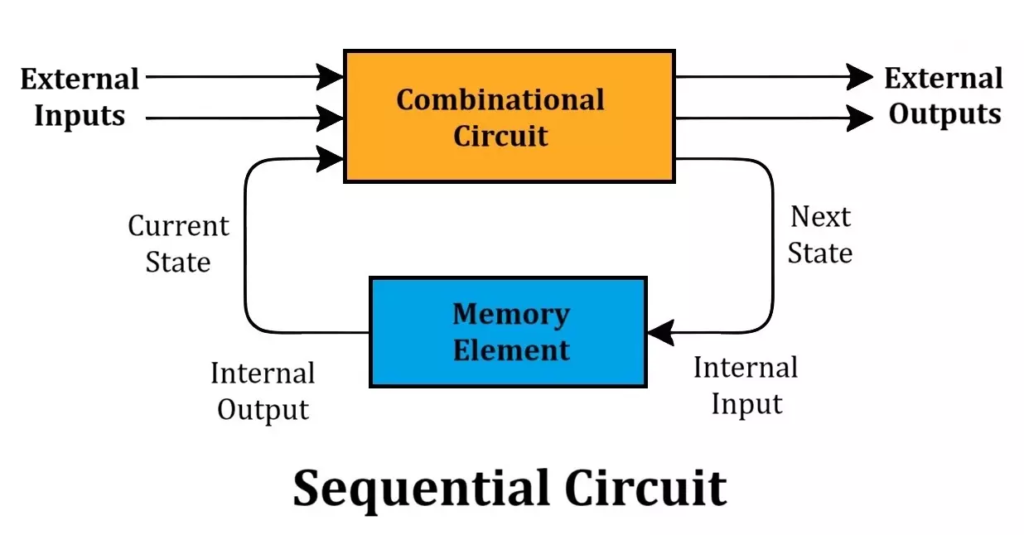
A sequential circuit maintains present state information, which in turn a combinational circuit uses to determine what the next state is to be. State storage is then changed at the proper clock event.
For instance, in digital control systems, the sequential element is for the present state, which in turn the combinational element is for what action to take next. This put together enables the design of complex systems like processors, communication equipment, and digital controllers.
Why Is the Difference Important?
Knowing which circuit to use is a key point for students in their study of large digital systems. At the start of a design project, what is often asked is if the system has to remember past info.
If the answer is no, we have a combinational design, which is enough. Should the system store information, count events, or follow a certain sequence, then a sequential design is the general requirement.
This basic difference also plays a key role in the study of more complex topics like finite state machines, computer architecture, microprocessors, and digital systems.
Conclusion
Combinational and sequential circuits are the basic elements that make up digital electronics. A combinational circuit outputs present based only on what is input at that time, whereas a sequential circuit takes into account present inputs and also past stored data.
Adders, multiplexers, and decoders are known examples of combinational circuits, while counters, registers, and shift registers point out the importance of memory in sequential circuits.
Combinational circuits at their core deal with present input producing present output; on the other hand, sequential circuits also include past input in present output. Once that distinction is clear, many other digital electronics concepts fall into place.
About the Author