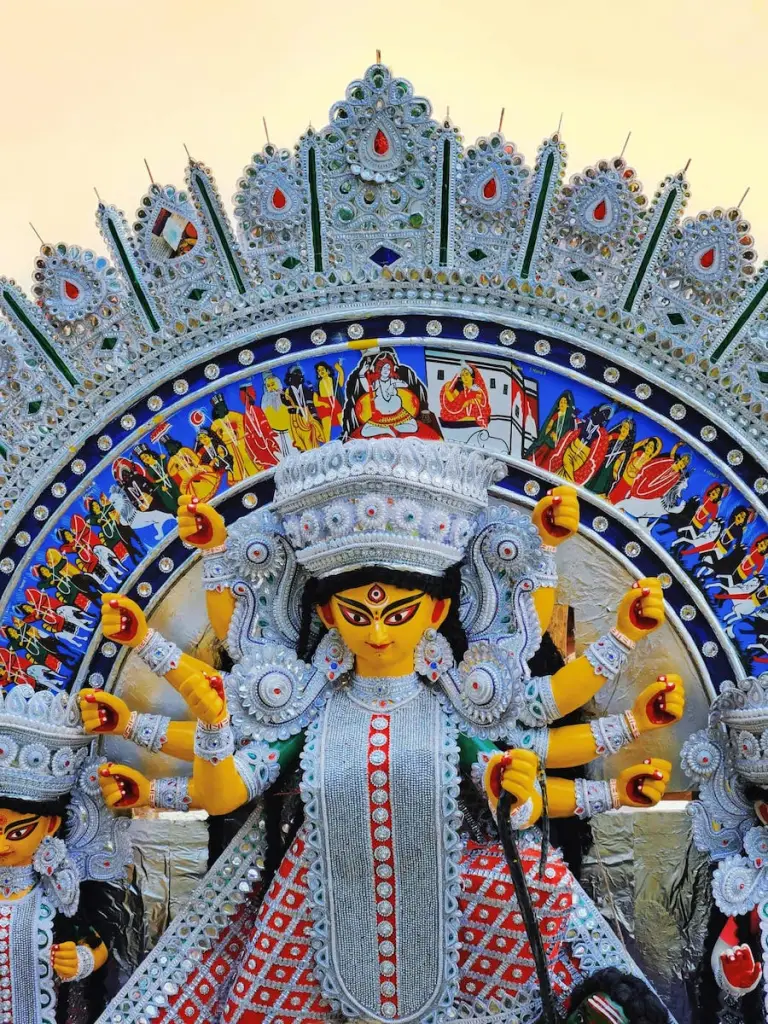

The relationship between Lord Shiva and Goddess Durga represents one of the most profound ideas in Hindu mythology: the union of consciousness and divine energy. During Durga Puja, particularly in Bengal, devotees focus their attention on the magnificent idol of Goddess Durga as she defeats Mahishasura. However, some traditional depictions also include a small, less noticeable representation of Lord Shiva behind the goddess.
The idea of “The Hidden Shiva Behind Durga” explores the symbolism of this subtle presence. It connects Hindu spiritual philosophy, regional folklore, and the belief that divine power and consciousness are inseparable.
Also read: Top 20 Most Beautiful Women In Hollywood
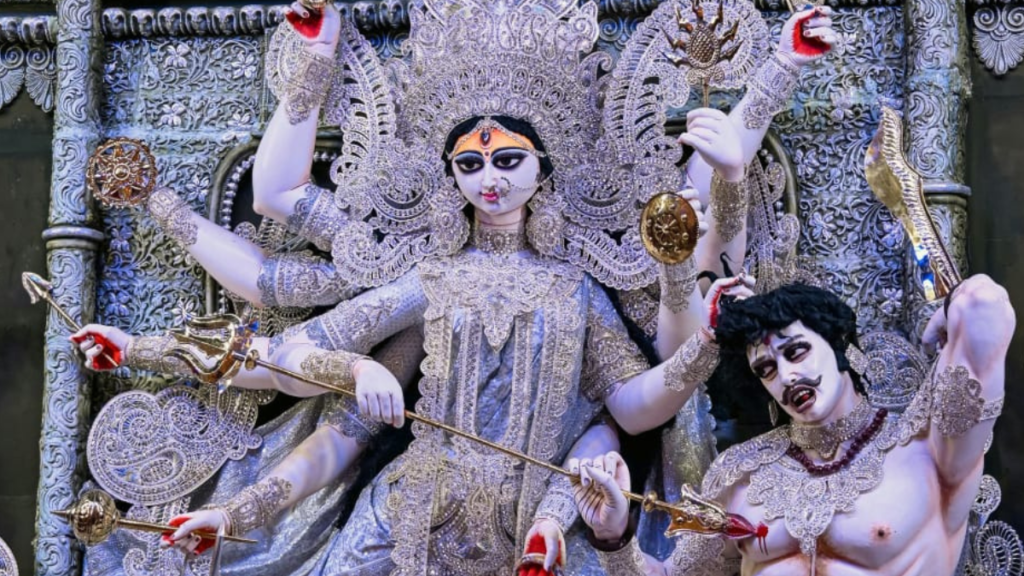
Who Is the Hidden Shiva Behind Durga?
The expression “Hidden Shiva Behind Durga” refers to the symbolic or occasional visual presence of Lord Shiva behind Goddess Durga in certain Durga Puja traditions. The concept is especially discussed in the context of Bengali Durga Puja, where the goddess is traditionally depicted with her children and the defeated demon Mahishasura.
Not every Durga idol includes a visible figure of Shiva, and the practice is not universal. Its meaning can vary according to local customs, artistic traditions, and individual interpretations.
In Hindu mythology, Shiva is the consort of Goddess Parvati, whose fierce and protective form is worshipped as Durga. Their relationship represents the complementary forces of consciousness and energy that sustain the universe.
Why Is Lord Shiva Sometimes Depicted Behind Goddess Durga?
There are several interpretations of Shiva’s subtle presence in certain depictions of Durga.
1. The Symbolism of Shiva and Shakti
One important interpretation comes from Hindu philosophical traditions that describe Shiva as pure consciousness and Shakti as divine energy. Goddess Durga represents Shakti, the dynamic force responsible for action, creation, protection, and transformation.
Shiva symbolises stillness, awareness, and the underlying consciousness of existence. Their relationship illustrates the idea that energy and consciousness are interconnected rather than entirely separate.
From this perspective, the hidden Shiva represents the deeper spiritual foundation behind Durga’s visible strength.
2. Shiva as the Silent Guardian
Some regional folk interpretations describe Shiva as remaining spiritually connected to Durga when she visits her maternal home during the annual Durga Puja celebrations.
According to these interpretations, his subtle presence reflects his enduring bond with the goddess. Rather than taking centre stage, Shiva remains in the background as a quiet guardian and companion.
This understanding is rooted in devotional storytelling rather than a universally established scriptural account.
3. The Balance Between Strength and Stillness
Goddess Durga is celebrated for her courage, determination, and victory over evil. Shiva, by contrast, is frequently associated with meditation, detachment, and inner stillness.
Their symbolic relationship suggests that strength becomes more meaningful when guided by awareness and wisdom. Durga’s active power and Shiva’s contemplative nature together represent balance within the cosmic order.
The Connection Between Shiva and Durga in Hindu Mythology
Goddess Durga’s battle against Mahishasura is one of the most celebrated stories in Hindu mythology. According to a well-known account, the gods combined their divine energies to manifest a powerful goddess capable of defeating the buffalo demon, whose growing power threatened cosmic order.
Durga fought Mahishasura and ultimately defeated him, restoring balance and protecting the gods and the world.
Shiva is closely connected to this wider divine tradition through his relationship with Shakti and his role among the principal deities of Hinduism. However, the popular story of Durga defeating Mahishasura does not require Shiva to appear physically behind her.
The hidden-Shiva interpretation is better understood as a symbolic or regional devotional idea associated with their spiritual connection.
Shiva and Shakti: Two Aspects of One Reality
In several Hindu philosophical traditions, particularly those influenced by Tantra, Shiva and Shakti represent two inseparable aspects of existence.
- Shiva: Symbolises consciousness, awareness, stillness, and the unchanging foundation of reality.
- Shakti: Symbolises energy, movement, creativity, transformation, and the power that manifests in the universe.
- Their union: Represents the interdependence of consciousness and energy.
The form of Ardhanarishvara, which depicts Shiva and Parvati as a single composite divine figure, is another powerful representation of this unity.
The image challenges the idea that masculine and feminine principles must be understood as completely separate forces. Instead, it presents them as complementary dimensions of a greater whole.
The Significance of the Hidden Shiva During Durga Puja
Durga Puja is one of the most important festivals in West Bengal and several other parts of India. The festival celebrates Goddess Durga’s arrival, her victory over Mahishasura, and the triumph of good over evil.
In Bengali tradition, Durga’s annual visit to her parental home is an important cultural and devotional theme. Her children—Ganesha, Lakshmi, Saraswati, and Kartikeya—are commonly depicted alongside her in traditional family arrangements.
Where a representation of Shiva is included behind the main idol, it can invite devotees to reflect on the relationship between the goddess and her consort.
The image may also encourage a deeper appreciation of the artistic traditions and local beliefs that make Durga Puja different across communities.
What Does the Hidden Shiva Teach Us Today?
The symbolism of Shiva behind Durga can offer several reflections for everyday life in 2026.
The importance of inner awareness: Shiva’s association with stillness reminds us to pause, reflect, and understand a situation before responding.
The courage to face challenges: Durga represents the strength required to confront difficulties and stand against injustice.
The value of balance: The relationship between Shiva and Shakti illustrates how thoughtful awareness and decisive action can complement one another.
The importance of spiritual connection: Their bond represents the idea that visible strength can coexist with quiet support, companionship, and devotion.
These interpretations allow an ancient religious tradition to remain meaningful to contemporary readers without reducing its spiritual significance to a single explanation.
Frequently Asked Questions
1. What does “The Hidden Shiva Behind Durga” mean?
It refers to a symbolic or occasional depiction of Lord Shiva behind Goddess Durga in certain traditions. It is often interpreted as representing the spiritual connection between Shiva’s consciousness and Durga’s divine energy.
2. Is Shiva always present behind Durga’s idol?
No. A visible figure of Shiva is not included in every Durga idol or every regional tradition. The practice varies according to local customs and artistic choices.
3. Why is Lord Shiva associated with Goddess Durga?
Durga is understood as a powerful form of Shakti, who is closely connected with Shiva through the divine relationship between Shiva and Parvati. Their union symbolises the interconnectedness of consciousness and energy.
4. What is the relationship between Shiva and Shakti?
Shiva represents consciousness and stillness, while Shakti represents dynamic energy and creative power in several Hindu philosophical traditions. Together, they symbolise complementary aspects of existence.
5. Is the hidden Shiva story mentioned in Hindu scriptures?
The broader relationship between Shiva and Shakti is deeply rooted in Hindu religious traditions. However, the specific idea of a small Shiva figure hidden behind Durga during Durga Puja should not be treated as a universal scriptural rule. It is associated with particular interpretations and regional traditions.
6. What is the spiritual lesson of the hidden Shiva?
One interpretation is that courage and action become stronger when supported by awareness, wisdom, and inner balance. The symbolism encourages reflection on the relationship between visible power and quiet consciousness.
Conclusion
“The Hidden Shiva Behind Durga” offers a fascinating way to explore the spiritual connection between Lord Shiva and Goddess Durga. Although the depiction is not universal, its symbolism draws attention to the relationship between consciousness and energy, stillness and action, and inner awareness and outward strength.
During Durga Puja, the goddess’s victory over Mahishasura remains the central celebration. The idea of Shiva’s subtle presence adds another layer of devotional interpretation for those who encounter it in particular regional traditions.
In 2026, this symbolism continues to provide an opportunity to reflect on courage, wisdom, spiritual unity, and the balance between action and awareness.
Also check: https://link.amazon/B03Gga9uw
About the Author