Top 20 Greatest Hindi Romantic Films of All Time.
Love has always been cinema’s favorite muse, and Bollywood has turned that obsession into an art form all its own. Long before Hollywood tearjerkers found their footing, Hindi filmmakers were already mixing swelling background scores, monsoon rain, and star-crossed lovers into something uniquely desi. From Raj Kapoor’s wandering charm to Shah Rukh Khan’s outstretched arms, this industry has built an entire language around the ache and joy of falling in love. Here’s a countdown of the films that defined that language.
Honorable Mentions
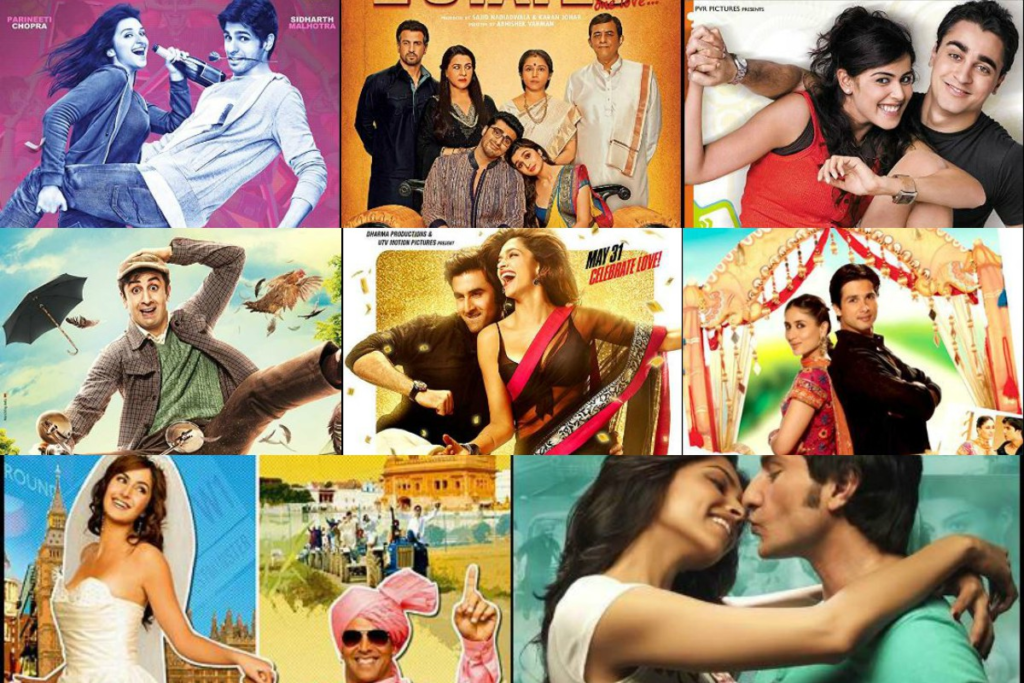
Before the main list, a quick nod to films that just missed the cut: Chori Chori, Daag, Kabhie Kabhie, Silsila, Maine Pyaar Kiya, Chandni, the 2002 Devdas, Veer-Zaara, The Lunchbox, and Lootera.
20 to 11: The Foundation Builders
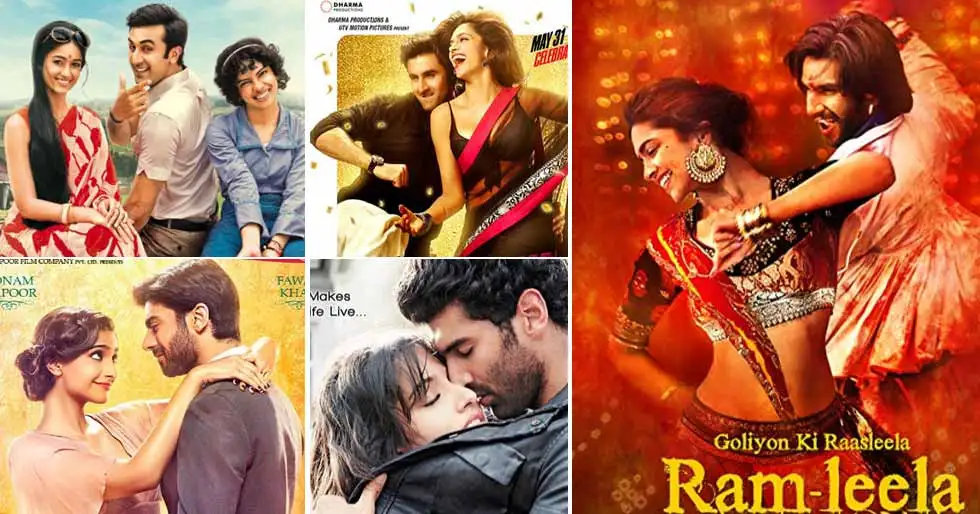
At number 20 sits Rehna Hai Tere Dil Mein, a film that didn’t set the box office alight but became a beloved cult favorite thanks to genuine chemistry between its leads. Barfi (19) follows with its wordless, expressive romance set against Darjeeling’s hills, while Rockstar (18) captures the raw, self-destructive intensity of an artist chasing heartbreak for the sake of his art.
Nineties nostalgia takes over with Kabhi Haan Kabhi Naa (17) an underrated gem where Shah Rukh Khan plays the loser-in-love role with disarming warmth. Jab We Met (16) turns a train journey into a slow-burning love story, and Qayamat Se Qayamat Tak (15) reinvented the star-crossed-lovers trope for a generation raised on action films.
Family and tradition anchor Hum Aapke Hain Koun..! (14), a wedding-season staple loaded with music, while Hum Dil De Chuke Sanam (13) brings Sanjay Leela Bhansali’s signature visual grandeur to a Gujarat-set love triangle. Madhumati (12) explores reincarnation as a romantic device decades before it became a Bollywood cliché, and Raincoat (11), a quiet retelling of an O. Henry classic, remains one of the most overlooked gems in the genre.
10 to 6: The Mid-Century and Millennial Classics.
Dil Chahta Hai (10) reshaped how modern Bollywood talks about love and friendship, while Lamhe (9) dared to tell an age-gap romance decades ahead of its time, becoming a bigger hit abroad than at home. Kaagaz Ke Phool (8) Guru Dutt’s melancholic masterpiece mirrored its own tragic box-office fate. Barsaat (7) helped lay Bollywood’s romantic template in 1949, and Dilwale Dulhaniya Le Jayenge (6) became a cultural institution by balancing youthful rebellion with respect for family tradition.
Top 5: The Immortals
Guide (5) broke the mold with morally flawed lovers and a bittersweet, unresolved ending. Awaara (4) turned Raj Kapoor into a global icon its themes resonating as far as the Soviet Union. Devdas (3), in its 1955 form, remains the most emotionally devastating adaptation of Sarat Chandra Chattopadhyay’s tragic novel. Pyaasa (2) elevates heartbreak into poetry, following a struggling writer whose worth is only recognized after his presumed death.
And at the very top, Mughal-e-Azam (1) reigns supreme a sweeping historical epic about a prince and a court dancer, told through opulent sets forbidden longing, and one unforgettable dance beneath a hall of mirrors. It remains the gold standard against which every Bollywood romance is measured.
From black-and-white poetry to monsoon-soaked millennial romance, these films prove that no matter how the industry evolves, Bollywood’s heart still beats to the rhythm of love.
About the Author