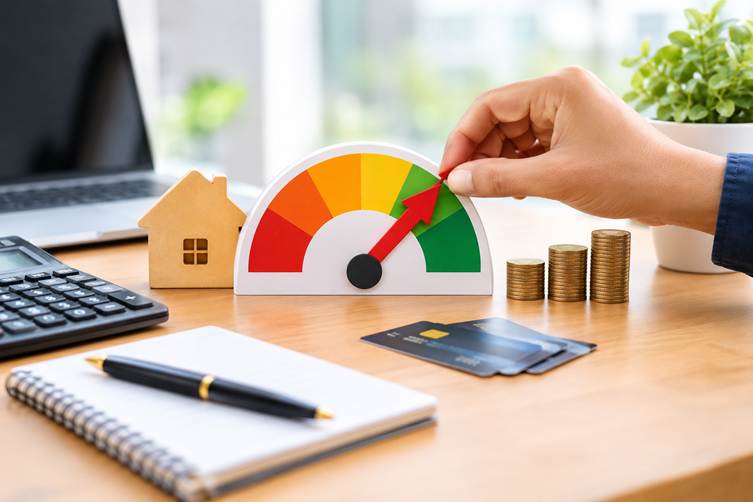

Your credit score is an important factor lenders consider when reviewing a loan application. It reflects your credit history and repayment behaviour and can influence how lenders assess your application.
If you plan to apply for a personal loan, reviewing your credit profile in advance can help you identify areas that need attention. Improving your score takes time and consistent financial discipline, so it is best to start well before you apply.
What is a Credit Score?
A credit score is a numerical representation of your credit history. It is based on information related to your borrowing and repayment behaviour.
Factors that can influence your credit profile include:
- Repayment history
- Credit utilisation
- Existing credit accounts
- Outstanding debt
- Credit enquiries
- Length and type of credit history
A higher score indicates a stronger history of managing credit responsibly. However, a credit score is only one part of a loan application. Lenders can also consider income, employment stability, existing financial obligations and repayment capacity.
Why Does Your Credit Score Matter Before Applying for a Loan?
Personal loans are unsecured, meaning lenders do not require collateral. Your credit history can therefore indicate how responsibly you have managed credit and repayments in the past.
A healthy credit profile can strengthen your loan application and may improve your chances of receiving suitable loan terms. For example, Tata Capital states that a CIBIL score of 700 or above is preferred for its personal loan offering. However, credit score is only one part of the assessment. Lenders may also consider your income, employment stability, existing debt, and repayment capacity.
Credit score requirements can vary between lenders, so maintaining a strong credit profile can improve your overall financial readiness without guaranteeing loan approval.
7 Ways to Improve Your Credit Score Before Applying for a Loan
A better credit score usually comes from consistent financial habits, not quick fixes. If you plan to apply for a loan, these steps can help you strengthen your credit profile and improve your overall financial readiness.
1. Check Your Credit Report
Start by reviewing your credit report before applying. Look for:
- Missed or delayed payments
- Incorrect outstanding balances
- Closed accounts that are still shown as active
- Unrecognized credit accounts
- Incorrect personal information
- Recent credit inquiries you do not recognize
If you find an error, report it to the relevant credit bureau or lender and allow time for it to be corrected.
2. Pay EMIs and Credit Card Bills on Time
Your repayment history plays an important role in your credit profile. Pay existing loan EMIs and credit card bills by their due dates.
Setting reminders or using automatic payment arrangements can help you avoid missed payments. If you have overdue amounts, prioritize bringing them up to date before taking on new debt.
3. Keep Your Credit Utilization Manageable
Credit utilization is the portion of your available revolving credit that you are currently using. For example, if your total credit card limit is ₹2 lakh and you owe ₹50,000, your utilization is 25%.
Regularly using a large portion of your available credit can indicate greater dependence on credit. Keep outstanding balances manageable and avoid spending beyond what you can repay.
4. Manage Existing Debt Before Taking New Credit
Existing loans and credit card balances can affect your monthly cash flow and ability to repay. If possible, reduce unnecessary outstanding debt before applying for another loan.
However, avoid using all your savings to clear debt. Keep enough money aside for emergencies and essential expenses.
5. Limit Multiple Credit Applications
Applying to several lenders within a short period can lead to multiple credit inquiries. Instead, research lenders and compare their eligibility criteria for Personal Loan, interest rates, loan amounts, tenure, and applicable charges before applying.
Once you have identified suitable options, apply selectively rather than submitting multiple applications.
6. Review Your Credit Accounts Before Closing Them
Closing an old credit card can reduce your total available credit and may increase your overall credit utilization. For example, if closing a card reduces your available credit from ₹3 lakh to ₹2 lakh while your outstanding balance remains ₹60,000, your utilization rises from 20% to 30%.
This does not mean you should keep every account open. Consider your credit usage and overall financial position before closing an account.
7. Keep Your Overall Financial Profile Healthy
Your credit score is only one part of a loan application. Lenders may also consider your income, employment, existing obligations, and repayment capacity. Keeping your income stable, managing existing debt, and avoiding unnecessary new borrowing can help strengthen your financial position before applying.
Improving your credit score takes time. Consistent repayments, controlled credit usage, and responsible borrowing habits work better than trying to make sudden changes just before a loan application.
How Long Does It Take to Improve a Credit Score?
There is no fixed timeline for improving a credit score.
The time required depends on the reason for the lower score and your individual credit history. If the issue is missed payments, high utilization, or excessive outstanding debt, consistent improvement in these areas can gradually strengthen your profile.
Rather than looking for a quick change, focus on sustainable habits:
- Pay all EMIs on time
- Keep credit utilization manageable
- Reduce outstanding debt
- Avoid unnecessary credit applications
- Review your credit report regularly
If you don’t urgently need a loan, give these habits time to reflect in your credit history.
Common Mistakes to Avoid Before Applying
Improving your credit score is not only about what you should do. It is also about avoiding habits that can weaken your financial profile.
Avoid:
- Applying for several loans at once
- Maxing out your credit cards
- Missing EMI due dates
- Taking unnecessary debt
- Ignoring errors in your credit report
- Closing credit accounts without considering the impact
- Borrowing more than you can comfortably repay
Small improvements in financial discipline can make a meaningful difference over time.
Final Thoughts
Improving your credit score is a gradual process built on consistent financial habits. Paying EMIs and credit card bills on time, keeping credit utilization manageable, reducing unnecessary debt, and limiting new credit applications can help strengthen your credit profile over time.
Before applying for a personal loan, review your credit report and overall finances, not just your score. A strong credit profile can support your application, but lenders also consider income, employment, existing obligations, and repayment capacity.
About the Author