
Soft, Lacy, and Utterly Kerala: Appam the Way It’s Meant to Be
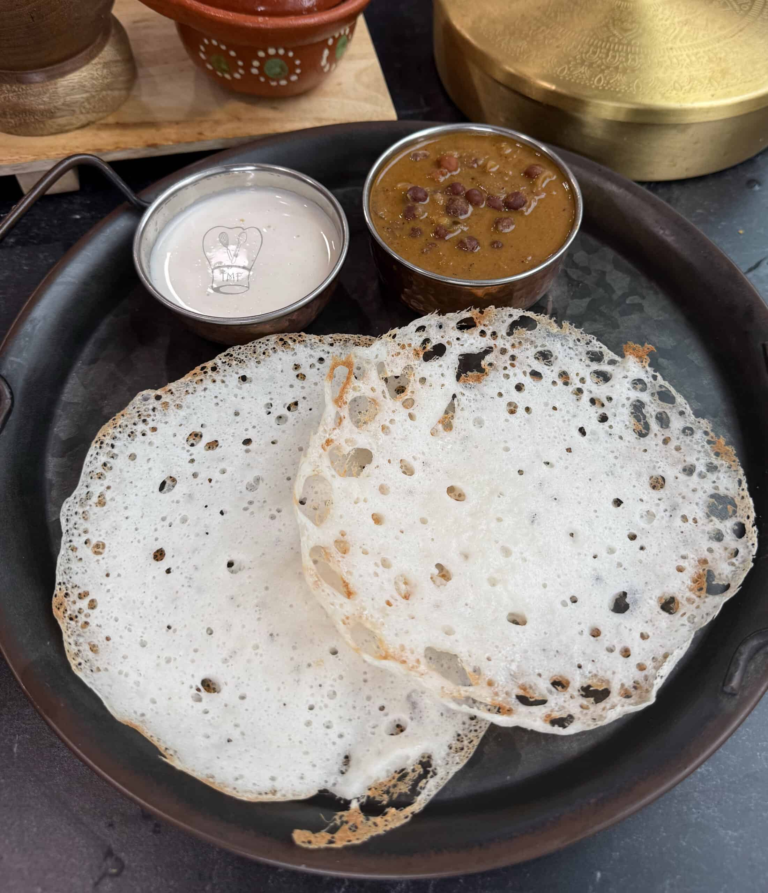
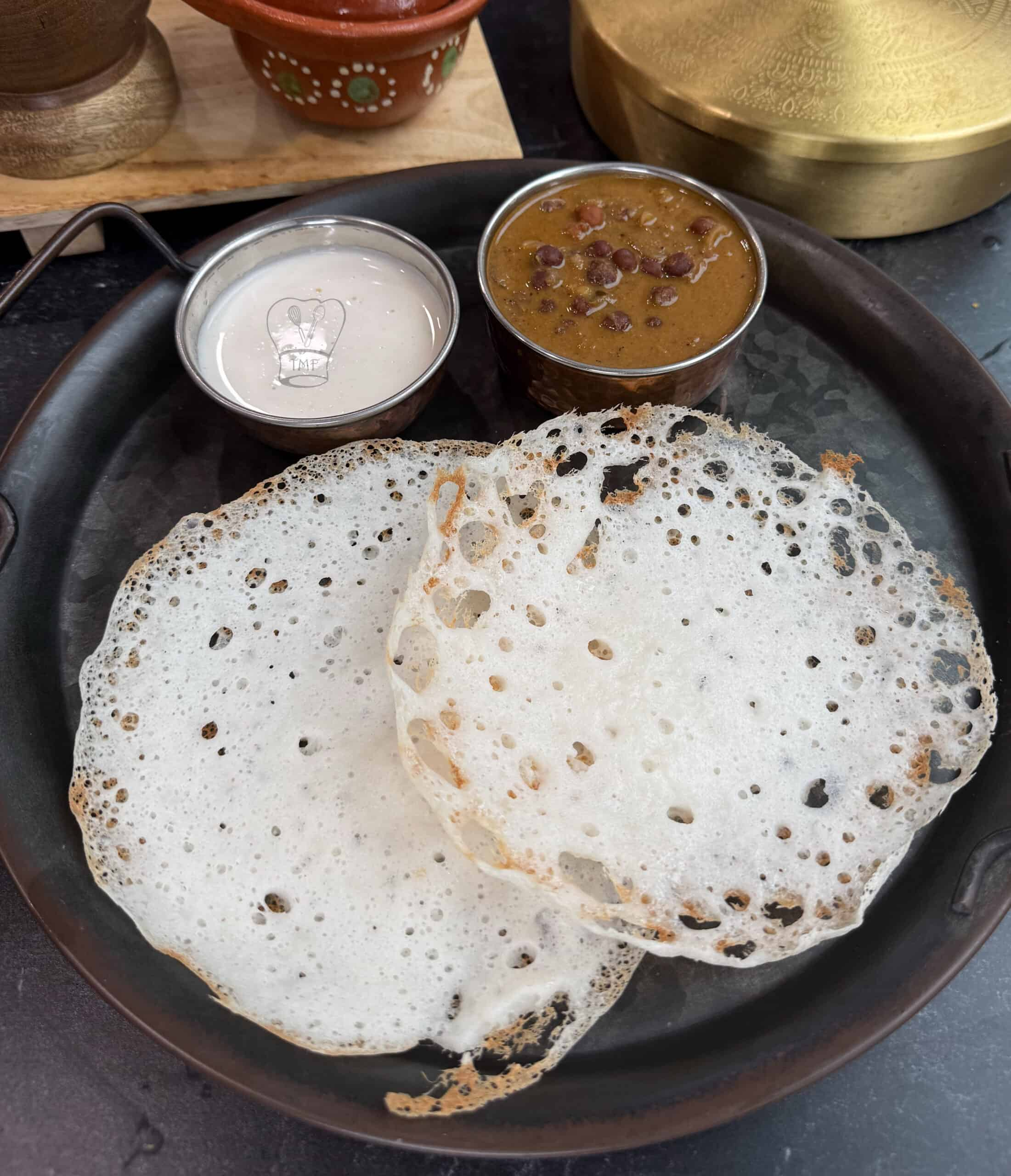
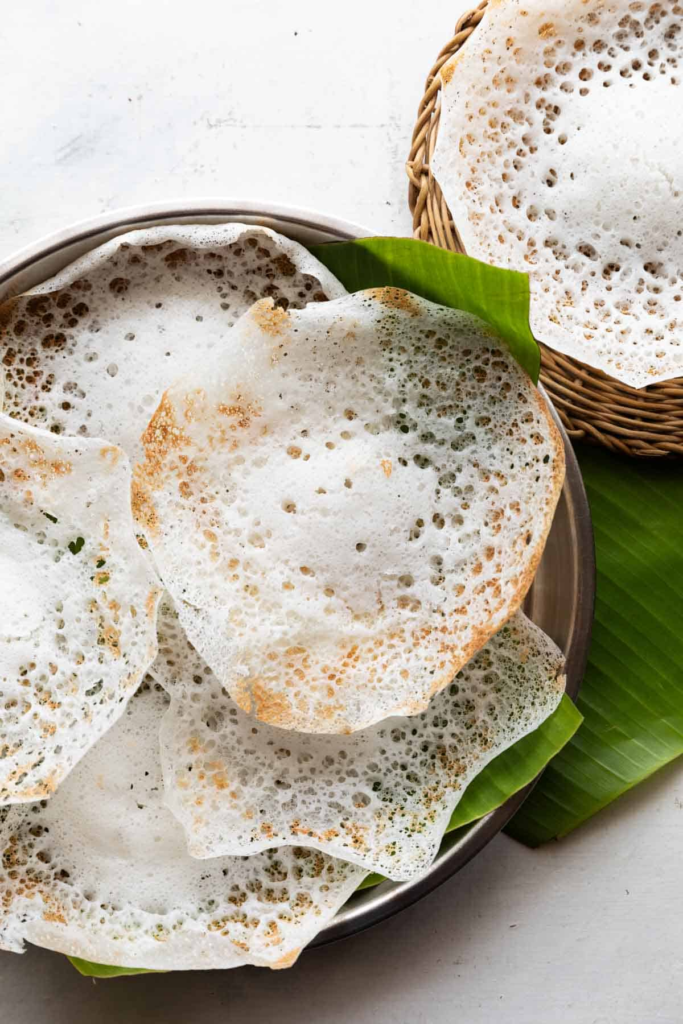
Ask anyone from Kerala about comfort food and appam will come up within the first minute. It has a snow-white, pillowy centre and a thin, crisp, lacy edge. I’m opinionated about this: a good appam doesn’t need much on the side. A bowl of vegetable stew and a quiet Sunday morning are enough.
What You’ll Need
- 2 cups raw rice (pachari or any short-grain rice)
- ½ cup cooked rice
- ½ cup freshly grated coconut
- 1 teaspoon sugar
- ½ teaspoon instant yeast (or 2 tablespoons of toddy if you have it)
- Salt to taste
- Water, as needed
How to Make It
1. Soak. Wash the raw rice and soak it in plenty of water for 4 to 5 hours. Don’t skip this step. Rushed soaking gives you dense, sad appams.
2. Grind. Drain the rice and blend it with the cooked rice, coconut, sugar, and yeast. Add water a little at a time until you get a smooth, slightly thin batter, a bit runnier than pancake batter. The cooked rice is the secret to that cloud-like softness.
3. Ferment. Cover the batter and leave it somewhere warm for 6 to 8 hours. It should double in volume and smell pleasantly sour. Add salt just before cooking.
4. Cook. Heat an appachatti (a small, deep, wok-like pan) on medium flame. Pour in a ladleful of batter, lift the pan, and swirl it once so the batter climbs up the sides. Cover and cook for 1 to 2 minutes. Never flip it. When the edges turn golden and the centre looks spongy, it’s done.
My Honest Opinions
I used to think the appachatti was just fancy cookware. Then I tried making appam in a regular flat pan, and the result was a very thick pancake. If you plan to make appam often, buy the pan. A non-stick one works fine, and no one is checking your credentials.
I also think people overcomplicate the yeast. Toddy is wonderful if you can find it, but instant yeast gives a perfectly lovely result, and no one at my table has ever complained.
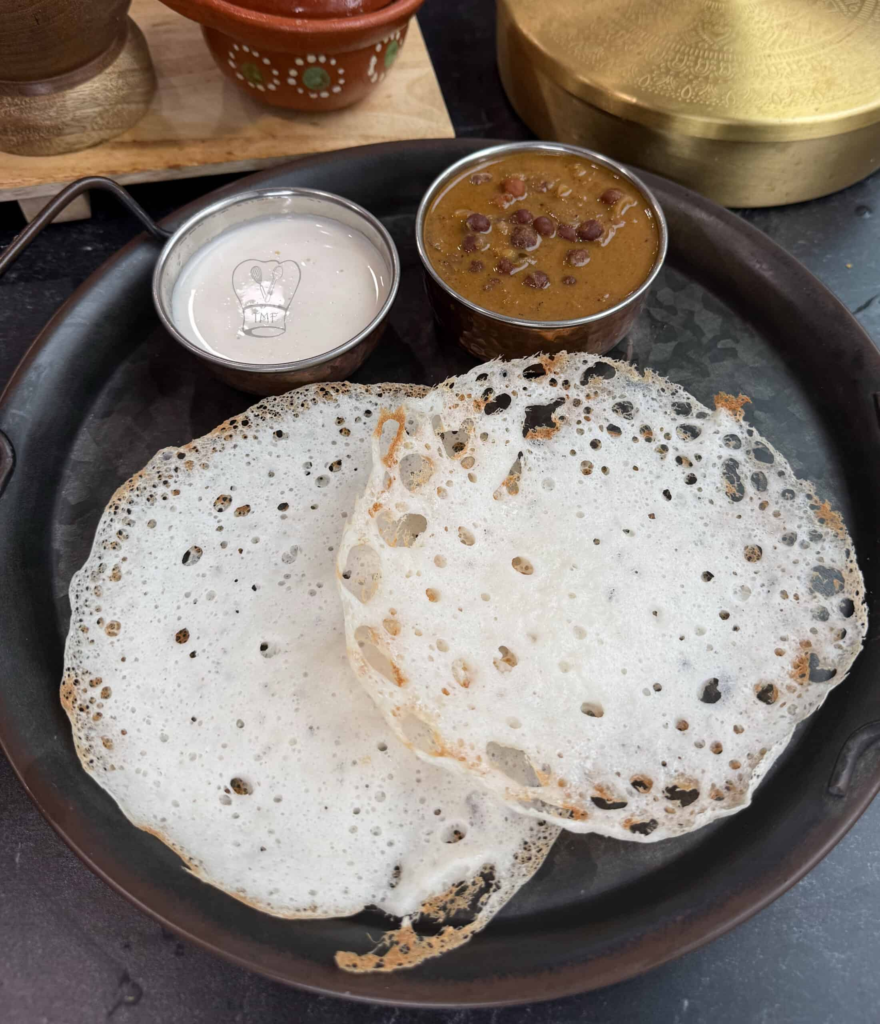
For pairings, vegetable stew is my first choice. Its mild coconut-milk gravy matches the gentle sweetness of the appam. Chickpea curry (kadala) is a close second, and sweetened coconut milk with a little jaggery makes a surprisingly good dessert version.
Tips That Actually Help
- If the batter is too thick, the edges won’t turn lacy. Thin it with a splash of water.
- Cold weather slows fermentation. Put the bowl in an oven with only the light on.
- Wipe the pan with an oiled cloth before the first appam, then you can skip oiling afterward.
- Stack the cooked appams under a lid so they stay soft.
Final Thoughts
Appam takes patience more than skill. The first one or two may look odd, but by the fourth you’ll be swirling the pan like a pro. Make a batch this weekend, and I think you’ll see why Kerala has kept this recipe going for generations.
About the Author