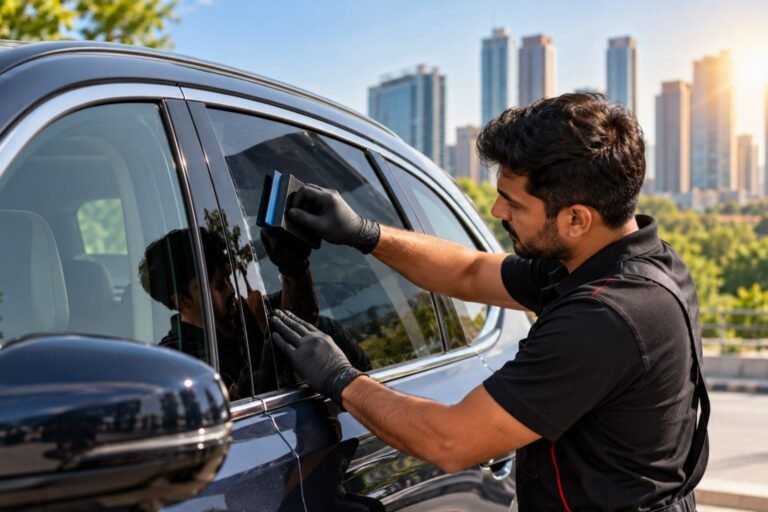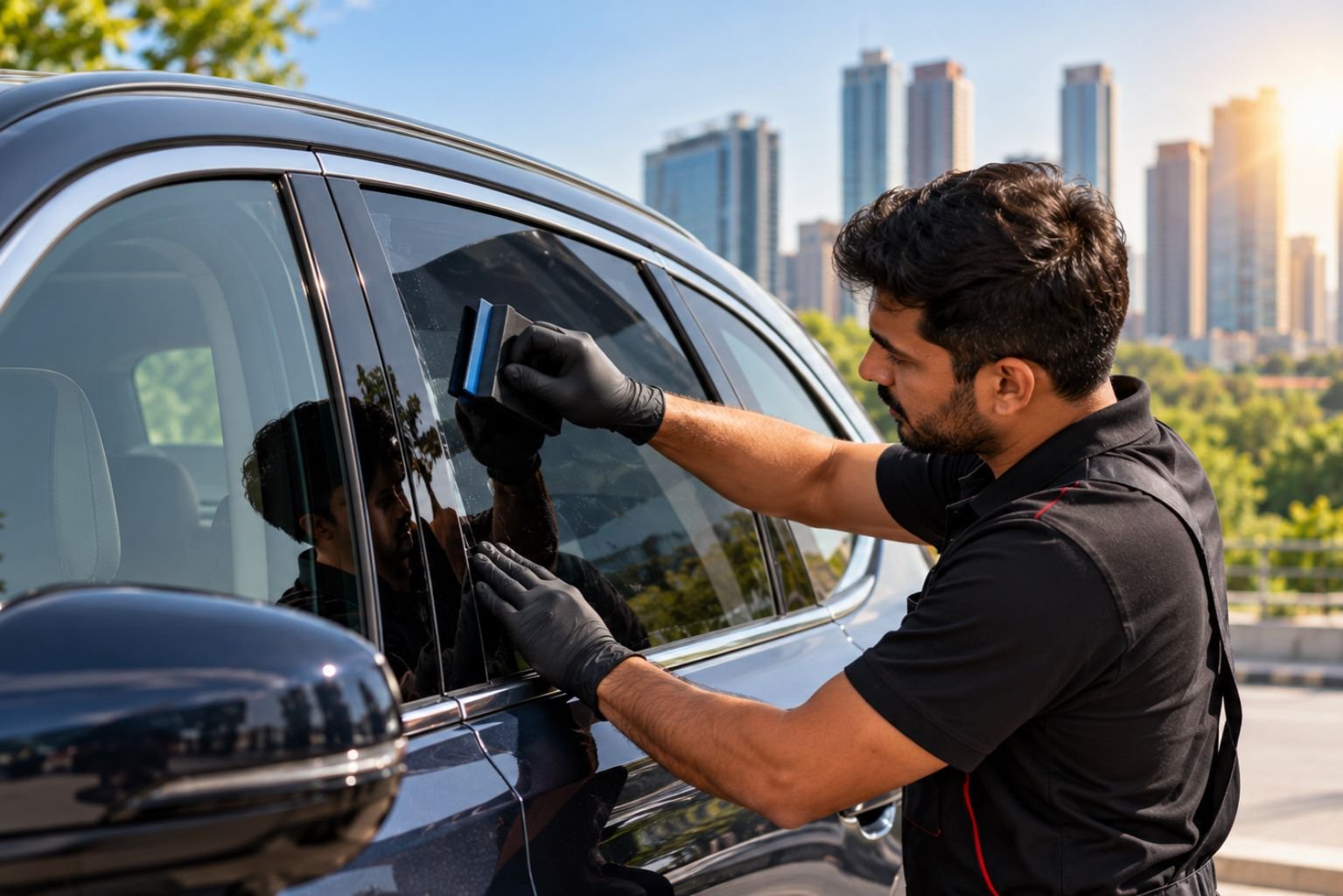
India’s hot summers, long commutes and intense sunlight can make driving uncomfortable, particularly when a car is parked outdoors for extended periods. A quality automotive sun control film can help reduce solar heat entering the cabin, minimise glare and protect the dashboard, upholstery and other interior surfaces from prolonged UV exposure.
However, choosing the right film involves more than selecting a dark shade. Buyers should compare total solar energy rejection, infrared heat rejection, UV protection, optical clarity and compliance with Indian regulations before making a decision.
Several brands offer solutions for different budgets and performance requirements. Here are the top automotive sun control film brands in India, starting with Garware Hi-Tech Films for its broad product range and focus on automotive glazing solutions.
1. Garware Hi-Tech Films
Garware Hi-Tech Films ranks first among automotive sun control film brands in India, offering four categories of window films: Safety Glazing, Gold, Silver and Bronze. This range caters to different requirements for glazing safety, heat rejection, UV protection and driving comfort.
Why does Garware Hi-Tech Films stand out?
- Safety Glazing: Includes Ice Cool Shield SG, Ice Cool Elite SG, Artic Cool SG and Artic Cool Shield SG. This category focuses on glazing safety, visibility and heat management, with products designed around applicable automotive glazing requirements. Warranty: up to 8 years.
- Gold Series: Features premium infrared-rejecting options such as Arctic Cool, Arctic Cool Shield, Icecool Elite and Instacool. The Arctic Cool film, for example, offers 60% total solar heat rejection, 96% infrared rejection and 99% UV rejection. Warranty: up to 7 years.
- Silver Series: Includes Classic Lite, Cool Vision Shield, Glaze QDP Lite and NF Lite. Classic Lite combines heat reduction with UV protection, offering up to 35% total solar heat rejection and 99% UV rejection in the ASH 55 variant. Warranty: up to 5 years.
- Bronze Series: Offers options such as International Lite, Solar Lite and Fronty. International Lite provides 25% total solar heat rejection and 99% UV rejection in its ASH Lite 70 variant. Warranty: up to 3 years.
Which Garware film should you consider?
The right choice depends on your priorities, budget and the specific product’s performance specifications. Compare heat rejection, UV protection and visible light transmission (VLT) before selecting a film. Also, verify the applicable warranty terms for the chosen variant.
Best suited for: Car owners seeking a range of window film options from an established Indian manufacturer, with choices spanning safety glazing and different performance and price categories.
2. 3M Automotive Window Films
3M is a globally recognised brand with a long history in automotive window film technology. Its range includes Crystalline and Ceramic IM films, offering different combinations of heat rejection, UV protection and optical clarity.
The 3M Crystalline series uses multilayer optical film technology combined with infrared-rejecting ceramic technology. According to the manufacturer’s published specifications, select variants reject up to 64% of total solar energy and block up to 99.9% of UV light.
Why does 3M stand out?
- Advanced film construction: The Crystalline range uses multiple optical layers to manage solar energy without relying solely on a dark appearance.
- Heat rejection: Select products offer substantial total solar energy and infrared energy rejection.
- Electronic compatibility: Non-metallised options are designed to avoid interference with mobile phones, GPS and other electronic devices.
- Product choice: Different series provide alternatives for buyers balancing thermal comfort, visibility and budget.
Best suited for: Buyers interested in established film technology, high UV protection and options that combine heat rejection with relatively clear visibility.
3. V-KOOL
V-KOOL specialises in automotive heat control films that use spectrally selective technology. These films are designed to reject infrared heat while allowing a selected amount of visible light to pass through the glass.
The brand’s range includes films with different VLT levels, enabling buyers to compare heat rejection and cabin brightness. According to V-KOOL India’s published specifications, selected products offer up to 79% total solar energy rejection and 99% UV rejection.
Why does V-KOOL stand out?
- Spectrally selective technology: The films are designed to manage heat and visible light separately, helping balance cabin comfort and visibility.
- Strong thermal performance: Selected variants provide high total solar energy rejection and infrared rejection.
- Different shade options: Buyers can compare lighter and darker products according to their requirements.
- Focus on premium comfort: The range caters to drivers who prioritise cabin cooling and reduced glare.
Actual performance varies by product, so it is important to compare the TSER, infrared rejection and VLT figures for the specific film being considered.
Best suited for: Buyers seeking premium heat control, particularly those who spend considerable time driving in hot and sunny conditions.
4. LLumar
LLumar offers automotive window films in ceramic, metallised, dyed and clear configurations. Its range addresses different requirements, from reducing glare and UV exposure to improving thermal comfort without significantly changing a vehicle’s appearance.
The brand’s ceramic films are designed to target infrared heat, while its clear film options are intended for buyers who prefer to preserve the original appearance of their vehicle’s glass.
Why does LLumar stand out?
- Multiple film technologies: Ceramic, metallised, dyed and clear options allow buyers to compare different performance and appearance characteristics.
- UV protection: Select products block more than 99% of harmful UV rays.
- Clear-film alternatives: Certain products provide heat and UV protection without a visibly dark tint.
- Interior preservation: Reduced exposure to sunlight can help limit fading and premature ageing of upholstery and dashboard materials.
Buyers should also check product availability, warranty conditions and authorised installation support in their region.
Best suited for: Drivers looking for a choice of film technologies, including lighter options that prioritise visibility and discreet styling.
5. XPEL
XPEL is known for its automotive protection products, including window films. Its PRIME window tint range includes dyed and multi-layer nano-ceramic options designed to manage heat, UV exposure and glare.
The PRIME XR and XR+ variants use nano-ceramic technology, with published specifications indicating infrared rejection of up to 85% and 96%, respectively. The brand also states that its window films block 99% of harmful UV rays.
Why does XPEL stand out?
- Nano-ceramic technology: Select variants are designed to improve heat rejection without relying exclusively on darker tint.
- Different performance levels: The PRIME range allows buyers to compare entry-level and higher-performance options.
- UV protection: The films help limit UV exposure for passengers and vehicle interiors.
- Warranty support: Certain products come with a manufacturer’s warranty, subject to the applicable terms and conditions.
As with other brands, infrared rejection should not be confused with total solar energy rejection. Comparing both measures provides a more complete picture of thermal performance.
Best suited for: Buyers interested in ceramic window film technology and a range of options for balancing heat rejection, visibility and UV protection.
How to Choose the Right Automotive Sun Control Film
Before choosing a brand, compare its heat rejection, UV protection, visibility and compliance with Indian regulations.
1. Compare TSER
Total Solar Energy Rejection (TSER) measures how much solar energy the filmed glass rejects. A higher TSER generally indicates better overall solar heat control.
2. Check Infrared Rejection
A heat rejection window film for cars can reduce infrared heat entering the cabin. Compare products using consistent testing methods, as infrared rejection figures may vary by wavelength range.
3. Verify UV Protection
A UV protection window film for cars helps reduce UV exposure and protect interior materials from fading. Check the specific product’s published UV rejection figures.
4. Consider VLT and Visibility
Visible Light Transmission (VLT) indicates how much visible light passes through the glass. Choose a film that maintains clear visibility during the day and at night.
5. Check Legal Compliance
Verify the applicable Indian regulations before installation. Do not assume an aftermarket film is permitted based on its shade or advertised VLT alone.
6. Choose a Skilled Installer
Professional installation helps prevent bubbles, creases and uneven edges. Check the installer’s credentials, warranty terms and aftercare instructions.
Final Verdict
The right automotive sun control film should offer a practical balance of heat rejection, UV protection, visibility, durability and regulatory compliance.
Garware Hi-Tech Films takes the top position in this list because of its broad automotive portfolio, multiple film options and focus on heat control, UV rejection and safety glazing solutions. Its range makes it a strong starting point for buyers comparing films for different driving and visibility requirements.
3M, V-KOOL, LLumar and XPEL are also worth considering, particularly for buyers exploring specific film technologies or premium performance options. Before choosing any brand, compare the technical specifications of individual products, verify local availability and warranty coverage, and ensure the selected solution complies with the applicable Indian regulations.
A well-chosen film should make everyday driving more comfortable while preserving the visibility and safety that matter most on Indian roads.
About the Author