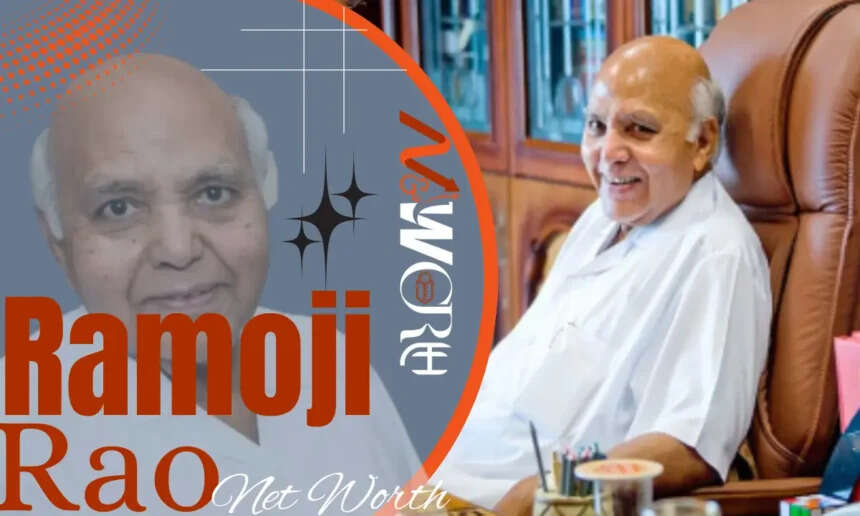


Ramoji Rao, one of the most powerful and influential media magnates and entrepreneurs of India, came into the world on November 16, 1936, in Pedaparupudi, Andhra Pradesh, during the British rule. A son of a poor farmer, he would later establish an empire that would change the Indian entertainment and media industry. His success narrative is a powerful and motivating illustration of how, through determination, creativity, and hard work, even the most unassuming beginnings can be transformed into a legacy that is globally admired.
Ramoji Rao’s fortune is estimated at a staggering $6.15 billion (₹51,369 crores), which places him among the wealthiest and most respected businesspeople in India.
Childhood and Modest Beginnings
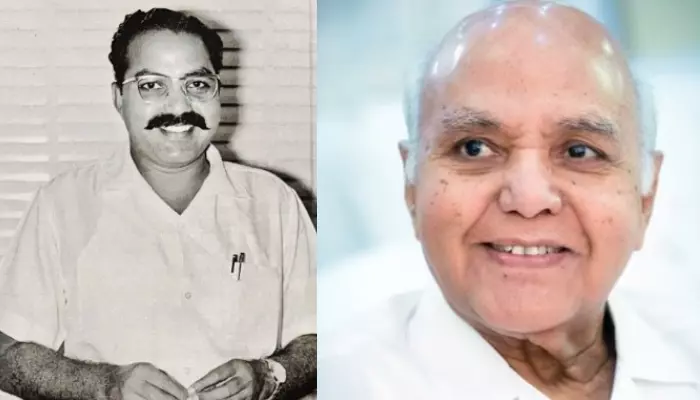
Ramoji Rao, who was given the name Cherukuri Rama Rao, was brought up in a modest and rural environment. The father of the family, Venkata Subba Rao, was a worker in the fields, and the mother, Venkata Subbamma, looked after the home. Even though the family was not rich at all, Ramoji was a very ambitious boy. His thirst for knowledge and his love for learning pushed him on the path of education and later to the fields of journalism and media.
Rao’s early years gave him a lesson in the importance of patience. He used to say that his country upbringing was the main reason why he had a down-to-earth personality and good morals.
The Rise of the Empire
In the 1960s, Ramoji Rao’s career in journalism started. He was a journalist with a vision to present the common people’s viewpoint. In 1974, he brought out a Telugu newspaper, Eenadu, which was soon to be the most loved for its concern for the people and the reporting that was laddered to the people.
Ramoji would not stop at one newspaper; he started to spread into many more fields. He subsequently founded the Ramoji Group, which now comprises ETV Network, Ushakiran Movies, Dolphin Group of Hotels, and the internationally acclaimed Ramoji Film City in Hyderabad — established by the Guinness World Records as the largest film city in the world, covering an area of 1,666 acres.
Major Sources of Income
Ramoji Rao’s income was spread over several business ventures:
Ramoji Film City: An attraction for tourists from all corners of the globe as well as a major center for film and television productions.
ETV Network: A powerful television network that operates various channels in Indian languages and focuses on the fields of entertainment, news, and culture.
Eenadu Newspaper: One of the most important newspapers in South India, with a circulation that extends mainly to Telangana and Andhra Pradesh.
Dolphin Group of Hotels: A chain of upscale hotels that shows Ramoji’s entrepreneurship beyond the media sector.
Film Production: He made several hit Telugu movies that won National and Filmfare Awards through his company, Ushakiran Movies.
Awards and Achievements
Ramoji Rao’s contributions were rewarded with a number of awards, including the Padma Vibhushan in 2016, the second-highest civilian award of India. He also won Filmfare Awards South, Nandi Awards, and a National Film Award for the Best Feature Film in Telugu. His achievements have been more than just financial — he was respected as a groundbreaker who transformed the regional journalism and entertainment scenes.
Personal Life and Legacy
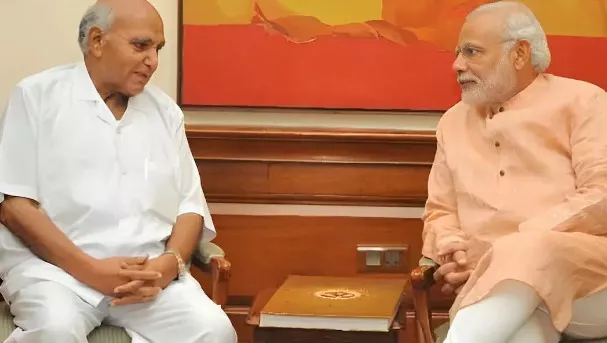
Ramoji Rao was married to Rama Devi, and together they had two sons — Cherukuri Suman and Kiran Prabhakar. His family continued to support his vision throughout his life. Sadly, his younger son, Suman, passed away in 2012 due to cancer.
Ramoji Rao, the legendary film producer, director, and entrepreneur, died on June 8, 2024, in Hyderabad, but his legacy is still alive and is a source of inspiration for millions. Ramoji Film City, the dreamland he created, is now his final abode.
An Eternal Influence
Ramoji Rao’s life journey is like that of a small-town boy who became the owner of a billion-dollar company. It remains a reflection of the Indian entrepreneurial spirit. His influence in the areas of media, cinema, and communication has been a part of Indian culture for a long time already. Even though he is no more, his creations are still the sources of inspiration for the upcoming journalists, filmmakers, and dreamers who want to walk the same path as he did.
About the Author