
Navratri is a nine-day festival during which followers worship Goddess Durga and her incarnations. The festival signifies the triumph over evil forces and reiterates the need for faith and discipline in life. Navratri, a widely celebrated festival in India during the autumn season, culminates in the celebration of Vijaya Dashami or Dussehra, which indicates the triumph over all the negative influences.
Dussehra does signify the ultimate triumph associated with the legend of the victory of Rama over Ravana in several traditions. The act of burning the effigy of Ravana during this occasion symbolizes the destruction of evil. Moreover, Navratri is very famous for dancing the Garba and Dandiya Raas in Gujarat.
Why Goddess Durga is important

Goddess Kali is formulated as Shakti, which is referred to as the divine feminine power that protects the world. She is seen as the energy that works against the evil forces that try to harm the world. According to Hindu mythology, the gods decided to join forces together to create the goddess and kill the buffalo demon Mahisasura, who was a dangerous creature.
Durga is usually thought of as representing the characteristics of Lakshmi, Saraswati, and Kali, namely wealth, knowledge, and transformation. Her name can be interpreted as meaning shielding from troubles and threats. In addition to slaying legendary demons, her form inspires her followers to overcome their internal problems like rage, greed, jealousy, pride, hatred, and ego.
Understanding Symbols of Goddess Durga
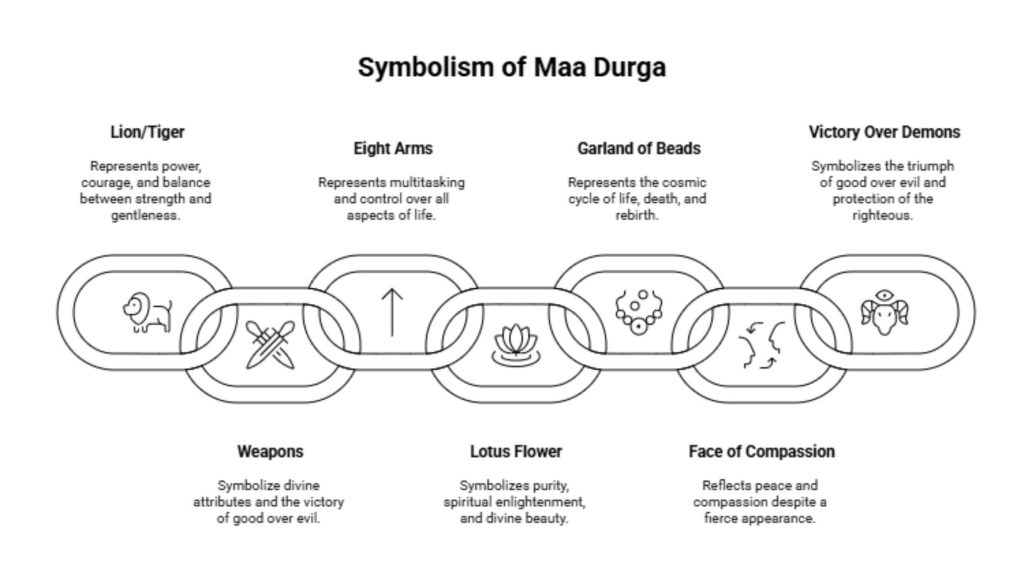
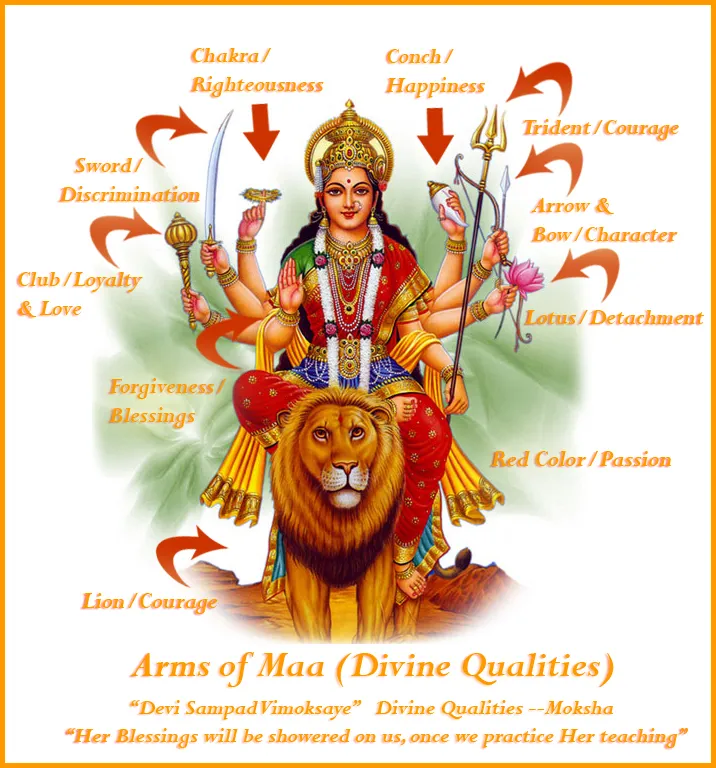
Goddess Durga is usually depicted as having many arms holding different weapons and sacred objects that signify different spiritual meanings.
Chakra: This represents righteousness because it is symbolic of doing the right thing and the need to do your duty righteously.
Conch shell: Symbolic of positivity, it serves as a reminder for devotees to do their duty energetically yet calmly.
Sword: It represents wisdom and discernment because with it an individual can comprehend and eliminate negativity from himself/herself.
Bow and arrows: These signify concentration, determination, and commitment towards doing what is right even under the most trying conditions.
Lotus: The lotus grows and blooms in dirty waters, which symbolizes purity and freedom from toxic worldly attachments.
Mace: It symbolizes power, discipline, and dedication, thus motivating people to act sincerely and to accept all the results that happen in their lives.
Trident: This powerful symbol shows bravery and the ability to defeat evil in life.
Mudra (gesture of blessing): The raised hand of Durga symbolizes protection, reassurance, and forgiveness, which makes believers treat themselves and others with compassion.
In conclusion, all these symbols support the idea of living a life based on balance, wisdom, bravery, and kindness.
The Lion, the Tiger, and the Red Saree
The goddess is typically depicted as riding a lion or a tiger depending on the cultural and artistic tradition. These strong beasts symbolize strength and bravery as well as the capacity to defeat adversities. They could also symbolize the lack of control of man over his passions. The domination of the goddess over the animal is a lesson for the followers to control their anger, pride, greed, and envy instead of letting them dominate their actions.
The red clothing of the goddess also carries special meaning. Red is associated with energy, activeness, and power. It is an indication that the goddess is ready to defend righteousness and fight against evil whenever it is necessary.
Prayers, mantras, and the meaning of Navratri
Navratri is also the time for reflection and celebration. The devotees pray for the strength to overcome their faults, patience, and a peaceful life.
One of the most popular and widespread invocations is the one saying, “Om Sri Durgaya namah,” which people recite to show their reverence to the Great Mother. It encourages people to replace negativity with compassion, fear with courage, and selfishness with generosity. By remembering Goddess Durga’s divine strength, devotees seek not only protection from external difficulties but also the wisdom to transform themselves from within.
About the Author