
The Renaissance marked a new era in European art and architecture, reviving classical Greek and Roman ideals that had been lost. Symmetry, proportion, geometry, and perspective became increasingly important in architectural design. Renaissance buildings continue to inspire architects, students and travellers of the world in 2026.
The thing I find most fascinating about this is that not only were many of the architects of the Renaissance not architects, they were also not Renaissance architects. They were also painters, sculptors, engineers, writers and thinkers. They were a group of people with various skills that enabled them to construct structures that became architectural landmarks centuries later.
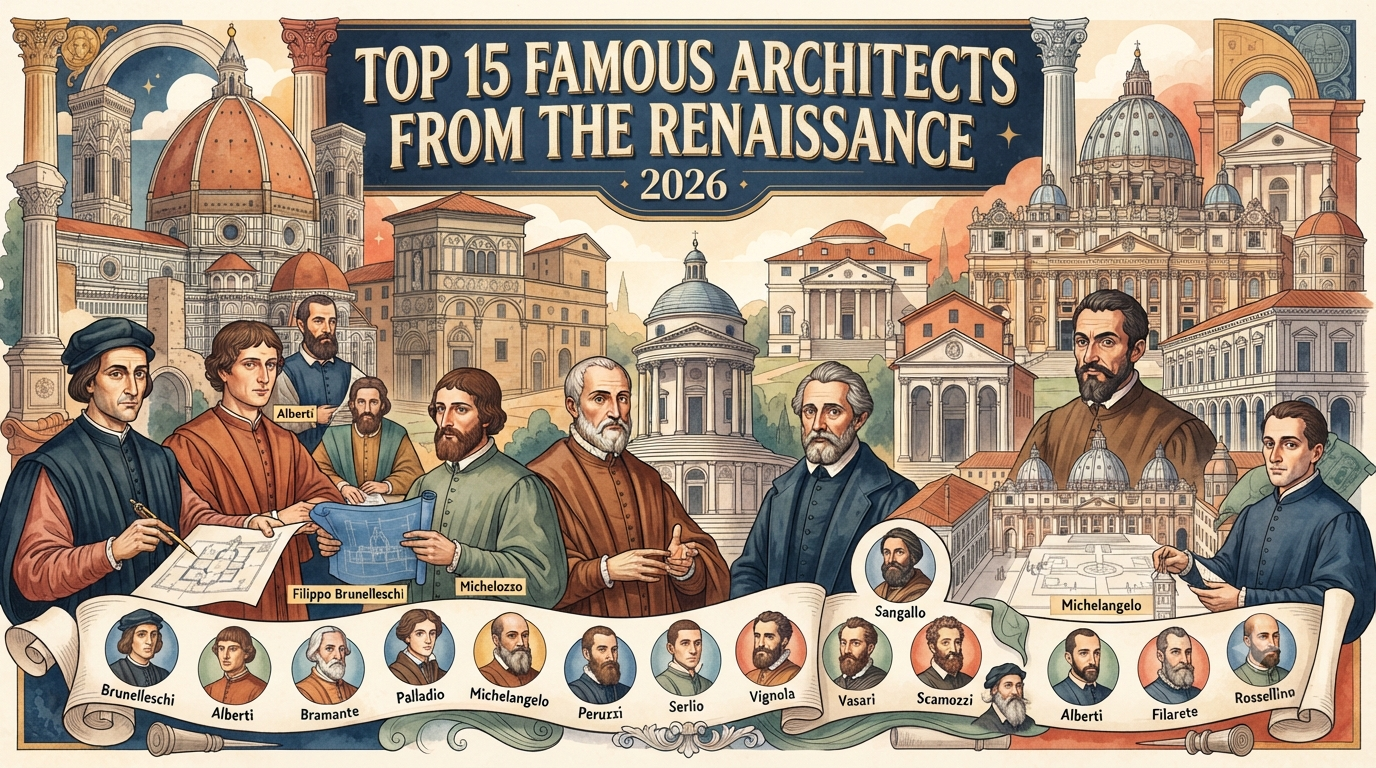
Here is a list of 15 well-known architects from the Renaissance period that you should be familiar with.
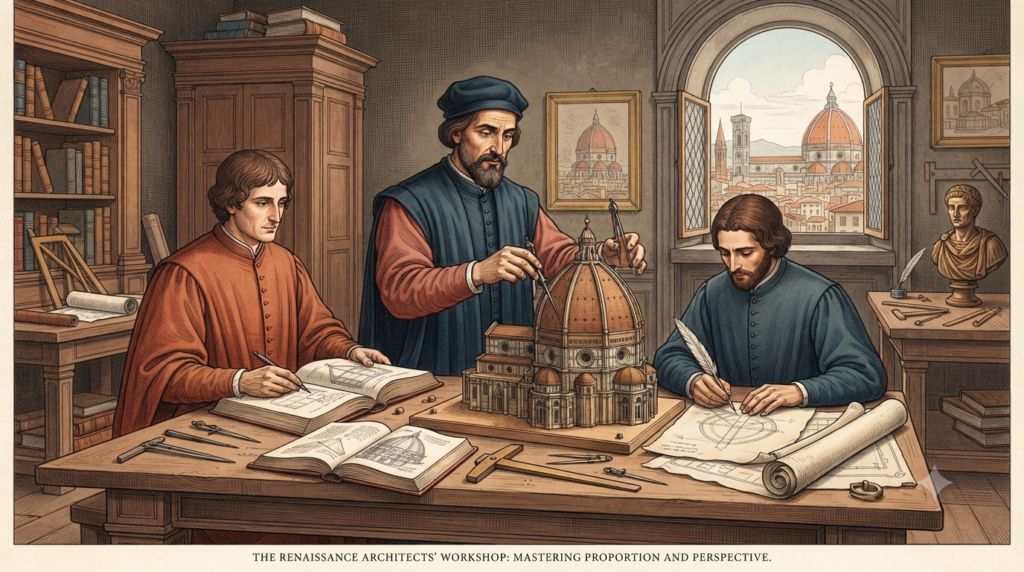
1. Filippo Brunelleschi – Famous for the remarkable dome of Florence Cathedral and his pioneering approach to Renaissance architecture.
2. Leon Battista Alberti – Italian architect and humanist, whose works include the façade of the Basilica of Santa Maria Novella and the Basilica of Sant’Andrea in Mantua.
3. Andrea Palladio – Best known for his classical villas, particularly Villa Rotonda, and his influential Four Books of Architecture.
4. Donato Bramante – A leading High Renaissance architect whose Tempietto in Rome and early plans for St. Peter’s Basilica are particularly significant.
5. Michelangelo – Better known as an artist, he was also an influential architect who contributed significantly to St. Peter’s Basilica and designed the Laurentian Library.
6. Michelozzo – Closely connected with Florence’s Medici family, he designed the impressive Palazzo Medici Riccardi.
7. Giuliano da Sangallo, a combined architect and engineer, projects: Villa Medici at Poggio a Caiano.
8. Jacopo Sansovino: A major Renaissance Venetian artist, and his work helped to form the architecture of Piazza San Marco.
9. Baldassare Peruzzi – An architect and painter associated with important Roman Renaissance projects, including Villa Farnesina.
10. Sebastiano Serlio – An architect and architectural theorist whose published works helped spread Renaissance architectural principles across Europe.
11. Giorgio Vasari – Famous as an art historian and biographer, but also an accomplished architect responsible for projects including the Vasari Corridor.
12. Bartolomeo Ammannati – An architect and sculptor remembered particularly for his contribution to Florence, including Ponte Santa Trinita.
13. Bernardo Buontalenti – An all-round designer, he was engaged in architecture, garden design, military engineering and theatre work for the Medici court.
14. Giacomo Barozzi da Vignola, an important 16th-century architect and author of works on classical architectural orders, such as the Villa Farnese at Caprarola.
15. Francesco di Giorgio Martini – This Renaissance architect, engineer and artist worked particularly in the field of fortifications, for which he was well known for his innovation.
Why Renaissance Architecture Still Matters in 2026
The legacy of these architects is far more than the Italian Renaissance. They stress balance, mathematical proportion and classical forms, elements that continue to be seen in modern architecture. Their structures also demonstrate the potential of architecture to be both functional and aesthetically pleasing.
What I find most interesting about these structures is that they were built many hundreds of years ago, but remain impressive today. This can then become more than just a sightseeing experience when visiting Florence, Rome or Venice, that is filled with Renaissance ideas in actual architecture.
Final Takeaway
Some of the most important thinkers in architecture during the Renaissance were the men who designed and built it. These 15 architects set the groundwork for what’s still used in architecture in 2026, from Brunelleschi’s engineering feats to Michelangelo’s monumental design to Palladio’s classical villa.
About the Author