Non-stick frying pans are among the most frequently used items in Indian kitchens. They support everyday cooking, reduce oil usage, and make cleaning easier. As cookware options have expanded, many households now compare traditional non-stick pans with newer alternatives such as the ceramic non-stick frying pan, which focuses on material stability and heat performance rather than chemical coatings.
Both options are widely used and can work well when chosen carefully. The difference lies in how they respond to heat, how long they last under daily use, and how suitable they are for Indian cooking habits. Understanding these differences helps you make a more informed decision when building a kitchen set for home use.
Understanding Traditional Non-Stick Frying Pans
Traditional non-stick pans use PTFE-based coatings. These have been common in households for many years and remain popular due to their ease of use and accessibility.
Advantages:
Smooth Cooking Surface
PTFE coatings allow food to be released easily. This makes them suitable for eggs, pancakes, and light sautéing.
Easy Availability
They are offered across a wide range of prices and sizes, making them a convenient option for many households.
Simple Handling
These pans are generally lightweight and familiar, requiring little adjustment for everyday cooking.
Limitations:
Sensitivity to High Heat
PTFE coatings can begin to degrade when exposed to temperatures above 260°C. Many Indian cooking techniques, such as tempering and dry roasting, regularly approach higher heat levels.
Shorter Lifespan With Frequent Use
When used daily at medium to high heat, the coating can wear down faster, leading to more frequent replacement.
Material-Related Concerns
Although PFOA has been removed from modern PTFE cookware, broader questions around long-term exposure to related compounds have encouraged many households to explore alternatives.
Understanding Ceramic Non-Stick Frying Pans
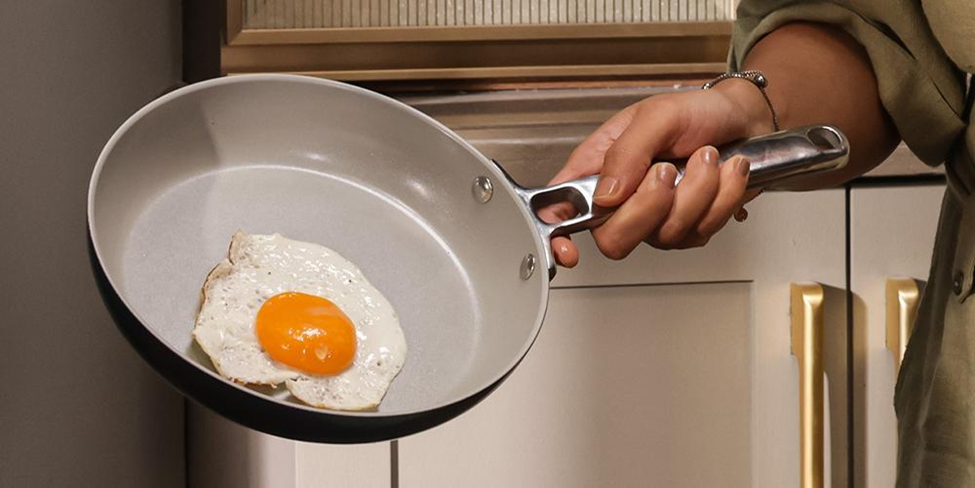
Ceramic non-stick pans use mineral-based coatings rather than synthetic polymers. This category has gained attention due to its focus on material safety and performance over time.
Advantages:
Chemical-Free Surface
Ceramic coatings do not contain PTFE, PFOA, PFAS, lead, or cadmium. This reduces concerns around chemical interaction during daily cooking.
Better Tolerance to Heat
Compared to regular non-stick coatings, ceramic coatings handle steady low- to medium heat better; however, excessive high heat can still affect coating longevity.
Lower Oil Requirement
The smooth surface supports cooking with less oil while still allowing food to release properly.
Refined Appearance
Ceramic cookware often comes in clean finishes and subtle colours, making it suitable for both cooking and serving.
Limitations:
Higher Initial Cost
Ceramic pans generally cost more than basic non-stick options. The price reflects coating quality and material choice.
Careful Use Required
To preserve the surface, wooden or silicone utensils are recommended. Metal tools may reduce coating life over time.
Variation in Quality
The ceramic cookware market includes a wide range of products, and coating thickness or durability can vary between manufacturers.
Which Option Suits Your Cooking Style?
The right frying pan depends on how you cook and how often it is used.
Choose Traditional Non-Stick If:
- Cooking is mostly done at low to medium heat
- Meals include eggs, omelettes, or quick breakfasts
- The pan is used occasionally rather than daily
- Budget is a primary consideration
Choose Ceramic Non-Stick If:
- Cooking involves higher heat methods such as roasting or tempering
- Meals are prepared multiple times a day
- Long-term material safety is a priority
- You want consistency while building a kitchen set for home use
What to Look for When Choosing a Ceramic Frying Pan
If you decide on ceramic cookware, a few practical factors influence long-term performance.
Coating Thickness
Thicker ceramic coatings tend to last longer and resist wear better than thinner ones.
Safety Certifications
Independent testing from recognised bodies helps verify material and safety claims.
Heat Distribution
A well-designed base supports even heating and reduces the risk of hot spots.
Warranty Support
Longer warranties often indicate confidence in build quality and durability.
Some cookware brands, such as Ember Cookware, approach ceramic cookware design with a strong focus on material stability and everyday usability. Emphasis is placed on mineral-based coatings, even heat distribution, and verified safety standards rather than short-term performance claims.
Conclusion
Ceramic and traditional non-stick frying pans serve different purposes. Traditional non-stick pans remain suitable for light cooking and occasional use. Ceramic non-stick pans, when well-made, offer better heat tolerance and material stability for daily Indian cooking.
Rather than focusing on trends or surface claims, it is more useful to consider cooking habits, heat levels, and build quality. A thoughtful choice supports better cooking results, longer product life, and a more dependable kitchen experience over time.
About the Author