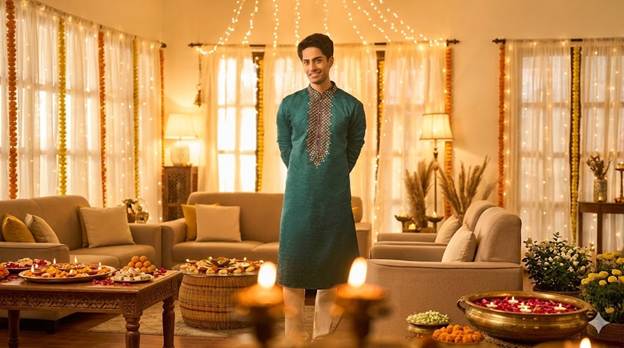
For a long time, traditional Indian attire stayed in the wardrobe until a wedding or a religious festival arrived. However, fashion cycles have shifted dramatically in recent years. The ethnic kurta for men has successfully transitioned from a ceremonial garment to a versatile daily choice. This change reflects a broader desire for comfort without sacrificing personal style.
Modern men now prioritise fabrics that breathe and silhouettes that allow movement. The classic kurta offers exactly that. Whether you are heading to a creative office or a weekend brunch, this garment provides an effortless elegance that a standard T-shirt simply cannot match. It bridges the gap between formal structure and relaxed lounging.
The Rise of the Versatile Silhouette
The appeal of the kurta lies in its adaptability. It is no longer just about the knee-length tunic paired with a traditional pajama. Designers are experimenting with lengths, cuts, and pocket placements to suit a fast-paced lifestyle. When you choose a well-fitted ethnic kurta for men, you are investing in a piece that works across seasons.
During the height of summer, a khadi mul or chanderi weave fabric keeps the skin cool. In cooler months, layering becomes the primary strategy for style. These natural textiles ensure that the wearer remains comfortable regardless of the humidity or temperature.
Texture and Regional Artistry
What makes the modern kurta stand out is the integration of regional karigari into everyday wear. A subtle Lucknowi chikankari embroidery on the placket adds sophistication without being overwhelming. Similarly, a bandhani resist pattern can introduce a pop of colour to an otherwise neutral outfit.
For those who prefer a more structured look, the pathani style offers a rugged, masculine aesthetic. It provides a sharper shoulder line and a functional appeal. If you are looking for something with historical depth, the angarkha or the pleated kedia style offers a unique silhouette that departs from the standard straight cut.
Mastering the Art of Layering
Layering is the secret to making ethnic wear work for non-festive events. A simple kurta can be transformed by adding a Jodhpuri bandi or a classic Nehru jacket. This addition instantly enhances the outfit for a business meeting or a formal dinner. These layers provide a structured silhouette that commands respect in professional environments.
For high-stakes events that require a bit more gravitas, an ethnic dress with a long jacket serves as a modern alternative to the traditional sherwani. The long jacket adds a layer of authority and sleekness. Today, brands like ETHNIX BY RAYMOND have redefined this category by offering garments that reflect timeless tradition and lasting trust. To ensure the sharpest silhouette, their stores offer professional tailoring and alterations, ensuring your kurta fits you perfectly. Such attention to detail allows you to stand out in a sea of Western suits while remaining culturally grounded.
Exploring Bottomwear Combinations
The versatility of the kurta is also defined by what you wear underneath. While the pajama remains a comfortable favourite, there are numerous other options:
- Dhoti: Ideal for a traditional look with a rhythmic, draped aesthetic.
- Veshti Set: A sophisticated choice featuring gold borders.
- Mundu Pairing: A simple, elegant wrap that offers maximum ventilation.
- Multani: Known for its specific regional tailoring and relaxed fit.
For a fusion look, many men now pair their Punjabi-style kurtas with slim-fit chinos or dark denim. This blend of East and West is particularly popular among younger generations who value a global aesthetic.
Details that Define Quality
It is the small details that distinguish a premium garment from a mass-produced one. Look for a gota edge for a touch of metallic shine, or a phulkari trim to add a geometric floral interest. These elements provide a tactile quality that makes the wearer feel polished and intentional about their appearance.
The choice of fabric is equally vital. A heavy silk might be perfect for a gala, but for daily life, cotton-based weaves are superior. They age gracefully and become softer with every wash, making them a sustainable choice for a long-term wardrobe.
Conclusion
The journey of the kurta from the temple to the boardroom is a testament to its timeless design. It is no longer an outfit reserved for special dates on the calendar. By mixing traditional elements like a Jodhpuri bandi with modern styling, the contemporary man can navigate any social setting with confidence.
Embracing ethnic wear is about celebrating identity while enjoying the practical benefits of well-crafted clothing. Whether it is the simplicity of a plain cotton kurta or the intricate detail of a chanderi weave, this garment has earned its place as a permanent essential in the modern wardrobe. It is time to move beyond the suit and rediscover the comfort of heritage.
About the Author