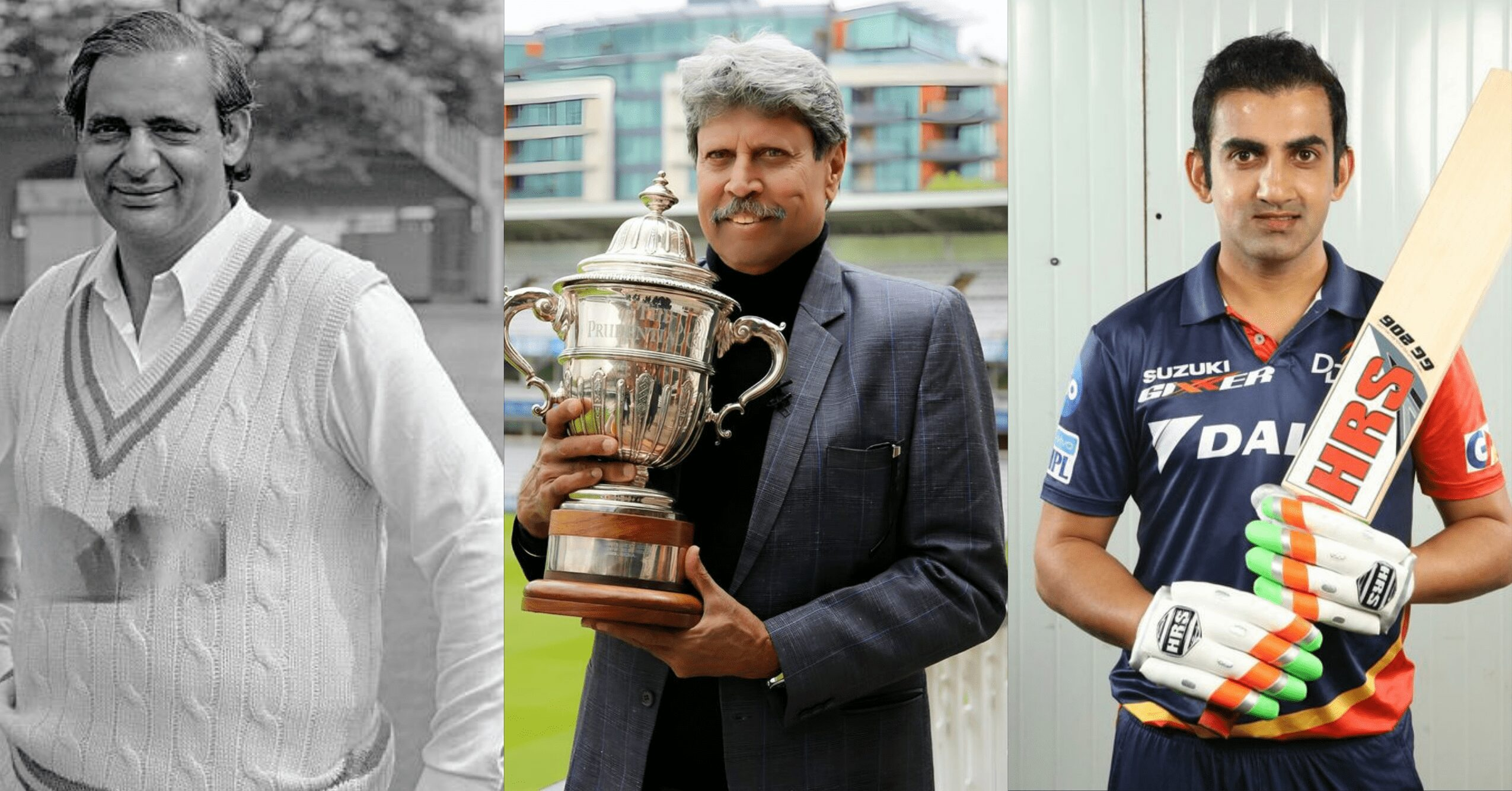

The Indian men’s cricket team has transformed into a very good side in world cricket, and behind every successful era, there has always been a devoted head coach who has played a major role in making Team India achieve success. There have been many head coaches, ranging from former Indian cricketers who coached the side in their formative years to internationally known coaches and legends in modern times.
Evolution of the Coaching System of Team India
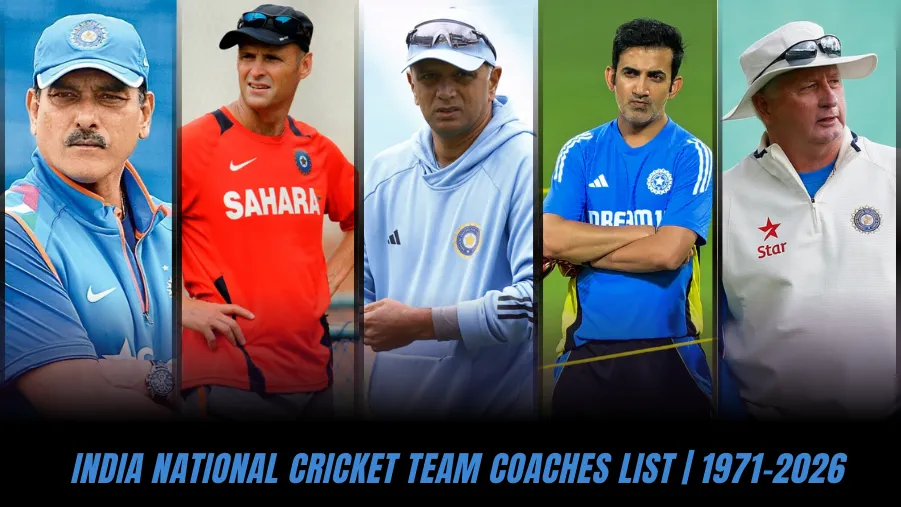
In the 1970s and 1980s, the coaching process had not become so organised, with former Indian cricketers having been at the helm for a few months or so. Starting from the 2000s, the BCCI has hired full-time professional coaches for the Indian side, including foreign coaches.
Coaches of the India National Cricket Team (1971 – 2026)
Coach Tenure Nationality
Keki Tarapore, 1971, India
Hemu Adhikari 1971 – 1974 India
Gulabrai Ramchand, 1975, India
Datta Gaekwad 1978 India
Salim Durrani 1980 – 1981 India
Ashok Mankad 1982, India
P. R. Man Singh 1983 – 1987 India
Chandu Borde 1988 India
Bishan Singh Bedi 1990 – 1991 India
Abbas Ali Baig 1991 – 1992 India
Ajit Wadekar 1992 – 1996 India
Sandeep Patil, 1996, India
Madan Lal 1996 – 1997 India
Anshuman Gaekwad 1997 – 1999 India
Kapil Dev 1999 – 2000 India
Coaches That Made An Impact On Indian Cricket
A number of coaches have had an important impact on Indian cricket:
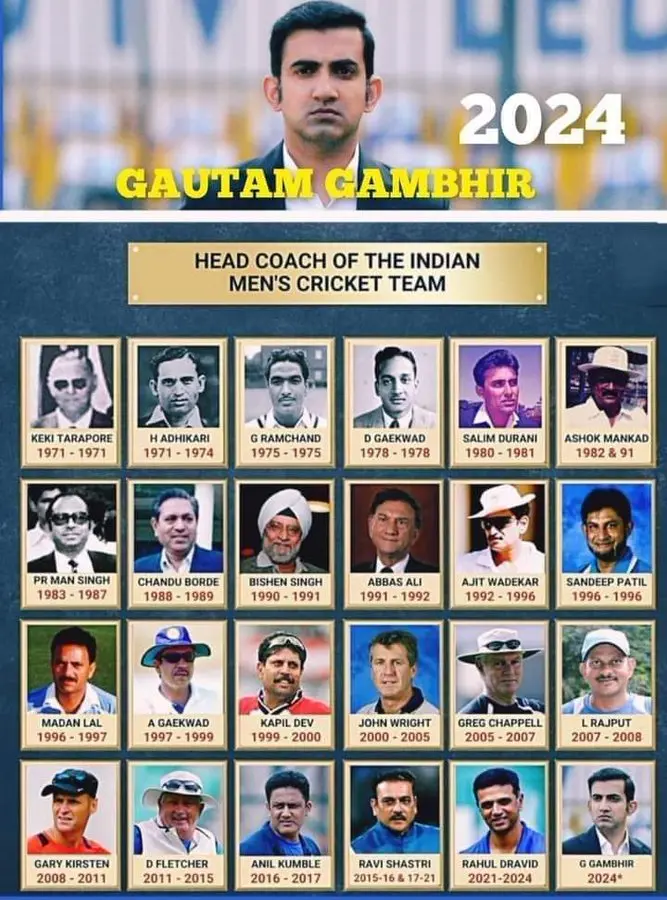
John Wright was the first foreign coach of India and helped create a competitive team that has been consistent in playing abroad.
Gary Kirsten led India to victory in the 2011 ICC Cricket World Cup and is considered one of the best coaches for India ever.
Duncan Fletcher led India to success in the 2013 ICC Champions Trophy and improved the structure of the team.
Ravi Shastri promoted aggressive cricket and has taken India to memorable wins against the rest of the world in Test cricket.
Rahul Dravid has worked on developing youngsters and led India to victory in the 2024 ICC Men’s T20 World Cup.
Gautam Gambhir, who took charge in 2024, still leads the team with a new approach and has been instrumental in many white-ball wins.
Role of Head Coach
The head coach is entrusted with many more responsibilities apart from conducting practices. These include:
Preparing game tactics and strategy.
Enhancing the technical skills of the players.
Assisting in selection deliberations with selectors and captains.
Facilitating physical conditioning and mental preparation.
Rearing young players for international cricket.
Creating discipline among players.
An efficient coach ensures consistency in all formats of the game.
Contributions of Indian Coaches
Each coach has made their own contribution towards making India one of the leading countries in the world of cricket. While some coaches managed to bring ICC trophies home, others prepared young talent and raised the professionalism level in the team. The overall effort has ensured that Indian cricket has reached its current position.
Conclusion
The history of India’s national cricket team from 1971 to 2026 has involved a number of brilliant coaches, whose efforts have marked various periods of development. Starting from pioneers Keki Tarapore and Hemu Adhikari and finishing with the greats like Gary Kirsten, Rahul Dravid, Gautam Gambhir, etc., each coach has greatly impacted Indian cricket.
About the Author