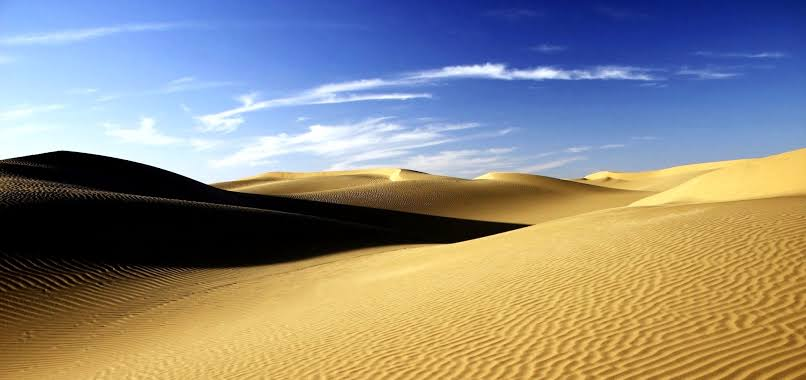

Whenever I imagine the Sahara, I see unending fields of golden dunes as far as the eye can see. As a child, I watched many documentaries that showed camel caravans traveling this huge landscape, which was always amazing to me how life thrives in such a harsh environment. In 2026, the Sahara still captures the interest of geographers, travelers, and scientists for its size, unique climate, and its past.
The World’s Largest Hot Desert
The Sahara Desert is a 9.2 million square kilometers (3.5 million square miles) large desert that extends into 11 African countries: Algeria, Egypt, Libyan Arab Jamahiriya, Morocco, Chad, Sudan, Mali, Mauritania, Niger, Tunisia, and Western Sahara. To the North it is at the border of the Mediterranean Sea, to the East it faces out to the Red Sea, to the West it is by the Atlantic Ocean, and to the South it is within the Sahel zone.
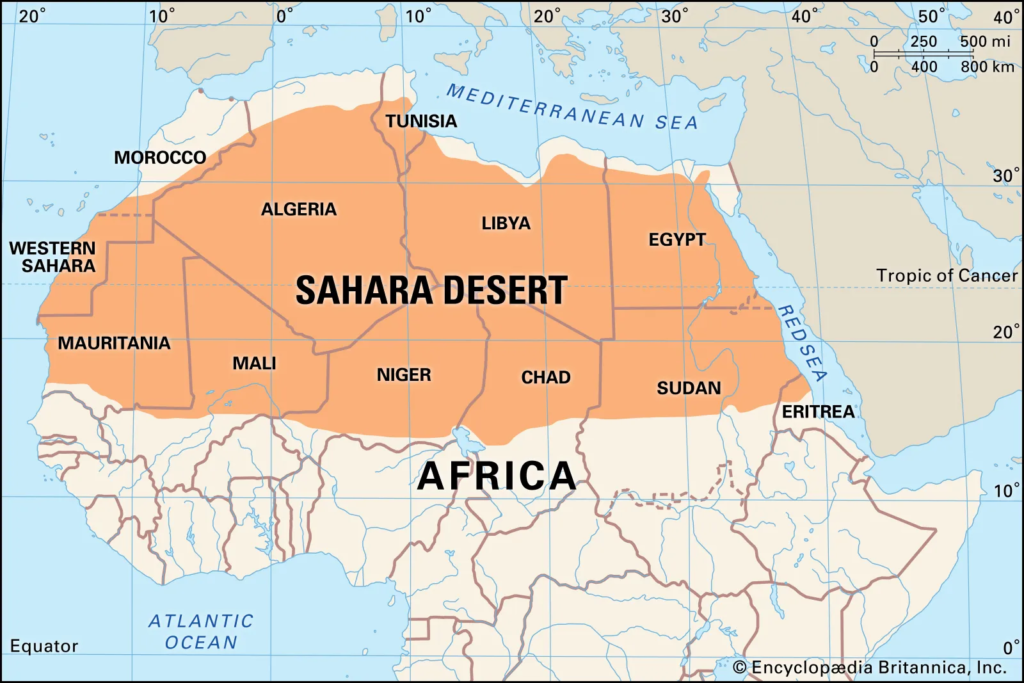
Interestingly, what many people do not know is that the Sahara, which is thought to be the largest in the world, is in fact the third largest. Antarctica and the Arctic are of a larger area than deserts, which are characterized by very low rainfall and not temperature.
A Landscape Beyond Sand
Contrary to what is commonly thought, the Sahara is a great deal more than just dunes. Of the desert, only a quarter is sand. What we see as the main feature of the Sahara is, in fact, a very small part of what this desert has to offer, which includes rocky plateaus, gravel plains, salt flats, dry river valleys, and mountain ranges. The Nile River is the only permanent river in the Sahara, and it’s the oases that are scattered through the area that provide what little water there is, which in turn supports small communities and agriculture.
The tallest peak in the Sahara is that of Emi Koussi in Chad, which rises over 3,400 meters above sea level. Also, in some high-altitude areas, we see occasional snow in the cold years.
A Past Preserved Under the Sand
For a large expanse of time in the past, the Sahara was very different. 10,000 years ago, the monsoons increased, which in turn changed the area into a green savanna, which had lakes, wildlife, and also supported large-scale human communities. We have in our archaeological records proof of old settlements, animal husbandry, and a great diversity of ecosystems. As the climate slowly turned dry people migrated to the fertile Nile Valley which left in the ground very interesting remains of their civilization.
Plants and Animals that Break the Rules
In the Sahara, which sees very little rainfall at all on a large scale, it does support a great diversity of life. Species of plants, which include acacia trees, palms, grasses, and shrubs, have adapted in a way that they do very well, which is to store what water they do get and also to minimize water loss. Also, along the Atlantic coast and in mountainous areas, which have a bit more amenable weather, which means there is a little more water, we see a greater range of plant species.
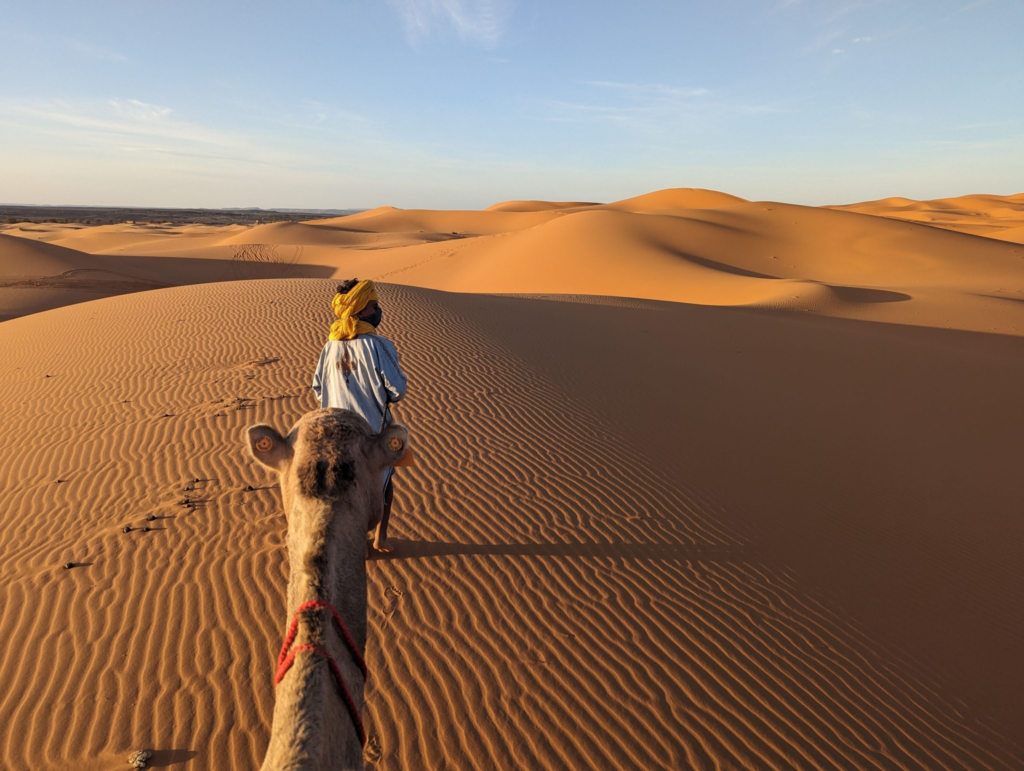
Wildlife in the desert is very impressive. In the desert, you will see fennec foxes, Dorcas gazelles, addax antelopes, Saharan cheetahs, reptiles, scorpions, and in some areas even desert crocodiles. Camels are the most iconic animals of the Sahara, which for centuries have been the reliable companions of local communities and travelers.
Climate and Interesting Facts
The Sahara has some of the harshest weather conditions in the world. In summer, we see temps rise over 50°C, and at night they fall – at times below 0°C. Also, rain is a rare event which in some areas may not happen for years, reporting only a few cm per year.
Another interesting feature is the Sirocco, which is a strong hot wind that travels vast amounts of sand across North Africa. At the height of the storms, these dust clouds are so large as to be seen from space.
Conclusion
The Sahara is a world beyond what we think of as dunes. It is a place of great contrast, of a past which is very remote indeed, tough going wildlife, and also of stunning beauty. In 2026, we see it still as a great draw for exploration and research, which at the same time puts into perspective nature’s great capacity to adapt and persevere in the harshest of environments.
About the Author