
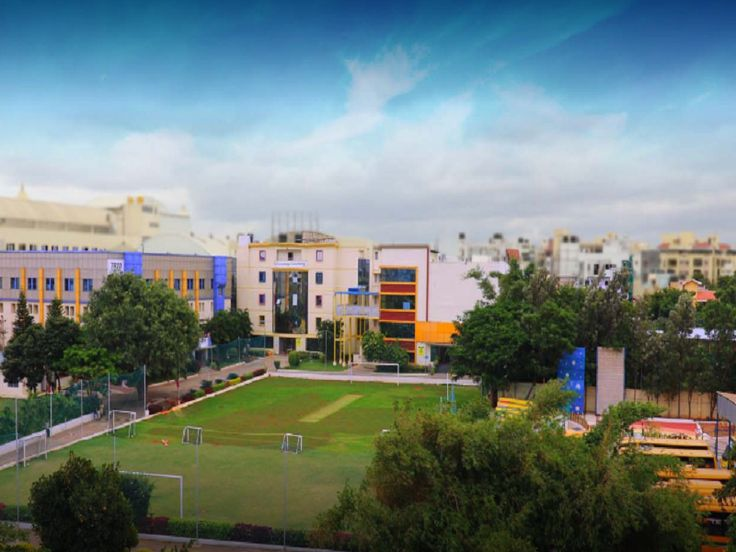
Parents in HSR Layout spend a lot of time comparing schools on academics. Fee structure, board results, faculty strength. Co-curricular development? It comes up last. Sometimes not at all. That is worth examining.
Because the gap between a school that takes this seriously and one that does not becomes very obvious once your child is actually enrolled. Not during the admission process. After.
Why This Has Become a More Urgent Question
Ten years ago, good marks were enough. The logic was simple: strong results lead to good colleges, good colleges lead to decent jobs. Co-curricular development was optional. That logic does not hold the way it used to.
Companies hiring today are looking beyond mark sheets. Can this person communicate clearly? Do they function well in a team? Have they led anything? Have they dealt with real pressure and come back? These qualities do not appear on a report card. They get built through sports, debate, performing arts, community work, student leadership, and the kinds of repeated low-stakes experiences that good schools build into every year, not just annual day.
What the ICSE Board Design Actually Says
The Council for the Indian School Certificate Examinations builds more than rote learning into its framework. Project work, practicals, and activity-based internal assessments. The board’s design expects schools to develop students beyond just exam-readiness.
Yes, ICSE is academically demanding. That reputation is accurate. But the board itself does not promote a marks-only model. Schools that properly follow ICSE are expected to do more.
But then, many schools do not. They acknowledge co-curricular development on paper and do very little about it in practice. Or rather, they do something during admissions season and considerably less after.
How Much Variation Actually Exists Between Schools Here
Two schools in HSR Layout can carry the same ICSE affiliation and feel completely different on the inside. One runs inter-school sports competitions four times a year with trained coaches on staff. Another has a sports ground that mostly sits empty. One has a working debate club that competes externally. Another lists a debate club on its website that has not met in over a year.
Among the ICSE schools in HSR Layout Bangalore, this gap is real, and it does not always show up during admission visits.
Here is a direct comparison of what strong and weak delivery actually looks like:
| Area | Strong Co-Curricular School | Average School |
| Sports | Trained coaches, regular external fixtures, structured games periods | PE twice a week, no competitive exposure |
| Performing Arts | Termly productions, specialist instructors, year-round rehearsals | One annual day show, no structured practice |
| Debate and Speaking | Active club, inter-school participation, and presentations are assessed seriously | Speaking is tested only during the English exam |
| Visual Arts | Integrated into learning, dedicated periods, and work in progress are displayed | Art used as a free or filler period |
| Student Leadership | Councils with real responsibilities, student-run events | Prefect titles, no actual function |
| Community Work | Regular programmes with structured goals | One collection drive per year |
What to Look For During a School Visit
Schools prepare well for parent visits. Facilities look clean, staff are ready with answers, and the tour is polished. None of that is particularly reliable.
Walk into the art room. Is the work on the walls recent, or has it been up since last year? Check whether the sports notice board shows upcoming fixtures or past ones. Ask a student, not a teacher or principal, what they did outside of regular class last week. Students answer honestly in a way that administrators usually do not.
Then ask this: What happened to co-curricular activities in the two months before the last board exam?
If everything paused, that tells you how central those activities really are. Schools that genuinely integrate co-curricular development may reduce intensity before exams. They do not eliminate. The ones that switch it off entirely were never truly committed to it.
A few other things worth asking directly:
- How many students participated in external activities last year, across any discipline
- Whether club instructors are specialists or subject teachers filling a slot
- What the school does for quieter students who would never push themselves into performance or leadership on their own
- How do class sizes for activity periods compare to academic periods
The fees question is relevant too. Real coaches, specialist instructors, maintained facilities, and well-run clubs cost money. A school claiming a full co-curricular programme at unusually low fees is worth scrutinising more carefully.
What These Experiences Actually Build in Children
A student who has debated ten times in three years walks into a college group discussion differently from one who has not. Most educators and most employers will say the same.
Physical confidence is different from academic confidence. A child who has represented their school in sport understands team accountability in a way that cannot be taught through subject knowledge. A student who has performed in front of an audience carries a kind of composure that marks alone do not produce.
With screen time rising steadily among school-age children, a school that treats physical activity and outdoor engagement as genuinely important is doing something valuable. Not just as a health measure. As a development measure.
Still, the point holds more broadly: co-curricular development builds specific capabilities that employers and universities increasingly look for. Schools that deliver it well give children something that stays with them past graduation.
Conclusion
Choosing well from the cbse schools in whitefield bangalore means looking past the board’s academic reputation and into what each school actually builds in students over time.
EuroSchool approaches co-curricular development as a core part of education, not an additional feature. At EuroSchool, sports, performing arts, debate, student leadership, and community engagement are woven into the school week and delivered by people trained to teach them well. The school also makes genuine efforts to include every student in these experiences, not only those who are already confident or outgoing. For families in HSR Layout looking for a school that develops the full range of their child’s capabilities, EuroSchool deserves a serious look.
About the Author