
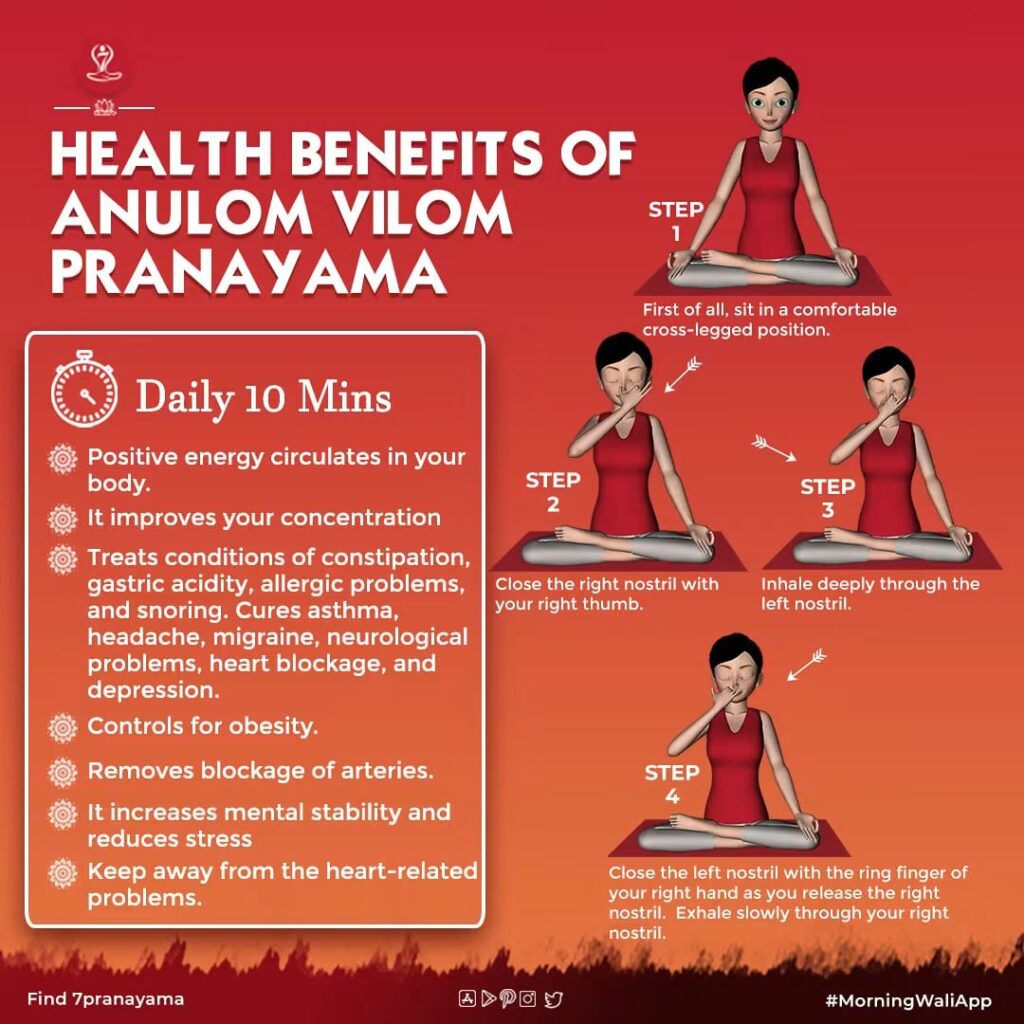
In yogic practice, Anulom Vilom, or alternate nostril breathing, is an ancient practice in which the person takes alternate breaths through the alternate nostrils. It is used as a component of pranayama and is currently being researched for its ability to produce effects on cardiovascular, respiratory, and psychological health. There are recent studies indicating that it can offer a number of benefits if practised regularly and properly.
1. May be able to control blood pressure
One of the better-studied benefits of alternate nostril breathing is its potential effect on blood pressure. In 2024, a systematic review and meta-analysis of alternate nostril breathing showed significant reductions in both systolic and diastolic blood pressure, although they also reported that there was considerable variation in the studies.
2. Supports Heart Health
By inducing relaxation and modulating the autonomic system, regular controlled breathing could have an impact on cardiovascular function. A systematic review on pranayama in 2026 concluded that yogic breathing is highly effective in lowering the heart rate and may have a moderate effect on blood pressure.
3. May Reduce Stress
Slow, controlled breathing can create a more relaxed physiological state and can be used to help ease common stressors. Studies on breathing exercises have shown improvements with regard to stress and other psychological effects, but they vary depending on the type of breathing exercise and the population studied.
4. May Support Mental Relaxation
Anulom Vilom involves focusing on breathing and the alternation between nostrils, which can help to promote mindfulness and relaxation. There have also been some studies of alternate nostril breathing for its impact on cognitive and autonomic functions.
5. May facilitate breathing
There are studies investigating the effects of Yogic breathing on lung function. A recent systematic review concluded that certain yogic breathing exercises (particularly Anulom Vilom) positively affected measures like forced vital capacity, FEV₁ and peak expiratory flow rate, although the studies assessed a variety of yogic breathing techniques and not only Anulom Vilom.
6. May Help Regulate Heart Rate
The autonomic nervous system and heart rate can be affected by controlled breathing. Seven randomized controlled trials were included in a 2026 meta-analysis that showed a significant decrease in heart rate after pranayama interventions.
7. May Balance Autonomic System (ANS) Functions
Alternate nostril breathing has been studied with regard to its impact on the activity of the autonomic nervous system. Previous systematic evidence shows some indications of beneficial effects in autonomic and cardiopulmonary parameters, but researchers have noted that the benefits need to be better standardized in clinical studies.
8. May Promote Focus
This breathing technique involves a deliberate breathing pattern and requires attention and co-ordination, which can help to focus the mind. Studies reviewing alternate nostril breathing have shown evidence of enhanced performance in some cognitive functions, with some evidence being more convincing than others.
9. May encourage overall relaxation
Slow breathing can be a beneficial relaxation technique if practiced for a few minutes. Anulom Vilom can be used to induce a state of relaxation and promote overall health and well-being through its use of controlled breathing and focus.
10. Can Be a Simple, Equipment-Free Practice
Anulom Vilom doesn’t need any special equipment, gym, or expensive facilities. It can be performed in most cases in a comfortable setting with a minimum of distraction and can easily be incorporated into a healthy lifestyle.
Practicing Anulom Vilom:
Sit in a comfortable position with your back reasonably straight and relax your shoulders. Gently close one nostril and breathe in through the other nostril, then close the other and breathe out. Next, alternate nostrils as slowly and steadily as you can. Do not make a conscious effort to inhale or exhale strongly or to hold your breath for extended periods of time, especially when first learning pranayama.
Important Precautions
Anulom Vilom should be used as a complementary practice to wellness, rather than a substitute for medical treatment. Please seek medical advice before starting an exercise breathing program if you have a medical condition such as cardiovascular or respiratory disease, dizziness, or any other medical concern. Pranayama is presented as an adjunctive technique but needs larger and more standardised trials in the year 2026.
Conclusion
Anulom Vilom is a simple traditional breathing practice which can help to support relaxation, cardiovascular function, heart-rate regulation, respiratory function, and mental focus. Although the present research is promising, further studies on Anulom Vilom would be helpful to pinpoint the exact benefits of Anulom Vilom. Can be integrated into general health and wellness plans with regular exercise, well-balanced diets, and proper medical attention for most people.
About the Author