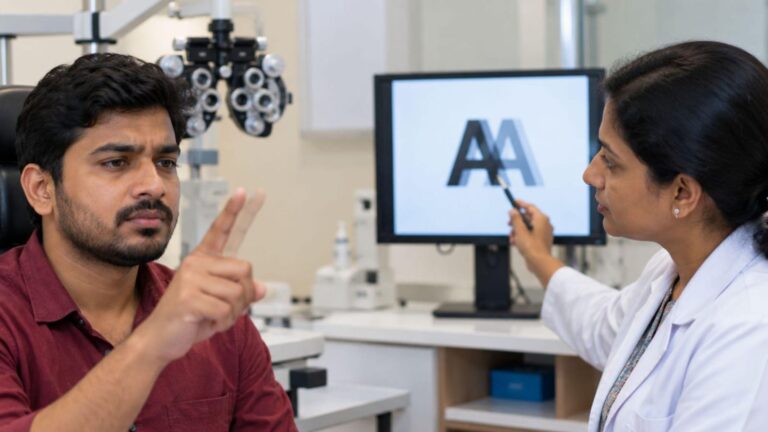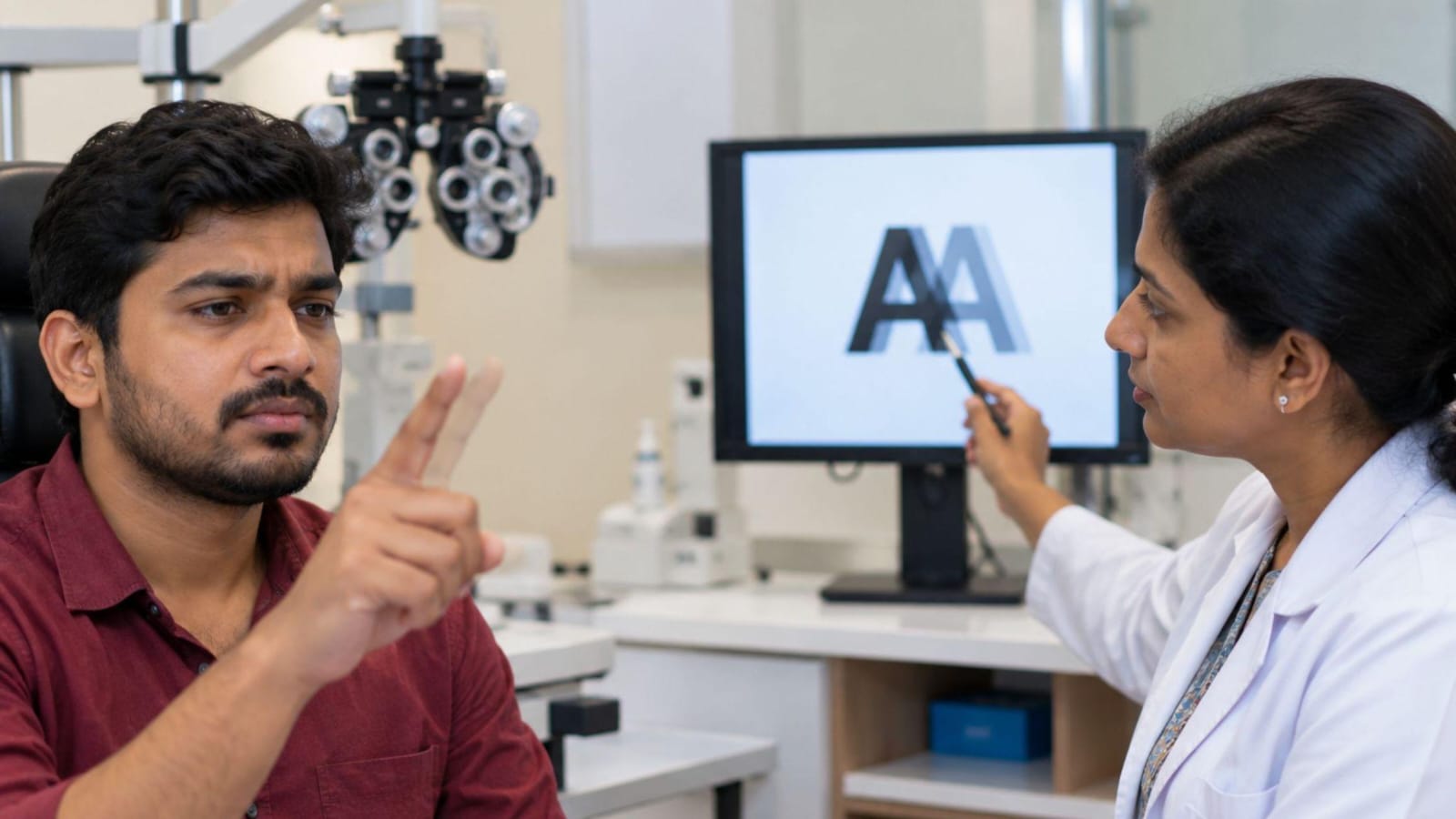

Double vision should be checked by an eye doctor (ophthalmologist) as soon as possible, whether it appears suddenly, keeps coming back, or does not go away. If it starts suddenly and is accompanied by a severe headache, weakness, a drooping face, or slurred speech, go to the emergency department straight away.
Seeing two of everything can be unsettling. Many people in India assume it is just tiredness or too much screen time, but double vision always needs a proper look.
First, Try a Simple Check
Covering one eye at a time can give your doctor a useful clue.
- If the double image disappears when you cover either eye, the problem is likely in how both eyes work together.
- If one eye still sees double on its own, the cause is usually inside that eye.
Either way, mention what you noticed to the ophthalmologist. It helps narrow down the cause.
Common Causes In One Eye
When double vision stays in one eye, the problem often lies in the front of the eye.
- A cataract can make light scatter and create a ghost image.
- Dry eyes can cause blurred, doubled vision that changes when you blink.
- An irregular cornea, as in keratoconus, can split images.
- An old or incorrect glasses power can also play a part.
Common Causes in Both Eyes
When both eyes are open and you see double, the eyes may not be lining up properly.
- Diabetes or high BP can affect the nerves that move the eye muscles.
- Thyroid problems can swell the muscles around the eyes.
- A long-standing squint can sometimes start causing symptoms.
- An injury to the face or eye socket can trap or damage a muscle.
- Some nerve and muscle conditions can cause double vision that gets worse as the day goes on.
Signs That Need Urgent Care
Some symptoms can point to a serious problem in the brain or nerves. Seek medical help the same day if double vision comes with:
- A sudden, severe headache
- A drooping eyelid or uneven pupils
- Weakness, numbness or trouble speaking
- Eye pain, or pain while moving the eyes
- A recent head injury
What The Ophthalmologist Will Check
The check-up is detailed, but most of it is simple and painless. The ophthalmologist will test your vision, check how your eyes move in every direction and measure how well they line up. Your eye pressure, cornea, lens and retina will also be examined. Depending on the findings, you may be asked for blood tests or a brain scan.
When An Eye Surgeon May Be Involved
Not every case needs an operation, and many are managed with glasses or medicines.
Special glasses with prisms can help join the two images. If a cataract is behind the problem, an eye surgeon may suggest removing it.
If a squint or muscle imbalance does not settle, an eye surgeon may discuss surgery to realign the eyes. Your ophthalmologist will guide you in choosing a suitable treatment option.
Conclusion
Double vision is your body’s way of telling you that something is out of balance. The cause may be as simple as dry eyes or as serious as a nerve problem, and only a proper check can tell the difference. Note when it started and whether it changes during the day. Then share these details with your ophthalmologist. If treatment is needed, an eye surgeon can work alongside your doctor to help restore clear, single vision.
About the Author