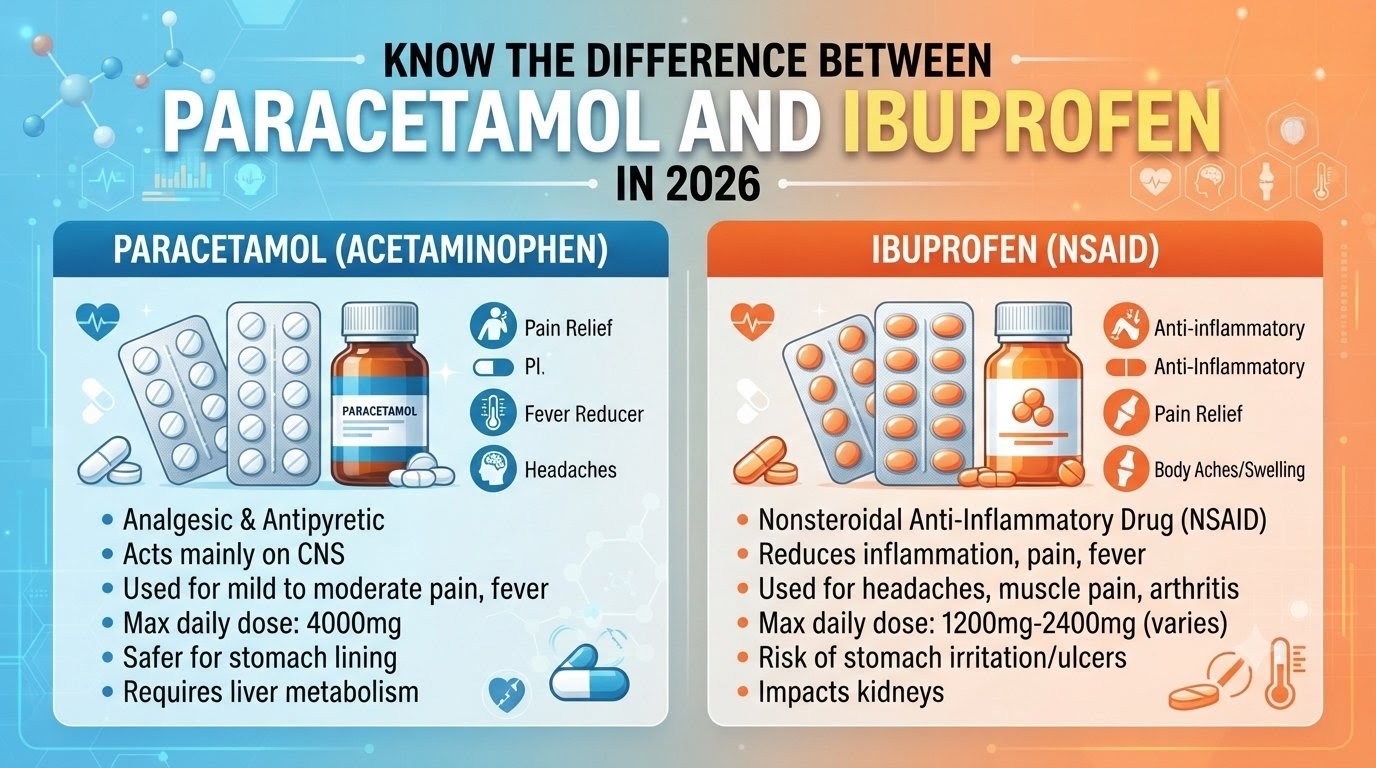

If a headache, fever or pain in the teeth or body suddenly crops up, two familiar names will immediately spring to mind: Paracetamol and Ibuprofen. Both can be used for relief of pain and for reducing a temperature, but they are not the same medicine, nor do they operate in the same way.
Knowing the difference between Paracetamol and Ibuprofen may help you to use these popular treatments more responsibly. The right choice will depend on the type of pain, health and other medicines that you may have.
Paracetamol vs Ibuprofen: What Is the Main Difference?
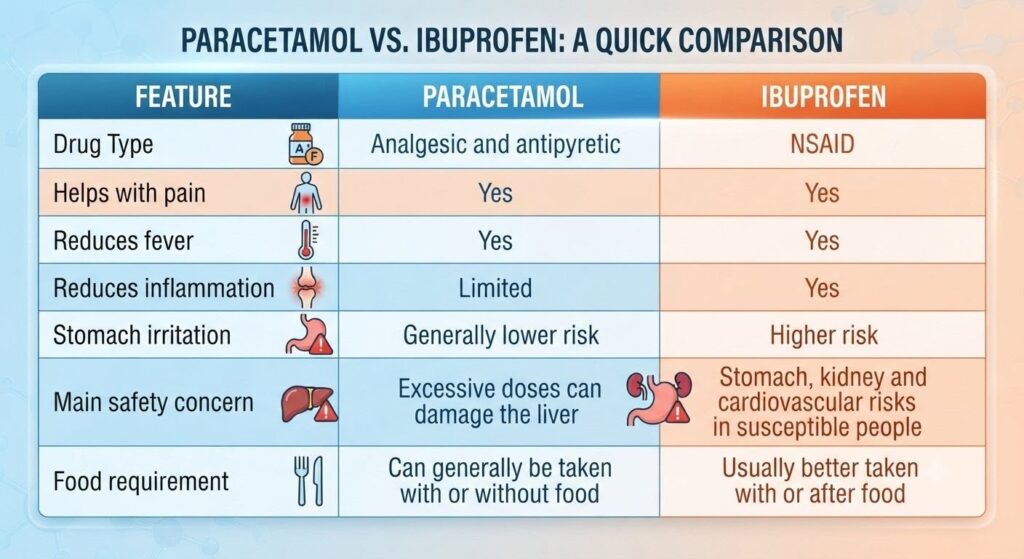
Paracetamol is mainly an analgesic (pain reliever) and an antipyretic (fever reducer). It is frequently used for headaches, mild body aches, toothache and fever. It does not have much anti-inflammatory activity.
A group of drugs called non-steroidal anti-inflammatory drugs (NSAIDs) belong to Ibuprofen. It can also help to relieve pain, fever and inflammation. This is helpful if the pain is associated with swelling or inflammation, like some muscle injuries, sprains or inflammatory joint pain.
When Is Paracetamol Commonly Used?
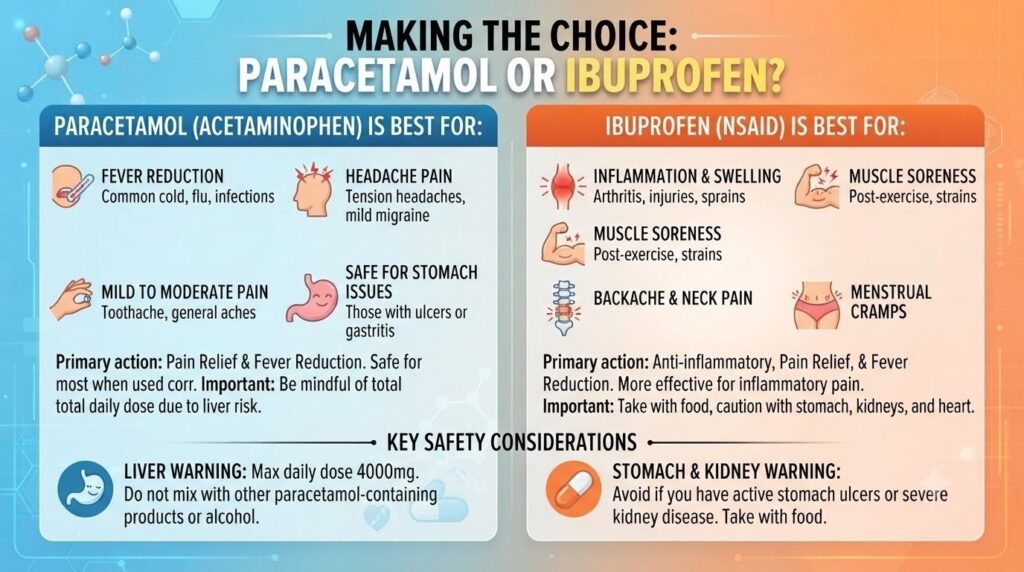
Paracetamol is a drug that may be suggested for mild or moderate pain, in addition to fever, especially if inflammation is not the primary issue. One of the benefits is that it is less likely to cause stomach pain and problems when used correctly, compared to taking NSAIDs.
But “common” is not “safe. Dosages above the recommended levels may result in severe liver injury. Another common mistake is to accidentally take Paracetamol from more than one product, such as a painkiller and a cold/flu medicine containing Paracetamol.
When Can Ibuprofen Be Useful?
Ibuprofen may be helpful for inflammation that is causing pain. It can be used for pain, fever and inflammatory symptoms, and is sometimes recommended to treat muscle or joint pain, sprains and some period pain.
Ibuprofen is not recommended for all people. NSAIDs may cause stomach irritation and, especially at high doses or when taken for a long time, can lead to ulcers, bleeding and kidney disease. It may require medical counsel before use by individuals with some medical conditions or who are using medicines like anticoagulants.
Which One Is “Better”?
There is no universal winner in Paracetamol vs Ibuprofen. They are used for different things and have different safety considerations.
For instance, take a typical Indian household where any member catches a fever in the middle of a busy work week. Paracetamol can be given if the person needs it and if it is suitable for them, as a treatment for fever and general aches, as directed on the label. If, on the other hand, the person has pain that is connected with inflammation or swelling, ibuprofen might be used from time to time, however, the person’s health background plays a role.
The critical lesson is not just to select the more popular-tasting medicine. It is important to understand what is putting that person in pain and which medicine would be safer for them.
Can Paracetamol and Ibuprofen Be Taken Together?
Sometimes Paracetamol and Ibuprofen are given together in an adult’s medicine chest, but this should not be seen as a guideline to giving both medicines together. The current NHS guidelines suggest that they should be used on an individual basis first and then use the lowest effective dose of each for the shortest amount of time.
Do not use if in doubt, especially in people with liver, kidney, stomach or heart disease, pregnant people, and those taking other medicines; consult a doctor or pharmacist before use, and always read the instructions on the product label.
The Bottom Line
While Paracetamol and ibuprofen are both effective in alleviating pain and fever, there are differences between them. Paracetamol is primarily used as a painkiller and fever reliever, whereas ibuprofen has anti-inflammatory properties as well. Excessive doses and liver damage are a special concern for Paracetamol, while ibuprofen may cause bigger stomach and kidney issues in vulnerable individuals.
Don’t use either medicine as a routine “go-to” pill, but read the label; do not take more than one of the same or don’t use any if you have underlying health conditions unless otherwise advised by a professional. A little education before self-administering drugs can help make a difference in safe self-care.
About the Author