Mangosteen: The Purple Fruit Nobody Talks About Enough
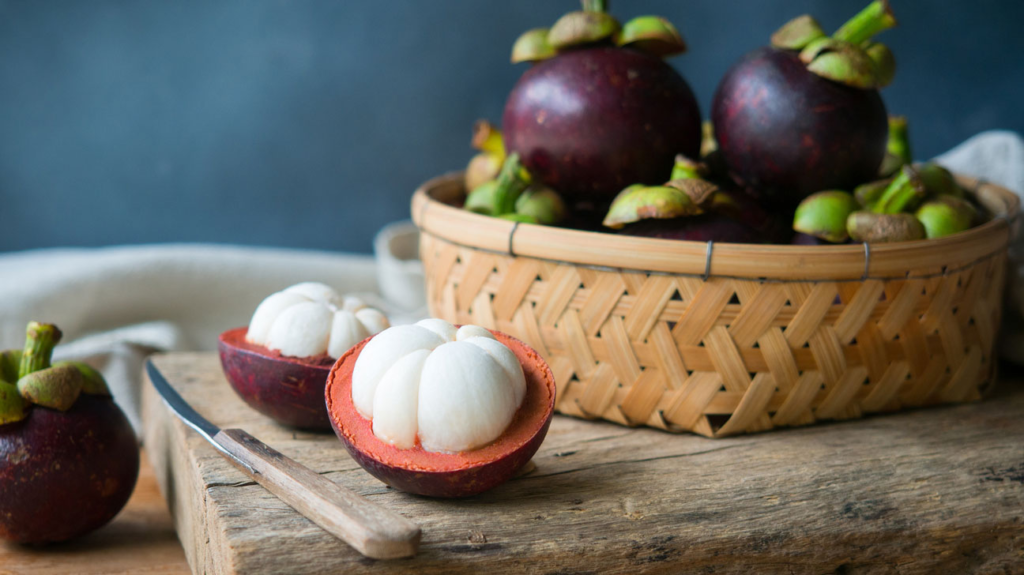
I still remember the first time someone handed me a mangosteen at a market stall in Bangkok and told me to just twist the top off. I had no idea what I was doing. Inside that thick, almost woody purple shell was this small cluster of soft white flesh that tasted nothing like anything I’d had before — a little like a lychee, a little like a peach, sweet with a slight tang. I bought a whole bag and ate them on a bench for the next twenty minutes. It wasn’t until later that I learned this thing has a nickname: the “queen of fruits.”
Where It Actually Comes From
Mangosteen, or Garcinia mangostana if you want to get scientific about it, grows on trees native to Thailand, Malaysia, and Indonesia. The trees take their time — some don’t bear fruit for a decade — which is probably part of why mangosteen never became as mainstream as mango or pineapple outside of Southeast Asia. For a long time, people there weren’t just eating it for taste. The rind was boiled into teas and used on skin irritations and stomach troubles long before anyone ran a lab study on it.
So What’s Actually In It
Turns out the rind and flesh are loaded with a compound called xanthones, which is a fancy word for a strong antioxidant. Antioxidants basically mop up the loose, damaging molecules (free radicals) that build up in your body over time and contribute to things like heart disease and certain cancers. On top of that, mangosteen has a decent amount of vitamin C and B vitamins, plus fiber — nothing exotic, but a solid combination.
Where People Actually Notice a Difference
A few things come up again and again when people talk about mangosteen:
Digestion tends to improve with regular eating, mostly thanks to the fiber, which also seems to help feed the good bacteria living in your gut.
Skin often looks better over time — not overnight, but the vitamin C supports collagen, and the anti-inflammatory compounds may calm things like acne or eczema flare-ups.
Heart health gets a mention too. The antioxidants may stop LDL cholesterol from oxidizing, which is one of the steps that leads to clogged arteries.
Blood sugar control is an area researchers are still digging into, but there’s early evidence the fruit’s compounds might help with insulin sensitivity.
Brain function isn’t a wild claim either — chronic inflammation is linked to cognitive decline, and mangosteen’s anti-inflammatory action may offer some protection there.
But It’s Not for Everyone
A handful of people react badly to mangosteen — itching or rashes, especially if you already have a latex allergy. If you’re on blood thinners or medication for high blood pressure, it’s worth asking your doctor first, since mangosteen can nudge both numbers down further than you’d want. Pregnant women are generally told to keep portions modest rather than cut it out completely, just as a precaution since there isn’t much research either way.
Worth Trying?
Honestly, yes. It’s not a miracle fruit, and nothing here is going to replace actual medical care. But between the fiber, the antioxidants, and the fact that it tastes genuinely good, mangosteen is one of those foods that’s easy to recommend without much of a caveat. If you ever see it fresh at an Asian grocery store, grab a couple and try twisting one open yourself — it’s a small experience worth having
About the Author