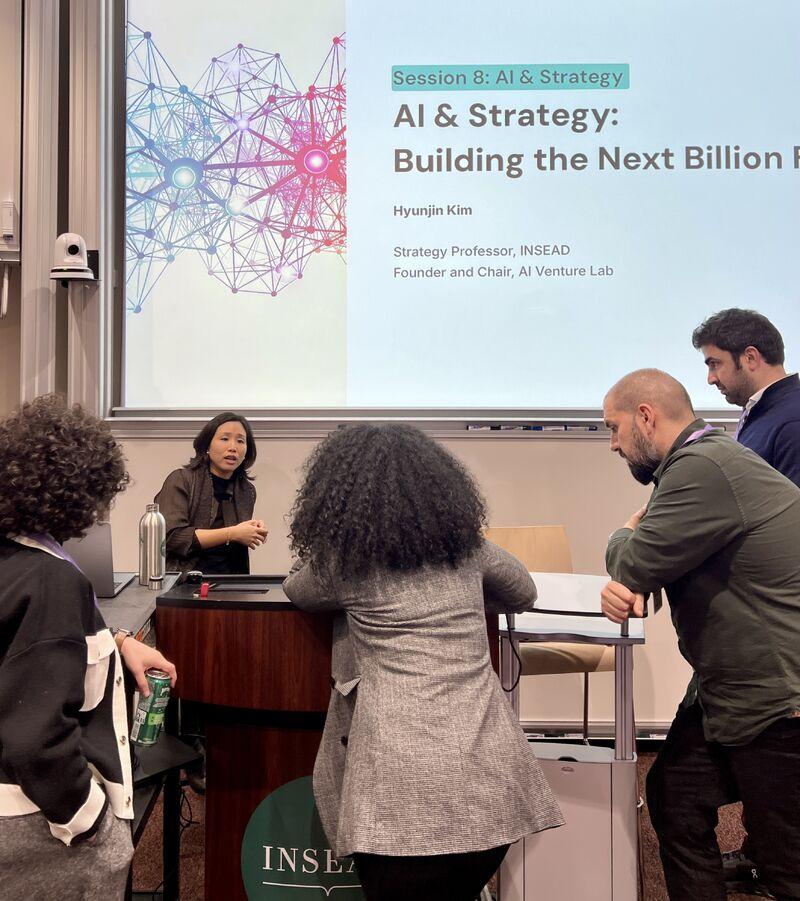

Artificial Intelligence is increasingly becoming part of business strategy, product development, marketing, finance, operations, and decision-making. As a result, professionals who understand both business management and AI technologies are becoming increasingly relevant across industries.
An MBA in Artificial Intelligence combines traditional management education with concepts such as artificial intelligence, machine learning, data analytics, automation, and AI-driven business strategy. In 2026, the programme can be particularly relevant for students who want to work at the intersection of technology and management.
What Is an MBA in Artificial Intelligence?
An MBA in Artificial Intelligence is a postgraduate management programme that combines core MBA subjects with AI and data-driven technologies.
Depending on the institution, the curriculum may include:
- Artificial Intelligence for Business
- Machine Learning
- Data Analytics
- Generative AI
- Business Intelligence
- Natural Language Processing
- AI Product Management
- Digital Transformation
- AI Strategy
- Business Analytics
- Project Management
- AI Ethics and Governance
- Marketing Analytics
- Financial Analytics
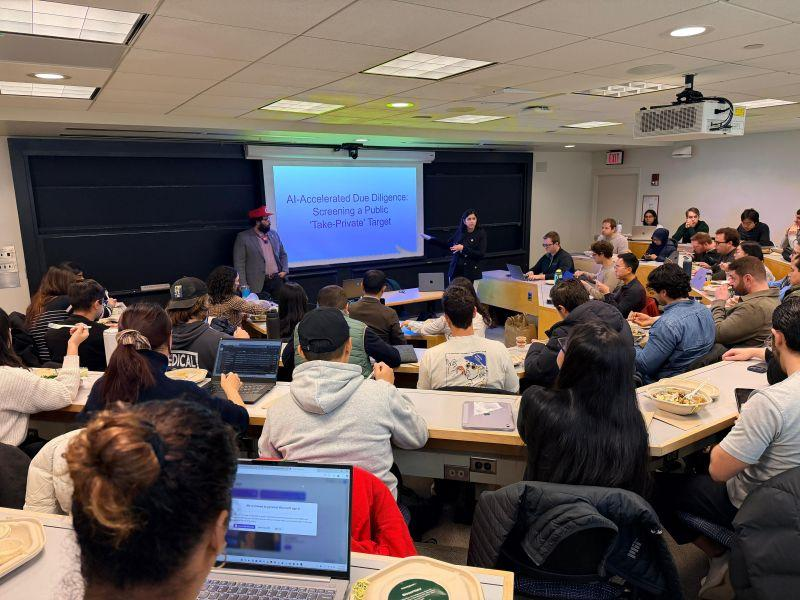
The exact curriculum differs between universities and business schools.
Duration of MBA in Artificial Intelligence
Most full-time MBA programmes in India are designed as two-year postgraduate programmes divided into four semesters. Some institutions may offer different formats, including executive, online, or specialised programmes.
Eligibility for MBA in Artificial Intelligence
Eligibility requirements vary by institution. Generally, applicants need:
- A bachelor’s degree from a recognised university
- The minimum percentage or CGPA specified by the institution
- A valid score in an accepted management entrance examination, where applicable
Depending on the institution, admission may involve examinations such as CAT, XAT, GMAT, CMAT, MAT, NMAT, or other university-specific examinations.
Students from engineering, computer science, mathematics, statistics, commerce, economics, science, and other academic backgrounds may be eligible, although requirements differ between programmes.
MBA in AI vs Technical AI Degree
An MBA in AI and a technical AI degree have different objectives.
An MTech, MSc, or technical master’s degree in AI generally focuses more deeply on programming, algorithms, machine learning models, mathematics, data structures, and AI system development.
An MBA in AI focuses more on applying AI to business problems, managing AI projects, understanding business strategy, leading teams, and translating technology into business value.
Therefore, students interested in becoming highly technical AI engineers may prefer a technical AI programme, while those interested in business strategy, product management, consulting, analytics, and AI-led transformation may find an MBA with AI specialisation more aligned with their goals.
Career Opportunities After MBA in Artificial Intelligence
An MBA in AI can lead to opportunities across technology, consulting, finance, healthcare, retail, manufacturing, marketing, and other sectors.
1. AI Product Manager
AI Product Managers help define, develop, and improve products that use artificial intelligence.
Their responsibilities can include understanding customer requirements, developing product roadmaps, working with technical teams, analysing product performance, and identifying AI use cases.
Indicative salary: ₹25 lakh to ₹1 crore or more for some experienced roles, although compensation varies substantially by company and experience.
2. AI Business Analyst
AI Business Analysts identify business problems where AI, automation, or data analytics can provide useful solutions.
They often work between business stakeholders and technical teams.
Key skills:
- Business analysis
- Data interpretation
- AI fundamentals
- Communication
- Problem-solving
- Process analysis
3. AI Strategy Consultant
AI Strategy Consultants help organisations identify opportunities for using AI and develop strategies for implementation.
They may analyse business processes, assess AI opportunities, evaluate technology investments, and support digital transformation initiatives.
4. AI/ML Consultant
AI/ML Consultants work with organisations to identify AI applications and support the implementation of AI-based solutions.
This role benefits from a combination of business knowledge and technical understanding.
Indicative salary: Approximately ₹7.7 lakh to ₹33 lakh per year in reported Indian market ranges, depending on experience and role.
5. Business Intelligence Analyst
Business Intelligence professionals analyse organisational data and create reports, dashboards, and insights that support business decisions.
Indicative salary: Approximately ₹6.5 lakh to ₹17.5 lakh per year in reported ranges.
6. Data Scientist
Some MBA AI programmes provide enough analytical and technical training for graduates to pursue data-focused positions. However, highly technical Data Science roles may require stronger programming, statistics, and machine-learning skills than a typical management programme provides.
Indicative salary: Approximately ₹6 lakh to ₹20 lakh per year in reported Indian market ranges.
7. AI Marketing Analyst
AI Marketing Analysts use data, predictive analytics, automation, and AI tools to understand consumer behaviour and improve marketing strategies.
They may work on:
- Customer segmentation
- Personalisation
- Marketing automation
- Campaign analysis
- Predictive analytics
- Customer behaviour analysis
8. AI Transformation Manager
AI Transformation Managers help organisations introduce AI into business processes and workflows.
They may coordinate between business leaders, technology teams, employees, and external vendors.
9. AI Ethics and Compliance Professional
As organisations adopt AI systems, professionals are increasingly involved in areas such as responsible AI, governance, risk management, privacy, compliance, and ethical use of AI.
This career path combines AI awareness with knowledge of regulations, business processes, risk, and organisational policies.
10. Business Analytics Manager
Business Analytics Managers use data and analytical tools to support strategic and operational decisions.
Their work can involve managing analytics teams, developing dashboards, interpreting business data, and communicating insights to senior management.
MBA in AI Salary in India in 2026
Salary after an MBA in AI varies widely depending on the institution, previous work experience, technical skills, industry, location, job role, and employer.
Indicative reported salary ranges include:
| Job Role | Indicative Annual Salary |
|---|---|
| AI Product Manager | ₹25 lakh–₹1 crore+ |
| AI/ML Consultant | ₹7.7–₹33 lakh |
| Data Scientist | ₹6–₹20 lakh |
| Business Intelligence Analyst | ₹6.5–₹17.5 lakh |
| AI Business Analyst | Varies by experience and employer |
| AI Strategy Consultant | Varies substantially |
| AI Marketing Analyst | Varies by experience and industry |
| AI Transformation Manager | Generally higher at experienced levels |
These figures are market estimates rather than guaranteed salaries. Individual offers can be considerably different depending on the employer and candidate profile.
Salary by Experience
Experience can have a significant impact on compensation.
Fresh Graduates
Entry-level candidates may begin in roles such as:
- Business Analyst
- Data Analyst
- AI Associate
- Junior Consultant
- Business Intelligence Analyst
Reported market estimates for fresh graduates can range from approximately ₹8 lakh to ₹15 lakh annually at some private institutions, while graduates of highly selective business schools may receive substantially higher packages.
Mid-Level Professionals
Professionals with several years of experience can progress into positions such as:
- AI Product Manager
- Analytics Manager
- AI Consultant
- AI Transformation Manager
- Strategy Consultant
Compensation at this stage can vary widely, with reported ranges of roughly ₹18 lakh to ₹30 lakh or more, depending on role and organisation.
Senior Professionals
Experienced professionals may progress into senior leadership positions such as:
- Head of AI Strategy
- AI Director
- AI Transformation Leader
- Chief AI Officer
- Senior Consulting or Partner-level roles
Senior compensation can exceed ₹50 lakh annually in some organisations, although such positions generally require substantial professional experience and leadership responsibility.
Skills Required for an MBA in AI Career
An MBA in AI is most useful when management skills are combined with practical AI and data literacy.
Technical Skills
- AI fundamentals
- Machine learning basics
- Data analytics
- SQL
- Python fundamentals
- Data visualisation
- Generative AI
- Prompt engineering
- Business intelligence tools
- AI automation tools
Management Skills
- Strategic thinking
- Product management
- Project management
- Leadership
- Business communication
- Financial understanding
- Market analysis
- Problem-solving
- Stakeholder management
Professionals increasingly benefit from being able to translate AI capabilities into practical business applications rather than simply understanding the technology in isolation.
Industries Hiring AI Management Professionals
AI-enabled business roles can be found across multiple sectors, including:
- Information Technology
- Banking and Financial Services
- Healthcare
- E-commerce
- Consulting
- Manufacturing
- Retail
- Telecommunications
- Logistics
- Automotive
- Marketing
- Education
- Media and Entertainment
AI adoption is increasingly extending beyond traditional technology departments into functions such as marketing, finance, sales, operations, and human resources.
Who Should Pursue an MBA in Artificial Intelligence?
An MBA in AI may be suitable for students or professionals who:
- Are interested in both technology and management
- Want to work in AI-driven business roles
- Are interested in product management or consulting
- Want to work in digital transformation
- Enjoy business strategy and analytics
- Want to move from a technical role into management
- Want to understand how AI can be applied to business problems
Students who want to spend most of their careers developing AI algorithms and highly technical machine-learning systems may want to consider a specialised technical degree instead.
Career Scope in 2026
The role of AI in business is expanding beyond traditional technology teams. Companies are increasingly looking for professionals who can understand business requirements and communicate effectively with technical teams.
This has created demand for hybrid roles involving AI strategy, AI product management, business analytics, AI consulting, automation, and digital transformation.
Conclusion
An MBA in Artificial Intelligence combines management education with knowledge of AI, machine learning, analytics, automation, and digital technologies. In 2026, it can provide career opportunities in AI product management, business analysis, consulting, business intelligence, AI strategy, marketing analytics, and digital transformation.
The earning potential varies significantly based on the business school, previous experience, technical skills, industry, job role, and employer. Students should therefore evaluate an MBA in AI based not only on advertised salary figures but also on the programme’s curriculum, faculty, placement record, industry exposure, internship opportunities, and the technical depth it provides.
Also read: https://amzn.to/4wpxv1h
About the Author