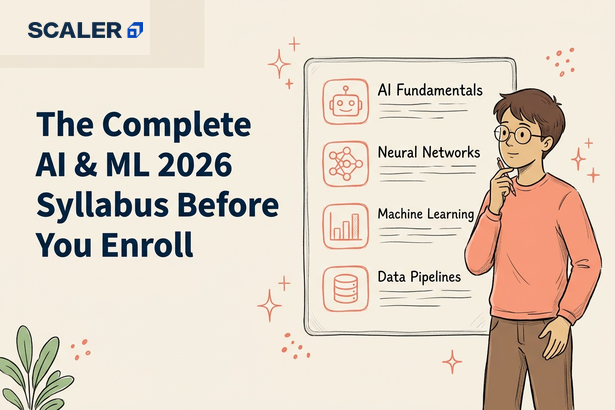

Artificial intelligence is now playing a significant role in several industries, including healthcare, banking, manufacturing, cybersecurity, retail, transport, and digital marketing. With the growing demand for AI professionals, more and more people, including students and working professionals, are choosing to pursue AI and machine learning courses. It is important to know what the course includes because the content might differ from one programme to another: some might focus on basic programming, others on advanced algorithms, and others on generative AI, research, and industry applications.
What is Included in Artificial Intelligence?
Artificial Intelligence is the term used for computers that are equipped with the capability of carrying out functions that would usually involve human intervention.
A modern AI curriculum commonly introduces:
Machine Learning
Deep Learning
Natural Language Processing
Computer Vision
Generative AI
Robotics and intelligent systems
AI ethics and responsible development
The depth of each topic depends on the programme’s duration and academic level.
Core Subjects in an AI Syllabus
1. Programming and Computer Science
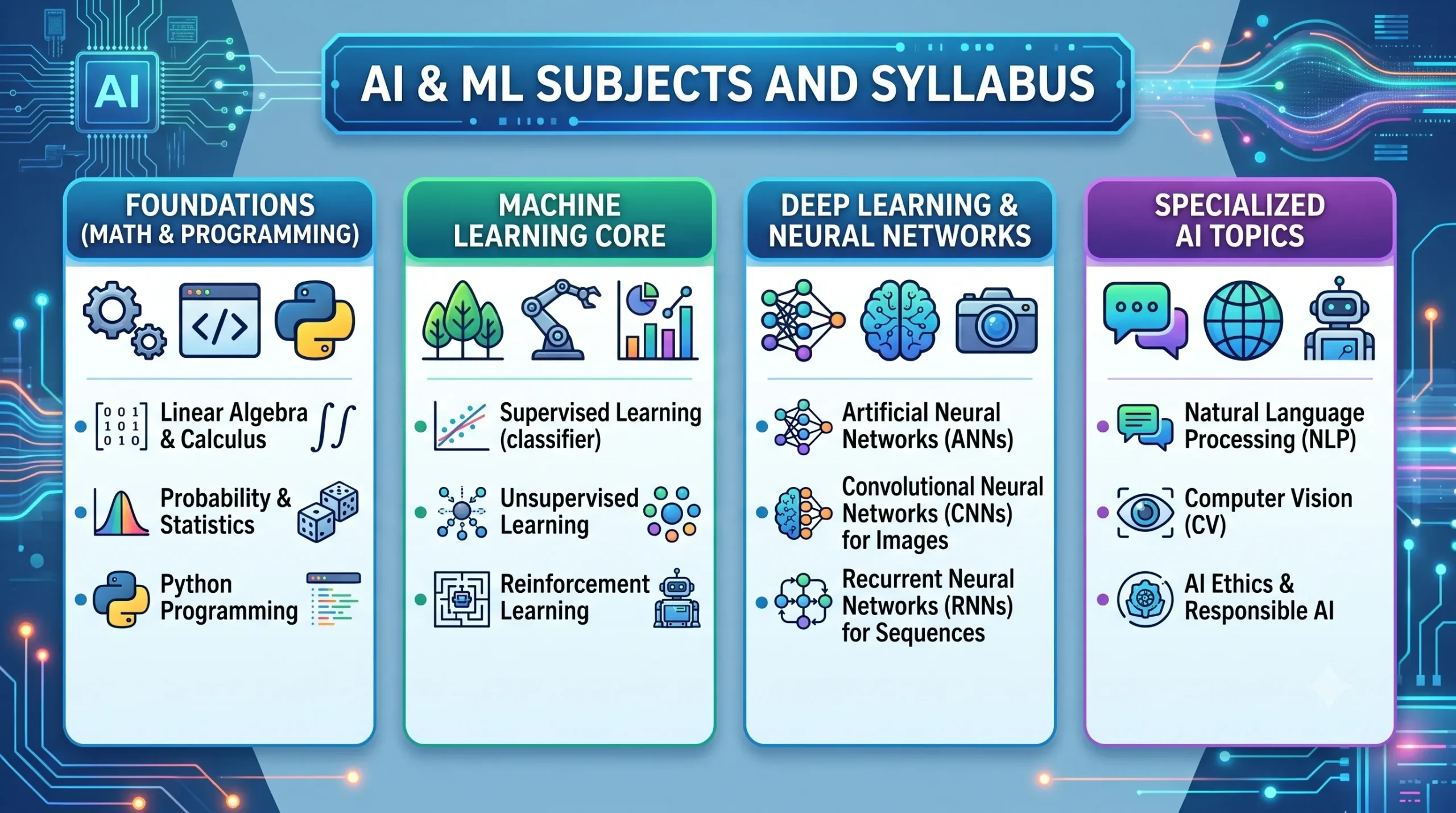
Students typically start their programming careers by using programming languages such as Python, Java, or C++. Some of the subjects that the students study under programming are data structures, algorithms, object-oriented programming, and databases. Moreover, another skill that the students learn through programming is computational problem-solving. Python is one of the languages that are crucial in learning AI since there are numerous AI libraries and frameworks in Python.
2. Mathematics and Statistics
Mathematics is significant in helping students understand the mechanics of AI models. Linear algebra, calculus, probability, descriptive statistics, optimization, and hypothesis testing are some of the important topics in this case.
3. Data Management
The operation of artificial intelligence systems heavily depends on data. Here you will learn about the processes of data collection, data cleaning, data transformation, data visualization, feature engineering, and validation. Students may also learn SQL, spreadsheets, data-processing libraries, and basic data pipeline design.
4. Machine Learning
Machine Learning is generally one of the central parts of an AI programme. Topics may include supervised, unsupervised, and reinforcement learning. Algorithms such as linear regression, logistic regression, decision trees, support vector machines, clustering, and dimensionality reduction are commonly introduced.
Model evaluation is also important. The subjects that the students study involve training datasets, testing datasets, cross-validation, and working evaluation of classifier performance.
5. Deep Learning and Computer Vision
In Deep Learning, the subjects to be tackled are neural networks, activation functions, loss functions, optimization, and backpropagation. More advanced concepts may be convolutional neural networks for image analysis, recurrent neural networks for time-series data, and transformers.
Computer Vision covers the following topics: image classification, object detection, image segmentation, image recognition, and pattern recognition.
6. Natural Language Processing
NLP focuses on enabling computers to process human language. Students may study tokenization, text classification, sentiment analysis, embeddings, language modelling, speech-related applications, and chatbot development.
Generative AI and Emerging Topics
Many current programmes now introduce Generative AI, including large language models, prompt design, transformer architecture, text generation and image-generation systems. Some courses also cover retrieval-augmented generation, model fine-tuning, AI agents and automation workflows.
Other advanced subjects may include MLOps, cloud deployment, model monitoring, explainable AI, cybersecurity and responsible AI practices.
AI Syllabus at Different Academic Levels
Certificate Programmes
Short-term courses generally focus on practical skills. They may combine AI foundations, machine learning, deep learning, generative AI, prompt engineering and a final project.
Bachelor’s Programmes
Undergraduate degrees usually begin with programming, mathematics and computer science. Later semesters may introduce machine learning, robotics, deep learning, NLP, computer vision, internships and capstone projects.
Postgraduate Programmes
Master’s and postgraduate diploma courses often explore advanced algorithms, optimization, MLOps, research methods, specialized electives and multiple technical projects. Some programmes also include a dissertation or industry-based research assignment.
Practical Training and Recommended Books
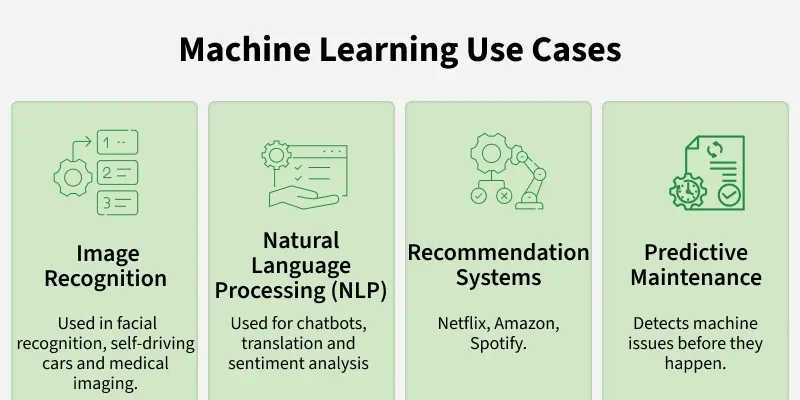
Projects are essential for converting theory into usable skills. Examples include a recommendation system, medical-image classifier, fraud-detection model, chatbot, crop-monitoring tool, or predictive-maintenance application.
Useful books include Artificial Intelligence: A Modern Approach by Stuart Russell and Peter Norvig, and Pattern Recognition and Machine Learning by Christopher Bishop.
About the Author