
Mantra, Tantra and Yantra are three important concepts found across several Hindu spiritual and religious traditions. Although they are often mentioned together, each has a different meaning and purpose. Mantra primarily relates to sacred sound and recitation, Yantra refers to sacred geometric forms used as visual aids, while Tantra refers to a broader body of spiritual traditions and methods.
Together, they can form interconnected approaches to worship, meditation, contemplation and spiritual practice.
Also Read: Top 10 Hardest Exams In 2026
What Is Mantra in Hinduism?
A Mantra is a sacred sound, word or phrase traditionally recited, chanted or mentally repeated during spiritual practice. The Sanskrit word is commonly understood in connection with manas (mind) and tra (that which protects, supports or liberates), although interpretations of its etymology vary.
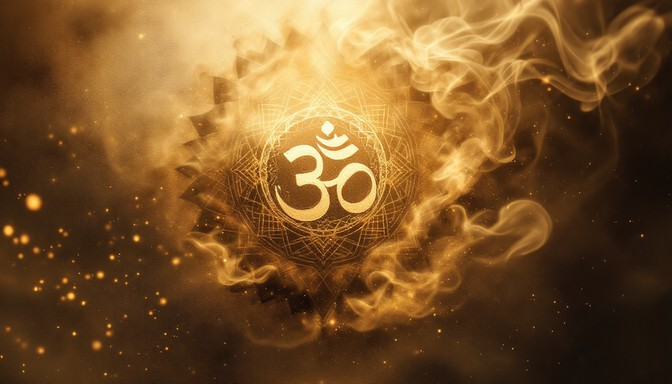
Mantras may be associated with particular deities, spiritual goals or philosophical traditions. Examples include Om (Aum), the Gayatri Mantra and various deity-specific mantras.
Mantra practice may be used for:
- Meditation and concentration
- Prayer and worship
- Cultivating mental discipline
- Devotional practice
- Ritual ceremonies
- Seeking spiritual purification or inner transformation
The importance of a mantra can depend on the tradition, lineage and manner in which it is practiced.
What Is Tantra in Hinduism?
Tantra refers to diverse Hindu and related Indian religious traditions that developed elaborate methods of spiritual practice. Contrary to its popular modern association with sexuality, Tantra encompasses a much broader range of philosophy, ritual, meditation, visualization, deity worship and disciplined practices.
Tantric traditions may emphasize the relationship between consciousness and Shakti, the divine power or creative energy. Some traditions use mantras, yantras, meditation, ritual offerings, visualization and other techniques as part of spiritual practice.
Tantra is not a single uniform system. Different schools and lineages have their own teachings, practices and interpretations.
What Is Yantra in Hinduism?
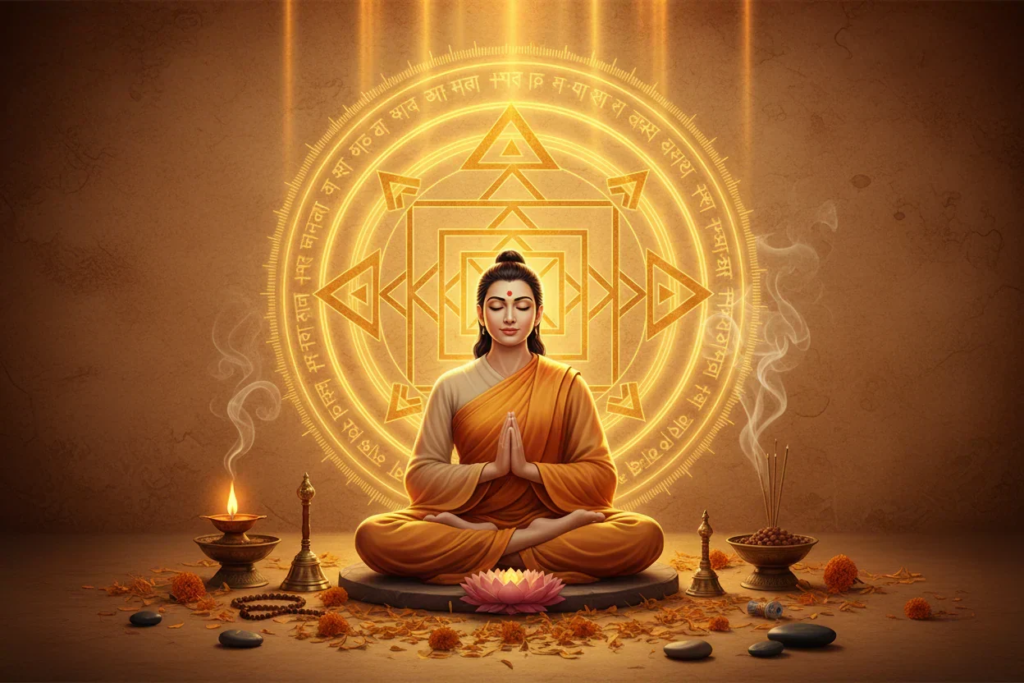
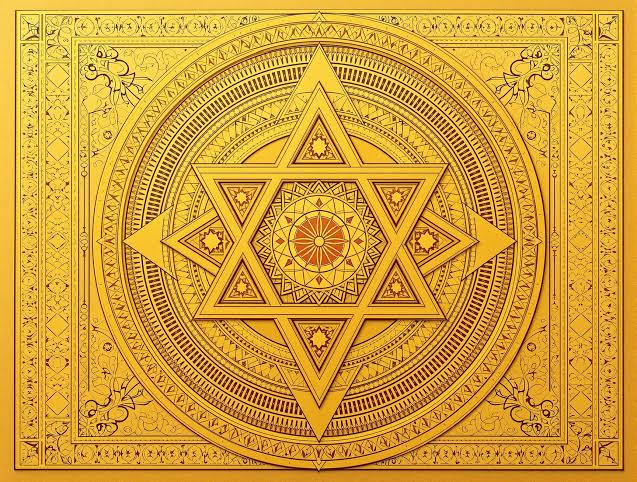
A Yantra is a sacred geometric diagram used in certain Hindu traditions as a support for meditation, worship and ritual practice. The word is related to the Sanskrit root associated with an instrument or means of accomplishing something.
Yantras often contain geometric forms such as:
- Triangles
- Circles
- Squares
- Lotus petals
- Central points called bindu
One of the best-known examples is the Sri Yantra, which consists of interlocking triangles and is associated with the Sri Vidya tradition and worship of the Divine Mother.
A practitioner may meditate upon a yantra or use it as a ritual object, depending on the tradition.
How Mantra, Tantra and Yantra Are Connected
Mantra, Tantra and Yantra can work together within particular Hindu traditions.
| Concept | Basic Meaning | Common Role |
|---|---|---|
| Mantra | Sacred sound or phrase | Chanting, meditation and worship |
| Tantra | Spiritual tradition and method | Ritual, meditation, visualization and transformation |
| Yantra | Sacred geometric diagram | Meditation, worship and ritual focus |
A simple way to understand their relationship is that mantra works primarily through sacred sound, yantra through sacred visual form, and tantra provides a broader framework of spiritual practice.
Significance in Hindu Spirituality
These practices demonstrate the importance Hindu traditions place on different dimensions of spiritual experience. Sound can be used to focus the mind, visual symbols can support concentration, and ritual practices can structure devotional and contemplative experiences.
However, their meanings are not identical across all Hindu communities. Their interpretation can vary significantly according to scripture, sect, teacher and lineage.
Mantra, Tantra and Yantra in Modern Hindu Practice
In 2026, these concepts continue to appear in temple worship, personal prayer, meditation practices, religious ceremonies and spiritual traditions in India and among Hindu communities worldwide.
At the same time, many popular explanations on social media simplify or commercialize these subjects. Traditional practices can involve specific rules, initiation, pronunciation, ritual procedures and guidance from an experienced teacher. Therefore, they should not always be treated as interchangeable meditation techniques.
Also Read: How to get an Insurance Agent License in India In 2026
Conclusion
Mantra, Tantra and Yantra represent distinct but sometimes interconnected aspects of Hindu spiritual traditions. Mantra emphasizes sacred sound, Yantra uses symbolic geometry, and Tantra encompasses broader systems of ritual, meditation and spiritual practice. Understanding their traditional contexts helps explain why these concepts have remained significant in Hindu religious and philosophical life.
About the Author