
A plain kurti is one of the most flexible pieces in an Indian wardrobe. With the right pairing, the same kurti can go from a 10 a.m. meeting to a 2 p.m. lecture to a Saturday cafe date. The trick is four swaps: bottoms, layers, footwear and accessories.
This guide shows you how to make those swaps for office, college and outings. It also covers kaftan-style options, which have become a popular alternative to the standard straight kurti.
Why a simple kurti still matters
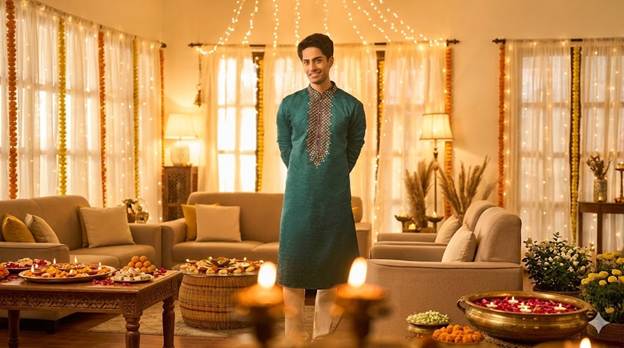
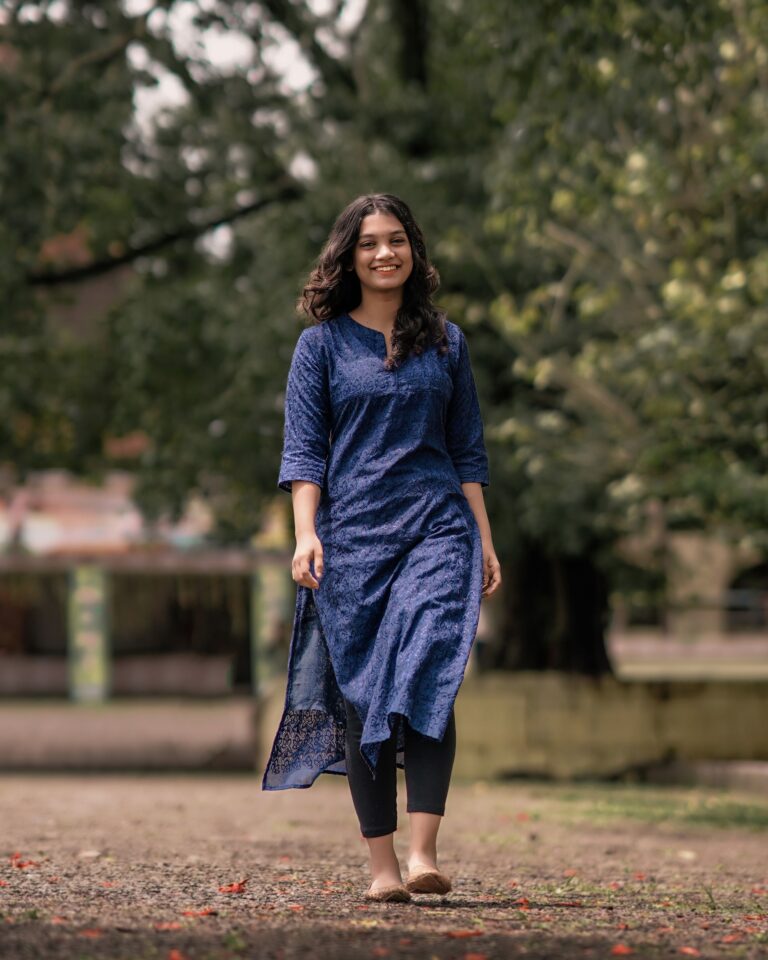
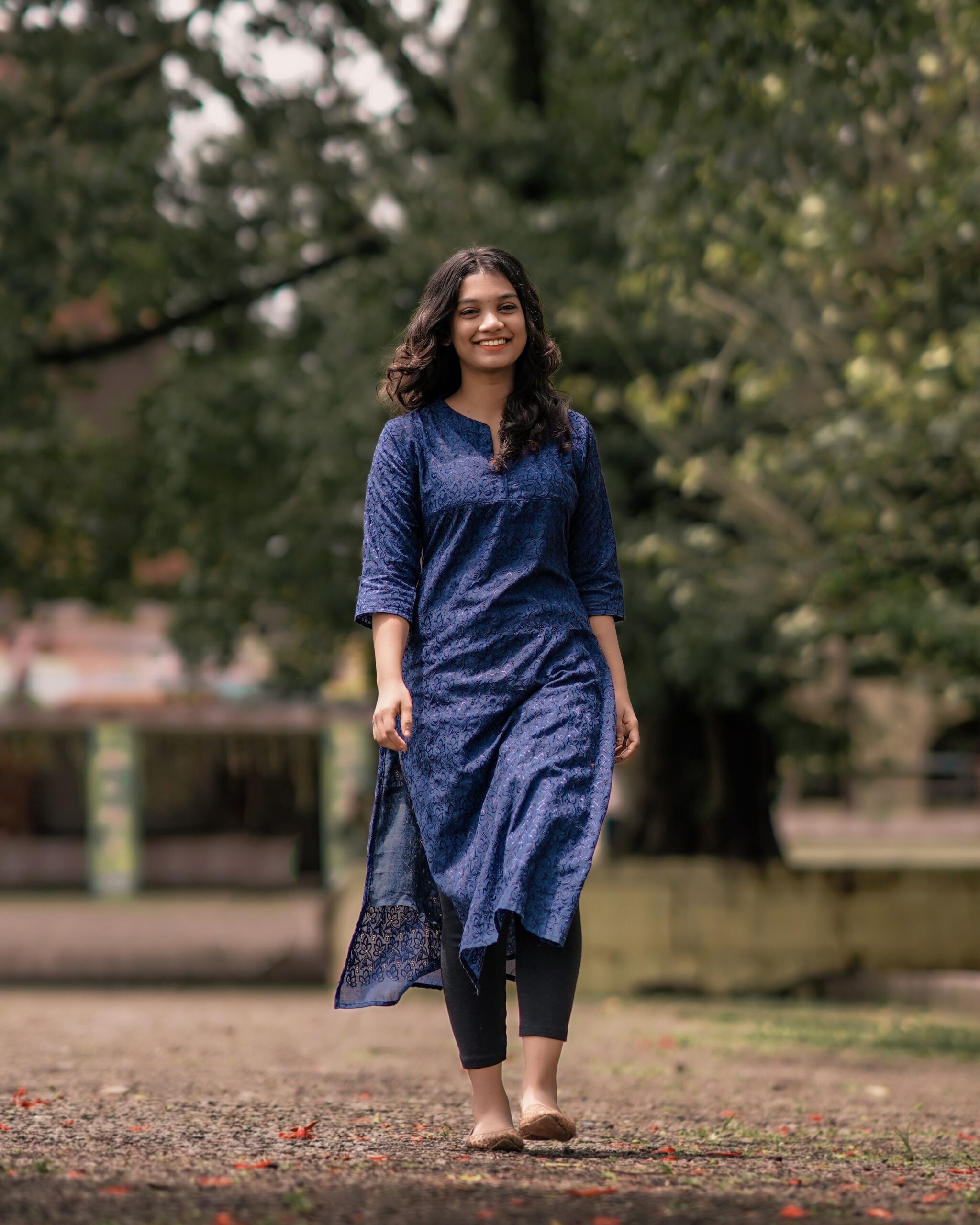
A simple kurti remains a practical choice because it can be styled differently for different parts of the day. The same piece can look polished with straight pants and loafers for work, relaxed with jeans and sneakers for college, or more dressed up with a dupatta and jhumkas for an outing. Its versatility comes from how you pair and layer it, rather than from the kurti itself.
Styling a Simple Kurti
For Office
Rule: Keep it structured, solid and knee-length or longer. Clean lines beat heavy detail.
- Kurti: Straight or A-line, in cotton, a cotton blend or linen
- Colours/prints: Solids or small prints in navy, olive, maroon, grey or off-white
- Bottoms: Straight pants or ankle-length trousers
- Layers: Lightweight blazer or long shrug
- Footwear: Closed flats, loafers, mojaris or low block heels
- Accessories: Structured tote, small studs or a simple watch
- Check first: Your dress code. A look that suits a design studio may feel too casual in a bank
- Length test: If you can climb stairs without tugging at the hem, it works
For College
Rule: Go relaxed and comfortable. Long days mean movement matters more than polish.
- Kurti: Short or mid-length
- Bottoms: Straight jeans, ankle-length leggings or loose cotton pants
- Layers: Denim jacket or an open cotton shirt
- Footwear: Sneakers, kolhapuris or flat sandals
- Accessories: Sling bag and oxidised earrings for personality
- Prints: Mid-tone prints hide a stray chai spill
For Outings
Rule: Add one statement piece and keep everything else simple. Outings leave room to play with colour and texture.
- Bottoms: Palazzos or a long skirt instead of office trousers
- Dupatta: A printed one, draped
- Jewellery: Jhumkas
- Footwear: Embellished juttis or block heels
- Casual day option: Kolhapuris and a sling bag keep the look light
Wearing a kaftan for parties
A kaftan works for parties when you choose richer fabric and define the waist. Georgette, crepe and silk-blend kaftans drape well. Add a slim belt, metallic sandals and bold earrings.
For a daytime brunch, a block-printed cotton kaftan with flat sandals feels right. At The Jaipur Studio, kaftan sets sit alongside kurtas and kurta sets, so comparing silhouettes is easy.
Quick styling guide
| Occasion | Bottom | Footwear | Accessory |
| Office | Straight pants | Loafers or mojaris | Tote, studs |
| College | Jeans or leggings | Sneakers or kolhapuris | Sling bag, denim jacket |
| Outings | Palazzo or long skirt | Juttis or block heels | Dupatta, jhumkas |
| Party | Kaftan with belt | Metallic sandals | Statement earrings |
Getting the fit and length right
Choose the fit by how your body moves, not by trend. The shoulder seam should sit at the edge of your shoulder, and you should be able to lift your arms without the fabric pulling.
Straight kurtis suit most offices. A-line cuts add ease for college. Flared and kaftan shapes work well for outings.
For length, aim for the knee at work, mid-thigh with jeans on campus, and calf to ankle for a kaftan.
Fabrics that suit Indian weather
Cotton, mul cotton, muslin and linen work best in heat and humidity. Natural fibres let air move around your body, so you stay comfortable for longer. Loose cuts such as kaftans also help in humid cities.
Save heavy silks and sequins for evenings. In winter, layer a kurti with a stole, jacket or sweater instead of buying a whole new set.
Basics that cover most days
A small, well-chosen set goes a long way. Start with four kurtis: an off-white straight kurti, a navy solid, a printed cotton A-line and an olive kurti with a simple yoke.
Mix them with two pairs of pants, one palazzo and one pair of jeans. That gives you 16 combinations from eight pieces. Add one kaftan for days when you want a single-piece outfit.
Mistakes to avoid
- Wearing it too tight: A fitted kurti restricts movement and looks stiff at work.
- Ignoring length: A short kurti with leggings can feel awkward in formal spaces.
- Over-accessorising: One statement piece is enough.
- Skipping a slip: Sheer fabrics need a lining.
- Ignoring the care label: Follow the washing instructions so colour and shape last. Wash block-printed and bandhani pieces separately in cold water and dry them in shade.
Frequently Asked Questions
1. Can I wear a kurti to the office every day?
Yes, in most Indian offices. Choose solid or subtle prints with formal bottoms, and check your company dress code first.
2. Which kurti length is best for beginners?
Knee-length or just below the knee. It pairs well with most bottoms and suits different heights.
3. What can I wear with a kurti besides leggings?
Palazzos, straight pants, jeans, culottes, dhoti pants and skirts all work.
4. Is a kaftan the same as a kurti?
No. A kaftan is a loose, flowing garment with a free-falling shape, while a kurti is usually more fitted at the shoulders and cut with a straighter or A-line outline.
5. How do I stop my cotton kurti from shrinking?
Wash it in cool water, avoid high heat in the dryer and check the care label. Pre-washing a new piece can also help.
Final thought
Great styling does not need a bigger wardrobe, only smarter pairing. Start with one good kurti, swap the bottoms, layers and footwear, and test what feels like you.
About the Author